Backcountry Vibes Without a Big Hike, Tokopah Falls Trail, Sequoia National Park, CA

Distance: 3.4 Miles

Elevation Gain: 615 ft

Difficulty: Easy, depending on your fitness level and sensitivity to altitude (as the trailhead is at 6,700 ft and the falls are at ~7,315 ft)

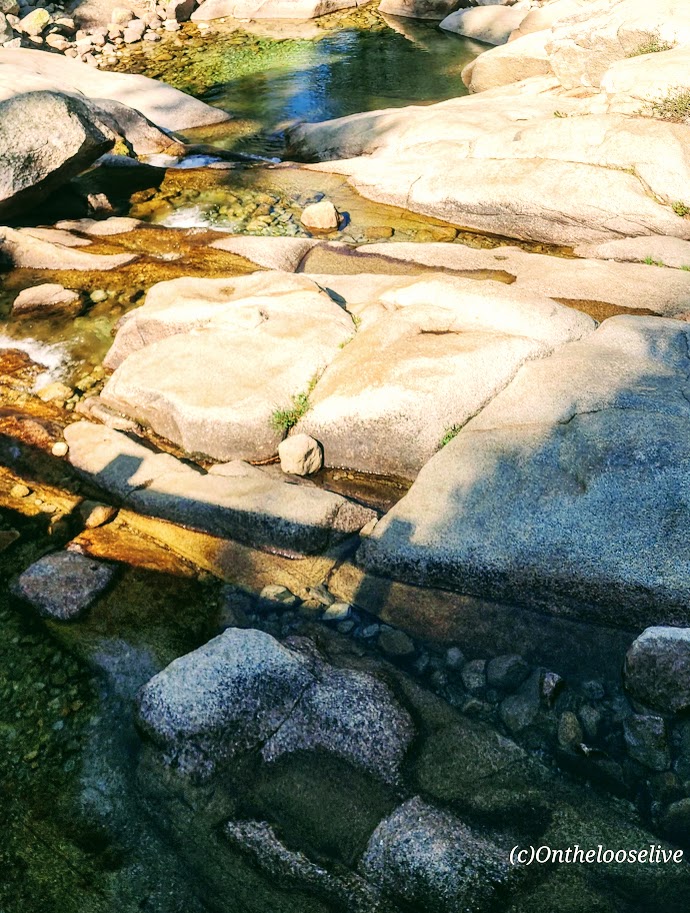
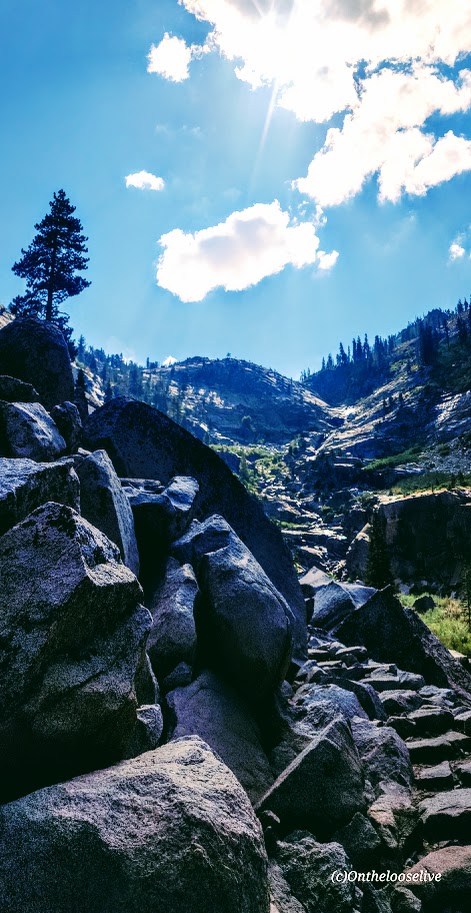
If you know me by now, you know I like a big hike and chasing waterfalls. Topokah Falls, in this case, offered neither, but in my opinion, it was still 100% worth it. Perhaps the pictures below will convince you why.

Even when the 1,200-foot falls were but a trickle, as is often the case in late summer, this is still a delightful little hike on a well-groomed, easy trail alongside a stream, glades of wildflowers, and gradually up to some impressive granite slopes. As you near the falls, you’ll encounter short sections of rocky footing.

This area has a wonderful “back-country” Eastern Sierra vibe; it reminded me a bit of Yosemite.

(Given its easy accessibility, you may be sharing it with a Boy Scout troop or other large groups.) Go early and have it all to yourself.

From the Lodgepole Campground, there are other trails to add on if you have the time and inclination, including Cahoon Meadow (2.6 miles) and Twin Lakes (6.5 miles). If there’s a next time for me, I’d probably take the Twin Lakes Trail. If you’ve done these hikes, let me know how they were.

Happy Trails! Leave No Trace! Tread Lightly! (Note, I’m not tromping on the wildflowers; there’s a path going through them that’s obscured in this photo, but perhaps it’s a good time for a PSA: As pretty as wildflowers are, please don’t pick them. They are essential for the ecosystem, including the pollinators, birds, and wildlife. Also, it’s illegal in most areas, including National Parks, though you’ll often see people doing it.)

Forest Bathing Under the Giants, Sequoia National Park, CA

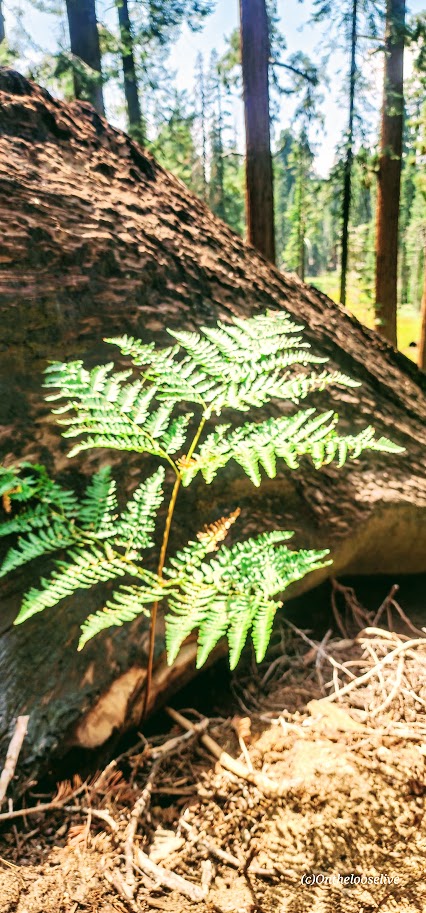
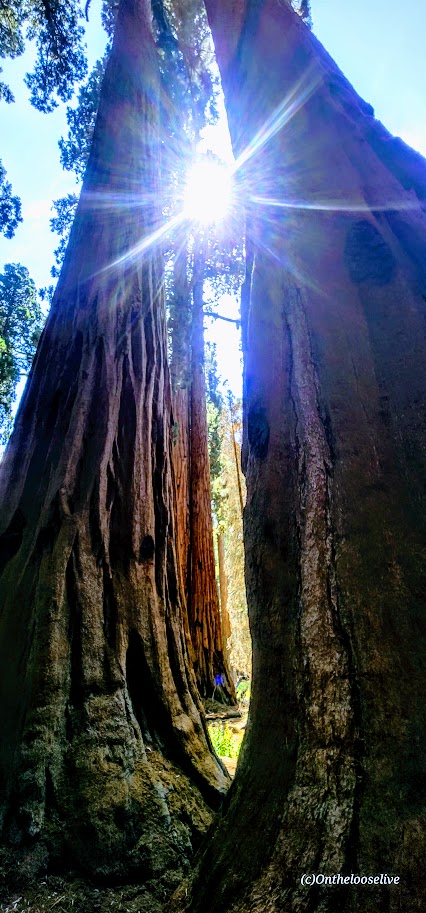
Visiting the Forest of the Giants is an awe-inspiring experience. It has to be the ultimate forest bathing destination on the planet. The ancient, colossal, towering Sequoias will fill you with a sense of wonder and quiet reverence. Since it’s a National Park, you can expect to share the experience with many others. But don’t let that deter you—a network of enchanting, less-traveled trails extends beyond the main viewing areas. Once you wander past the beaten (paved) path, you’ll leave the crowds behind and discover soft, winding trails that weave through fern-laced glades and alongside serene meadows, with each step taking you deeper into the heart of this magnificent forest.

If I ever return, I’ll aim for a sunrise visit or perhaps a backpacking trip. I imagine that those moments in the early light, when the forest is just beginning to stir, would be the best way to connect with this sacred place.

Sequoia facts:

  • Only grow on the western slopes of the California Sierra Nevada Mountain range, as they require a specific climate: moderate winters, minimal rain, moist-well-drained soil, and moderate temperatures overall. (Attempts to grow them elsewhere have failed.)
  • Rely on natural cycles of fire to open cones and prepare the soil for seedlings.
  • Have exceptionally thick (up to 3 ft thick), spongy, fire-resistant bark that’s rich in tannins, providing a natural shield against wildfires and insect infestations. Their high branches (up to 8 ft wide) stay out of reach of most fires. (We saw many trees with fire/lightning damage that were still living.)
  • Require water from snow melt, which they absorb through their shallow, wide root systems that are only ~5 ft below the surface.
  • Grow up to 300 ft high and live for 3,000 years!
  • Are an endangered species due to the threat of droughts and more intense wildfires.

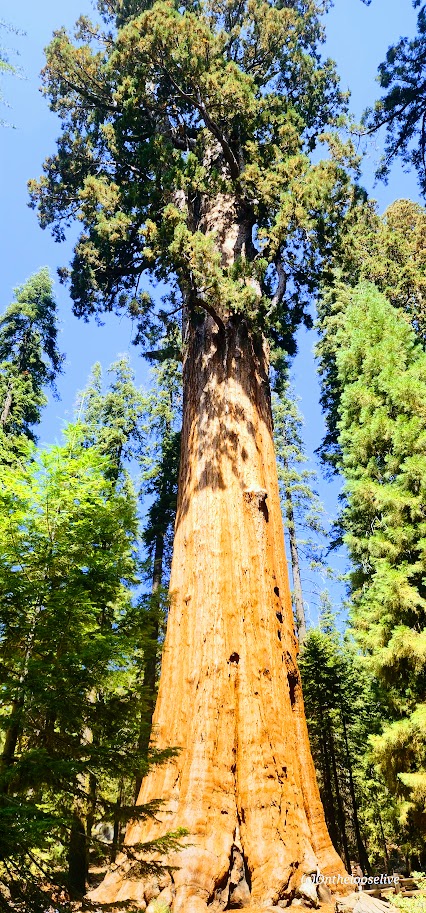
General Sherman Tree – The largest living single-stem tree on Earth! (Can’t capture the scale with a picture.)

Height: 275 ft Weight: 4.1 million lbs Circumference: 101+ ft Age: ~2,700 years old

Happy Trails! Leave No Trace!
Stave Springs to Observation Point, Zion—Take the Hike Less-Traveled for an Engaging “Angel’s Landing-Like” Experience Without the Crowds

Distance: 9.3 miles

Elevation gain: 2k

Difficulty: Easy to moderate, depending upon your fitness level

This is definitely one of the more engaging official trails in Zion and now one of my favorites. From the trailhead, it begins as a tame, wide-open, flat route.

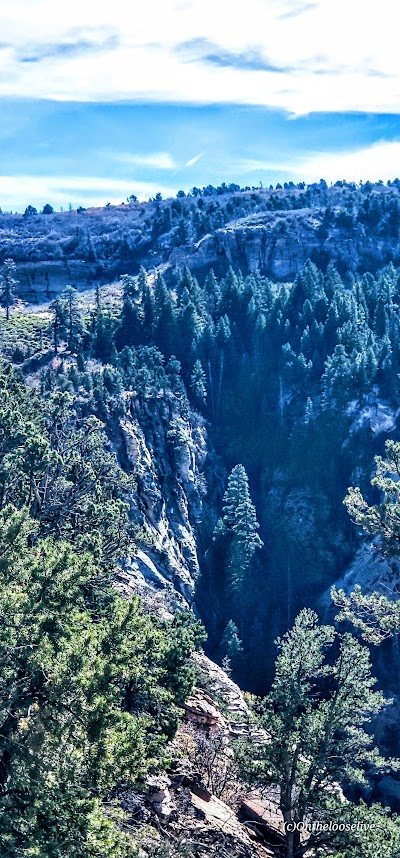
After a mile or so in, stop and look back for a glimpse into a dark canyon below.

As you continue along the trail, you’ll be treated to distant views of Zion, but don’t forget to watch your step as you descend the rocky trail into the lightly forested valley.

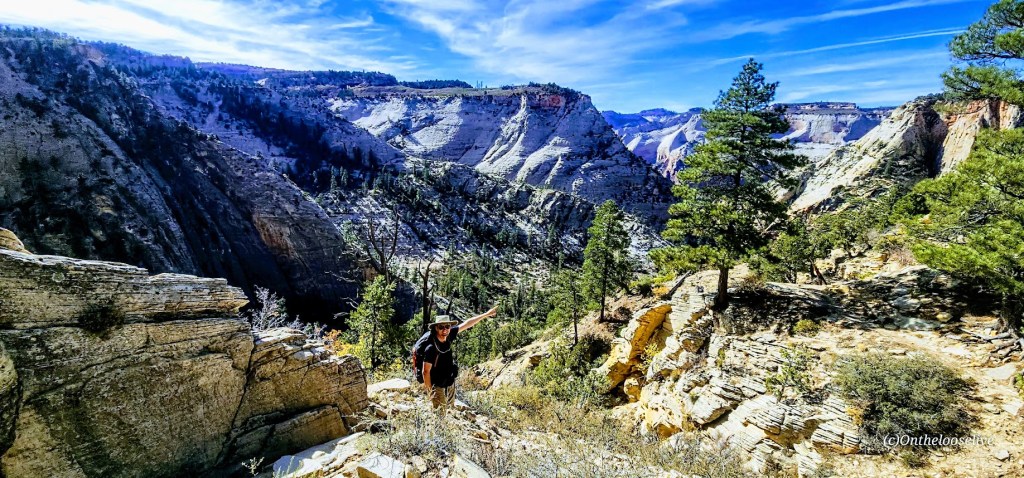
After reaching the other side of the valley, the climb will begin in earnest along the remnants of a concrete trail, zigzagging up to higher ground. It’s a friendly grade and easy terrain for fast hiking or trail running. It’s reminiscent of Walter’s Wiggles on Angel’s Landing, but the big difference is that you’ll likely have it and most of the hike from Stave Springs all to yourself!

This was my favorite part of the hike—a great workout with great scenery! (The picture above was taken on the return trip down.)

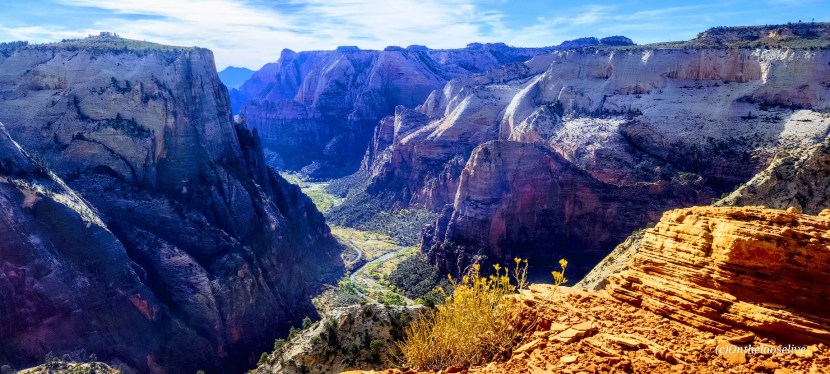
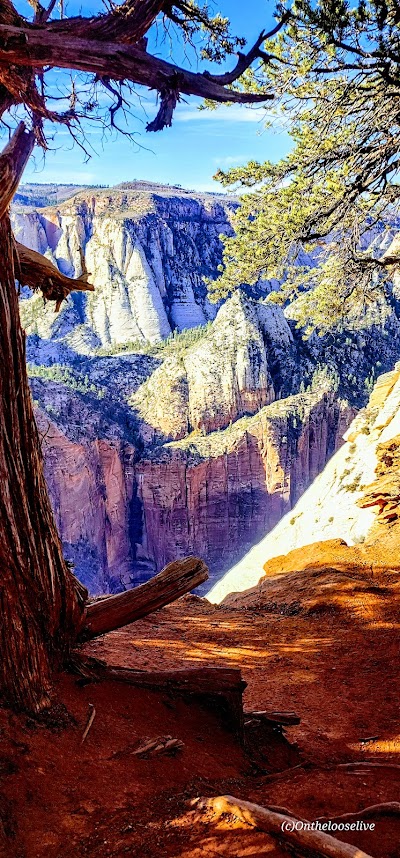
Once you reach the zenith, the views into Zion Valley are spellbinding, but you’ll want to keep your eye on your footing as you traverse along the slim cliff rim. (If you’re subject to vertigo and have a strong fear of heights, this might not be the hike for you.)

As you approach Observation Point, you can see Angel’s Landing below and across from you, a very cool perspective! This hike doesn’t have the rugged, chained, cliff-hanging social media over-posted appeal and crowds, and that’s exactly why it appeals to me.

Looks like angels are landing on Angel’s Landing. The picture above is taken from the trail along the rim. How dangerous is it? Might depend upon whom you’re with… In 1997, James Bottarin was accused of pushing his wife, Patricia Bottarini, off the cliff to her death here. Choose your hiking (and life partners) carefully!

Yes, Observation Point Views are grand, but in my opinion, they are no better than what you see en route, so you can always skip the last 1/2 mile or so if you want to skip the crowds.

There are two downsides: one is the long drive to reach the remote Stave Springs Trailhead, which is actually an upside, as it keeps the humans away. The second is the crowds you’ll encounter at Observation Point, who have taken the easier, shorter, less engaging route from East Mesa. It can be a shock to the system, especially after enjoying the splendid solitude of the Stave Springs route. Select the hike that suits you, but please note that both trailheads have limited parking, so arrive early to secure a spot.

If you’re lucky, you might encounter some of the locals.

Driving back through Zion and capturing golden light is always a delight.

Getting there: Use the Zion Ponderosa Ranch Resort address for your GPS: Twin Knolls Rd, Orderville, UT 84758. Once there, signs will direct you to the trailhead. It’s a gravel road with a couple of rough spots by the small parking area. High clearance recommended.

Happy Trails!

Devil’s Garden Loop, Arches National Park, UT

Distance: 8 miles via the “Primitive Trail”

Elevation Gain: 1,085 Ft

Difficulty: Easy to moderate, mild scrambling and slick rock traverses, requires some route finding, download a map

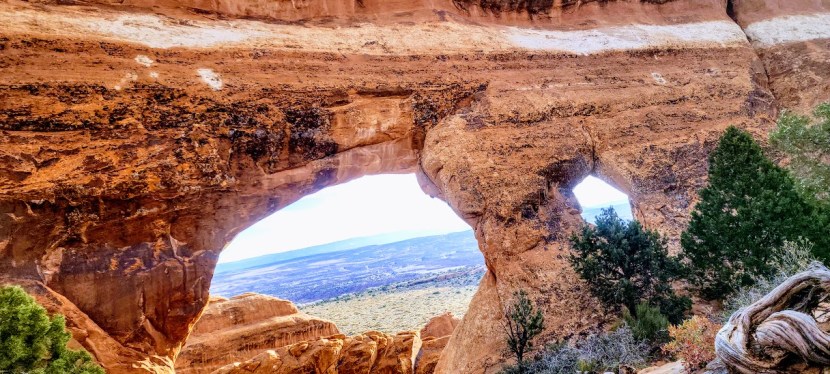
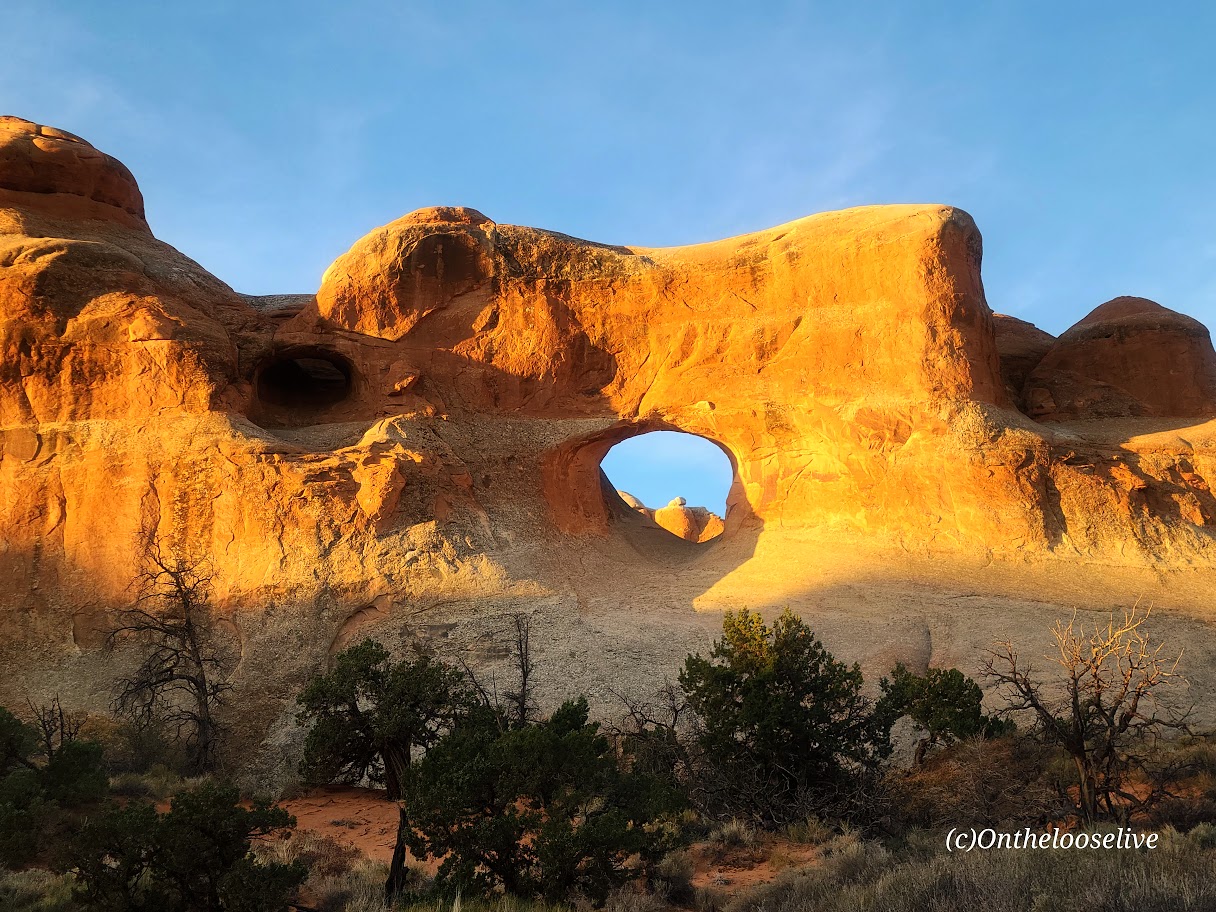
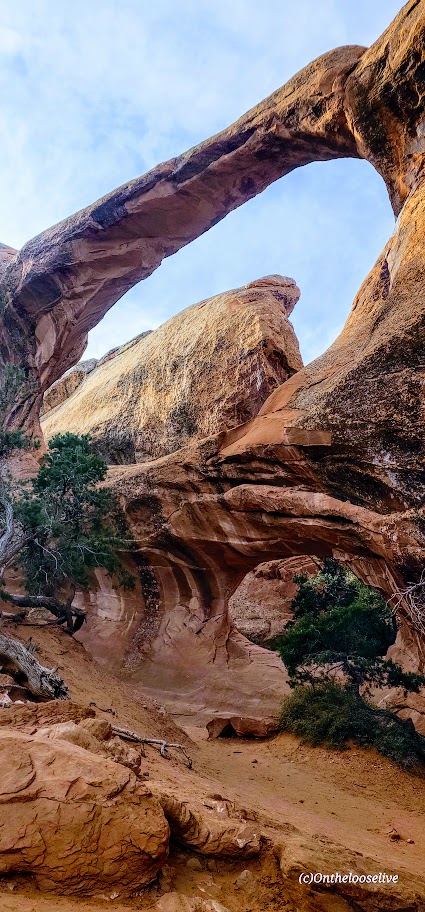
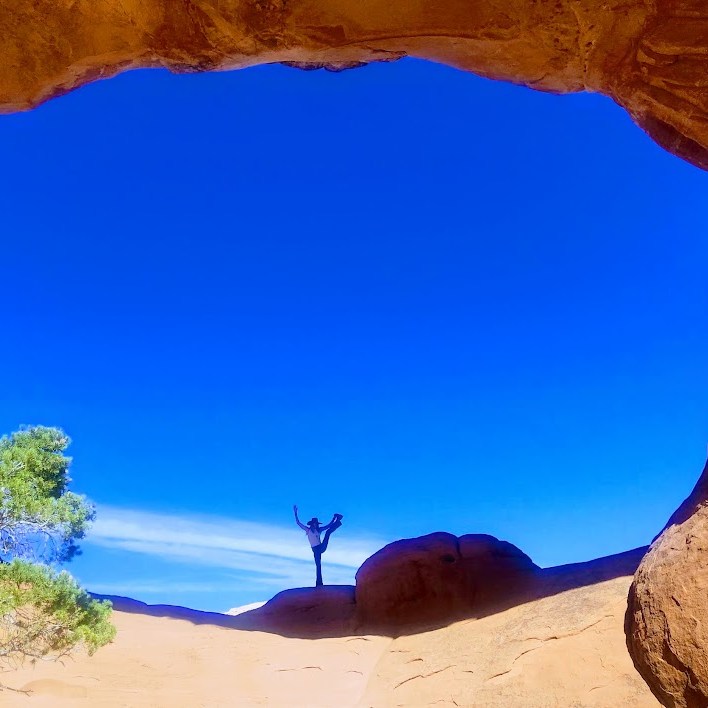
This hike will take you on a fun tour of 9 of the 2,000 arches in Arches National Park, including Landscape Arch, which is the longest arch in the world. So many arches so little time! The good news is in this park, no matter how short on time or energy you may be, there’s always an arch to see from the road or just a few steps away.

The first 2-miles of the Devil’s Garden Loop or so is on an easy wide gravel trail. (There are 3 arches in the first couple of miles, Tunnel Arch, Pine Tree Arch, and Landscape Arch. Beyond that the trail gets more interesting as it branches into a loop and takes you up a mild scramble to a slick rock traverse. While the trail is relatively well marked by cairns, there are a few tricky spots along the slick rock traverses. If you’re used to hiking across our rugged Utah topography, you won’t blink. If you take the loop counter clockwise, you’ll see all the arches at the beginning and middle of the hike. Word to the wise, we ran into a couple of people who were lost even though they were following their downloaded AllTrails map.

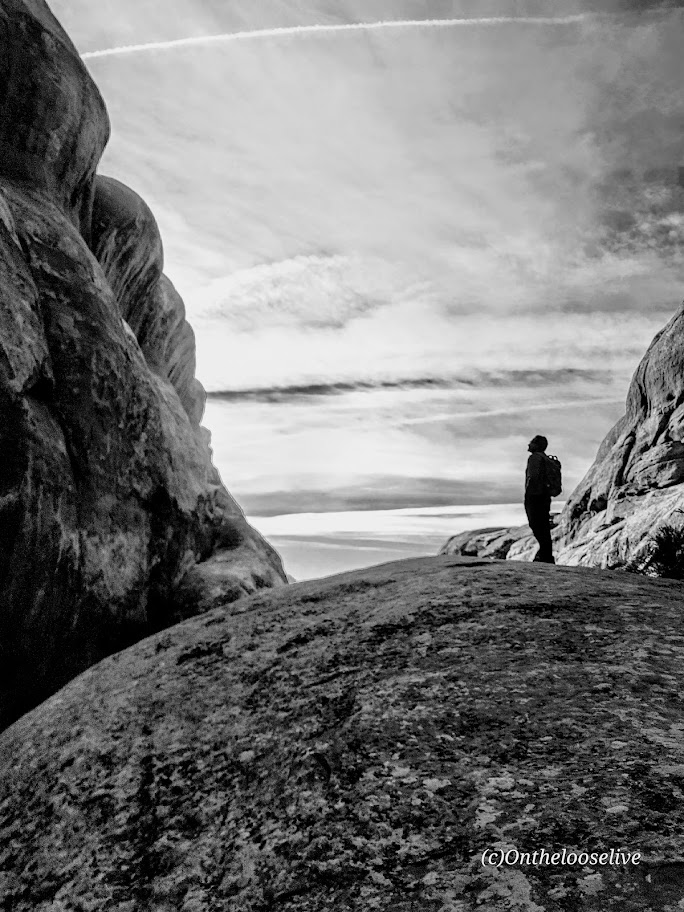
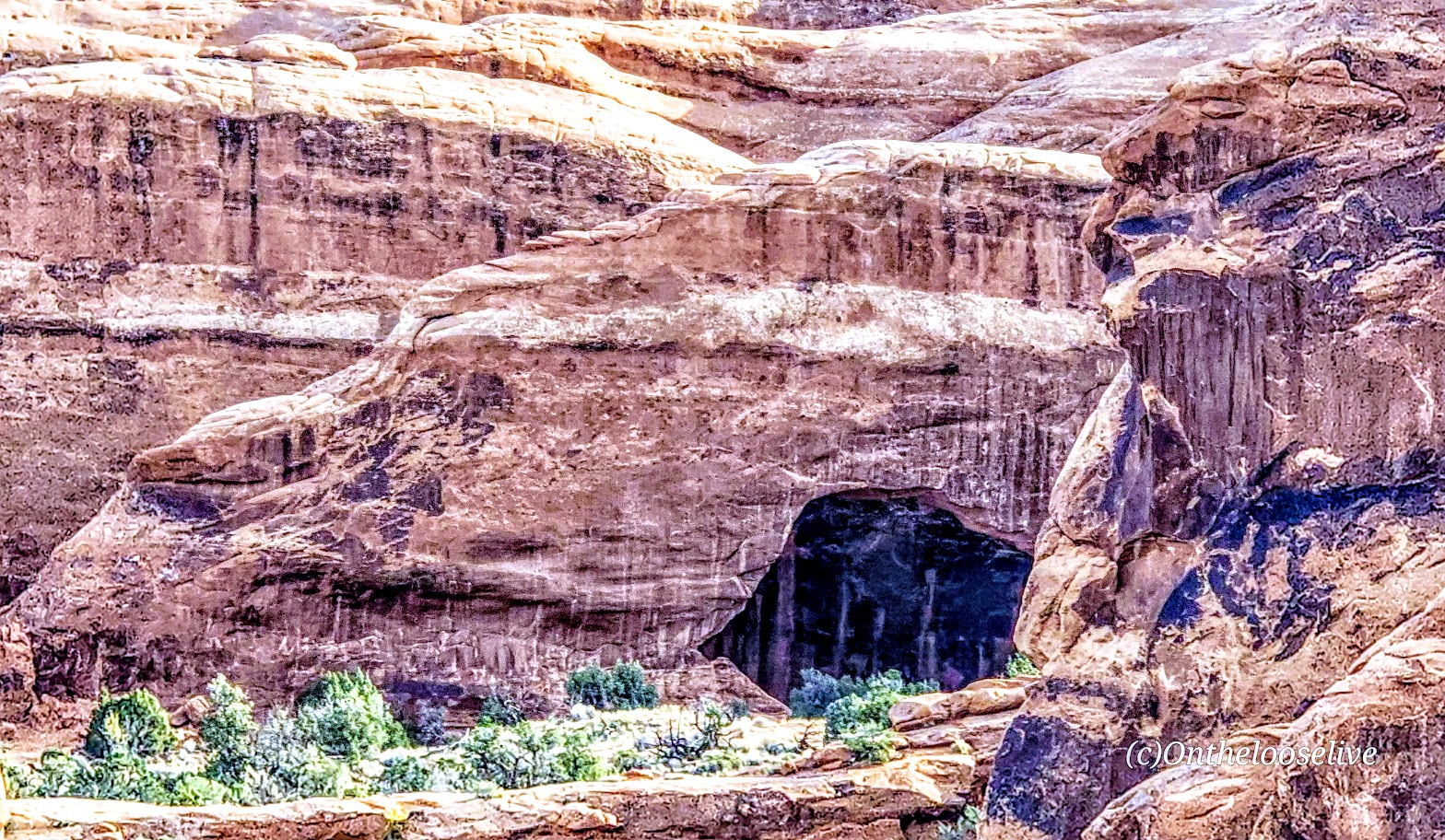
If you’re short on time or energy, the imposing Dark Angel rock formation can be seen and photographed best (IMO) from the distance from Double-O Arch area so you can skip the offshoot trail to it and shave about a mile off the hike’s total distance. (I took a picture up close that didn’t even make my final cut. )

On the other hand, if you have extra time and energy, you can drive down the road and add on a 3-mile loop hike to Sand Dune Arch, Broken Arch, and Tapestry Arch. (Sand Dune Arch is only a half mile total distance, add Broken Arch for 1.5 miles, and Tapestry Arch for ~3 miles.)

If you go, let me know which arches were your favorites!

Happy Trails!

Getting Wonky on Wheeler Peak—A Sobering Bout of Altitude Sickness

RT: 8.6 miles (started from the campground and added on the Alpine Lake Lake Loop)

Elevation Gain: 3,000ft

Peak Altitude: 13,065 ft

Difficulty: Moderate to Hard, depending on your fitness level and altitude acclimation…

Located in Great Basin National Park (Nevada), Wheeler Peak is a relatively easy peak to bag with a short hike up (<4 miles) and a total elevation gain of 3k. The hike doesn’t get serious (intense) until you hit the 3-mile mark. By then, you’re at about 12,000 ft elevation with another 1,000 ft of climbing packed into the last scrappy scree and talus-filled mile.

At 13,065 ft, Wheeler Peak is the tallest mountain in the Snake Range and the second-highest peak in Nevada. (Boundary Peak is the highest at 13,147 ft.) For perspective, in the first picture above, those tiny linear marks are people on the scree and talus section of the”trail”.

By “I got wonky”, I mean I got altitude sickness. And I don’t mean to downplay the potential seriousness of it. I’ve done higher peaks (Mount Whitney 14, 495 ft) and experienced headaches, but I’ve never experienced altitude-induced “aphasia.”  It happened on the way down after spending over an hour taking in the views from the top. (Apparently, too long for me.)

After descending about a mile, I said something to my hiking partner, and my words came out jumbled. (I knew what I wanted to say, but the wrong words were coming out in random order.) Either I was having a stroke or experiencing altitude sickness. My heart rate was relatively low, 75 bpm, and I’m relatively fit – while that doesn’t rule out a stroke, altitude sickness was more likely. There were no other symptoms, although I stumbled a couple of times towards the top and on the way down, which I attributed to the loose, rocky terrain (talus and scree) and my bad knees.

It didn’t help that we drove from an altitude of 3,000 feet directly to the campground and trailhead, which sits at 10,000 feet and started hiking vigorously immediately. (We made it to the top in 2 hours.) In retrospect, this was probably not the best plan, but I’ve never experienced more than a headache at altitude, so I considered myself relatively impervious. (False; just because you haven’t had altitude sickness doesn’t mean you won’t get it. No one is impervious. Altitude sickness strikes randomly.) I had hiked in the local mountains to 10,000 feet that week without incident.

What to do? The best treatment for altitude sickness is to descend immediately, so I did. It took another 1,000 feet of descending before my ability to speak coherently returned, much to my relief. I count myself lucky, as there have been incidents of high-altitude hikers experiencing aphasia for as long as six months—yikes!

Of note, a thin 20-something-year-old man dressed in a black sweatshirt and sweatpants (overdressed for 70-80-degree temperatures) appeared to be having some difficulty as he approached the last 100 feet of the climb. He seemed out of it, angry/unfriendly, as we gave him the right of way on the single-track trail. As we were hiking out our last mile, a ranger approached us and asked if we’d seen a young man dressed in black as they’d received a distress call about a fellow with altitude sickness…

Flash forward to the following weekend; on my way down from Mount Timpanogos Peak (11,752 feet) a slight teenage girl was curled into a fetal position on the side of the trail, holding her head. Her father and brothers stood around her. They had brought her down as far as they could, but she was incapacitated with severe nausea and a headache. The rescue team was on its way.

Other than my bout of altitude sickness, Mount Wheeler is a “relatively easy” peak to bag though the last steep slippery scree and talus section isn’t much fun if you’re not nimble-footed or if you have knee issues. Both apply to me. I used a pole on the way down to keep myself from taking a spill.

I was back to feeling fine, so we added on a leisurely stroll around the scenic Alpine Lakes Loop Trail for views of Teresa and Stella lakes, both of which looked more alluring than the last time I visited them. Perhaps I just caught the light right this time? If you’re not into bagging peaks, the lake loop is an easy 2.6 mile trail, but the altitude of 10,000 feet can still be a factor.

Altitude Sickness PSA

There are 3 syndromes of altitude sickness: acute mountain sickness (AMS), high-altitude cerebral edema (HACE), and high-altitude pulmonary edema (HAPE)

Acute mountain sickness (AMS)

Symptoms: Headache, Dizziness. Loss of appetite, Nausea, Vomiting, Fatigue / Loss of Energy, Shortness of Breath, Irritability, Dizziness, Muscle Aches, Insomnia

High-altitude cerebral edema (HACE) is a potentially life-threatening form of AMS where the brain swells due to lack of oxygen. Symptoms: Extreme fatigue /Drowsiness, Confusion, Loss of Coordination, Hallucinations

High-altitude pulmonary edema (HAPE) is also a potentially life-threatening form of AMS that impacts the lungs. It can occur in rapid ascents above 8,200 feet when blood vessels narrow due to lack of oxygen, leading to fluid build-up in the lungs. Symptoms: Shortness of breath, Weakness, Cough

Altitude Sickness Facts

  • 75% of people experience mild symptoms of AMS at elevations over 10,000 feet, dependent upon the elevation, the rate of ascent, and individual susceptibility.
  • 14% of people with HAPE will also have HACE
  • Anyone (fit/unfit, old/young, male/female) can get altitude sickness
    • Men are more susceptible
    • Obese individuals are more susceptible
    • Genetics play a role
    • Fast rate of ascent can play a role
  • Your body loses water through respiration at high altitudes twice as fast as it does at sea level

Preventive Measures

  • Hydrate well
  • Carb load
  • Allow at least a day to acclimate to the altitude if possible
  • Take it easy (rate of ascent)
  • Descend at the first sign of altitude sickness

Happy and Safe Trails!