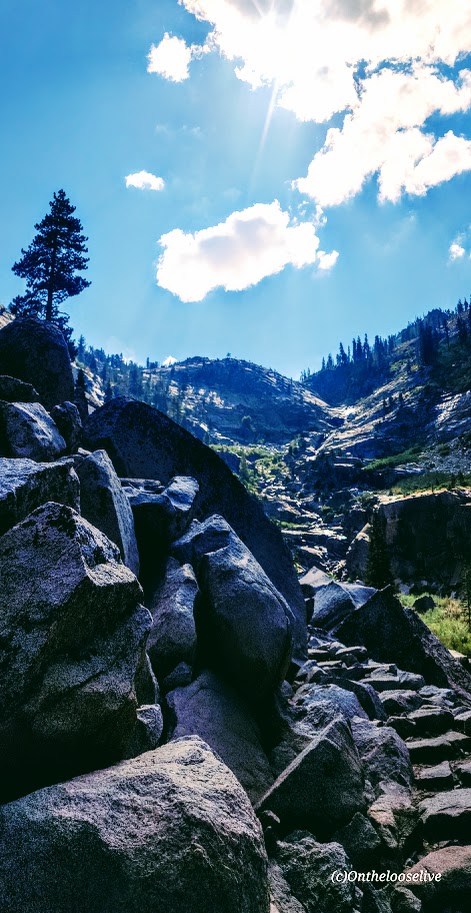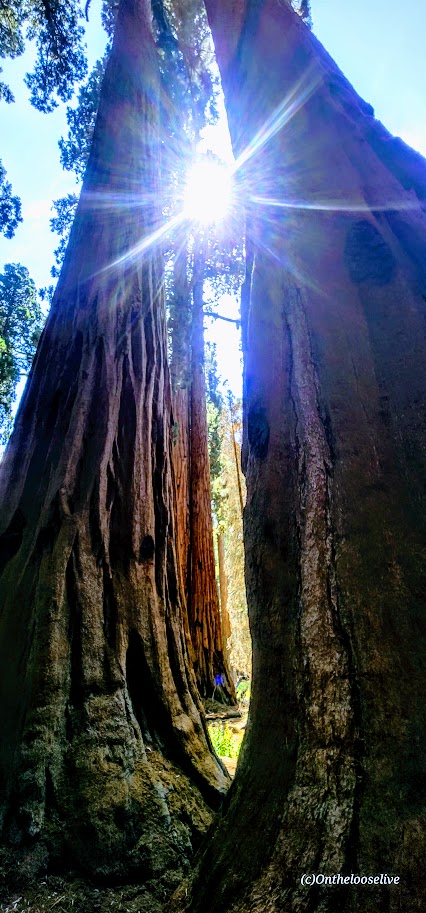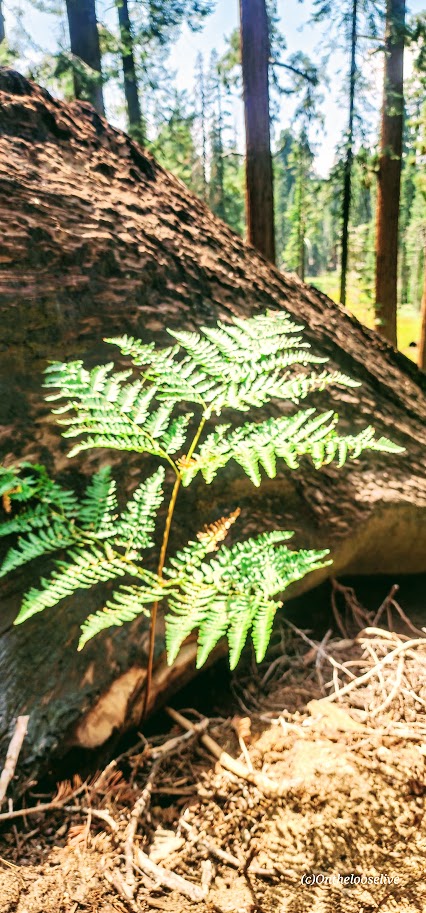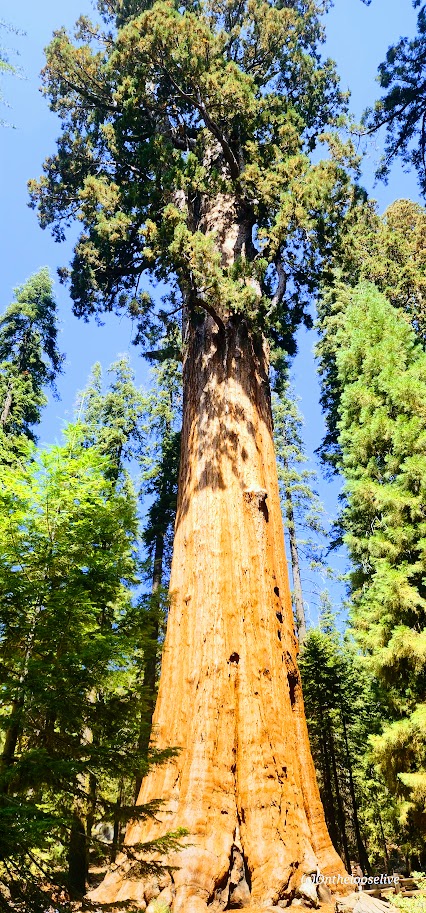
Visiting the Forest of the Giants is an awe-inspiring experience. It has to be the ultimate forest bathing destination on the planet. The ancient, colossal, towering Sequoias will fill you with a sense of wonder and quiet reverence. Since it’s a National Park, you can expect to share the experience with many others. But don’t let that deter you—a network of enchanting, less-traveled trails extends beyond the main viewing areas. Once you wander past the beaten (paved) path, you’ll leave the crowds behind and discover soft, winding trails that weave through fern-laced glades and alongside serene meadows, with each step taking you deeper into the heart of this magnificent forest.
If I ever return, I’ll aim for a sunrise visit or perhaps a backpacking trip. I imagine that those moments in the early light, when the forest is just beginning to stir, would be the best way to connect with this sacred place.
Sequoia facts:
Only grow on the western slopes of the California Sierra Nevada Mountain range, as they require a specific climate: moderate winters, minimal rain, moist-well-drained soil, and moderate temperatures overall. (Attempts to grow them elsewhere have failed.)
Rely on natural cycles of fire to open cones and prepare the soil for seedlings.
Have exceptionally thick (up to 3 ft thick), spongy, fire-resistant bark that’s rich in tannins, providing a natural shield against wildfires and insect infestations. Their high branches (up to 8 ft wide) stay out of reach of most fires. (We saw many trees with fire/lightning damage that were still living.)
Require water from snow melt, which they absorb through their shallow, wide root systems that are only ~5 ft below the surface.
Grow up to 300 ft high and live for 3,000 years!
Are an endangered species due to the threat of droughts and more intense wildfires.
General Sherman Tree – The largest living single-stem tree on Earth! (Can’t capture the scale with a picture.)
Height: 275 ft Weight: 4.1 million lbs Circumference: 101+ ft Age: ~2,700 years old
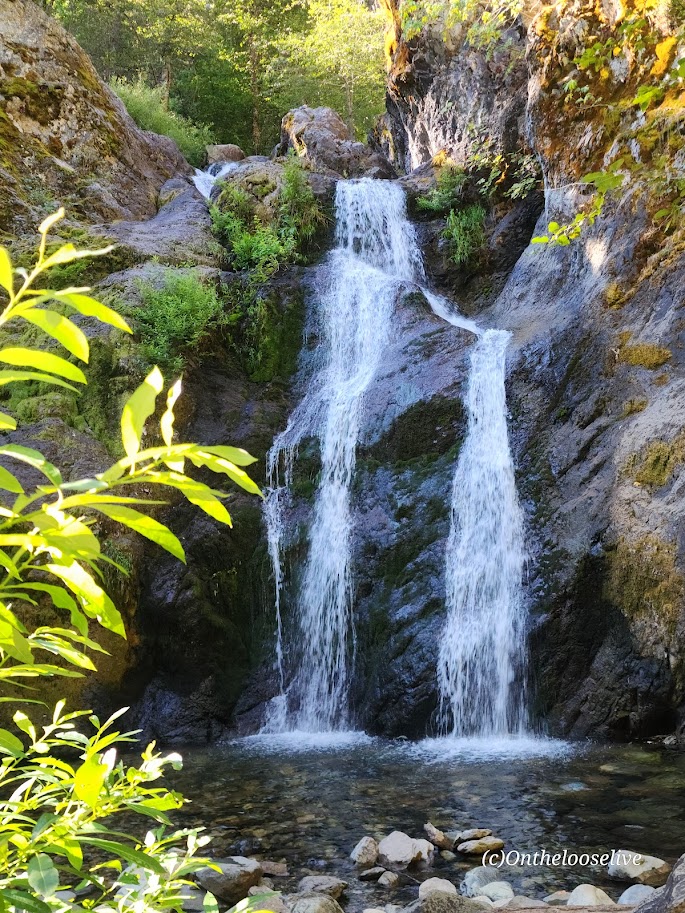
Sometimes enchantment is just a short stroll away, as is the case with Faery Falls. Nestled in the Shasta-Trinity National Forest, Faery Falls is an easily accessible, enchanting waterfall that drops about 50 feet into a small pool. The short, easy hike on a dirt road above Ney Springs Creek passes a few stone remnants of the fountain from the old Ney Springs Resort. Watch for the single-track drop-in trail to the waterfall on the left at .8 mile. Some have described this final section as difficult – in adverse conditions such as mud, snow, or ice, it could be. In dry conditions with appropriate shoes, it’s no problem.
The falls area is small and enclosed by rocks and trees. It can become crowded quickly. Especially important to go early on a weekday if you want your best chance of solitude. Luckily, I was there early and had it to myself.
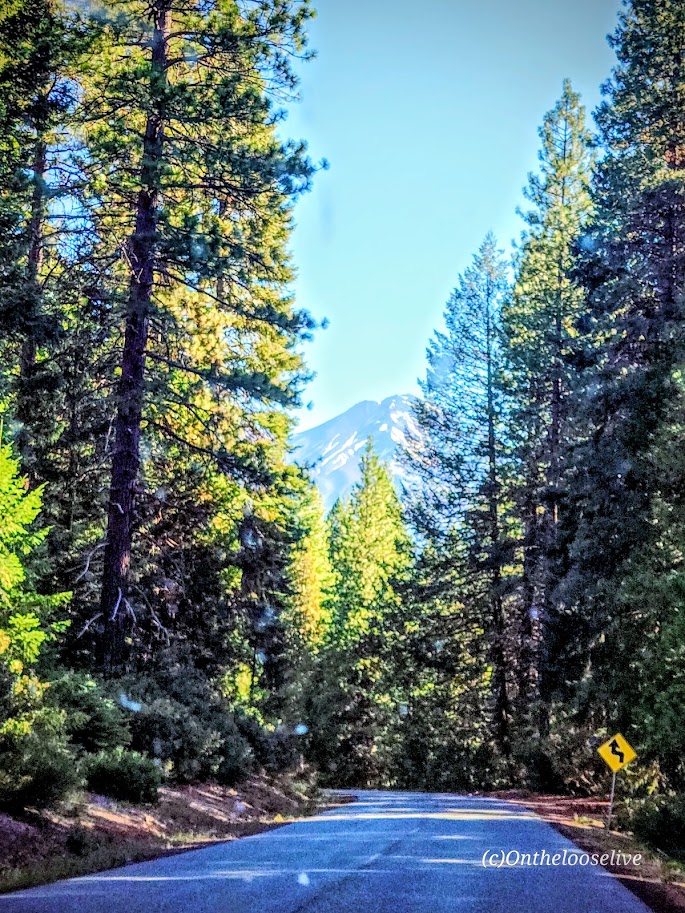
Views of Mt. Shasta on the way to the trail. Not sure what the rooster was doing there. Perhaps a pet from the VW double bus?
Notes: The Faery Falls “Trail” is the dirt road to the right of the large parking lot. Parking is free! This hike is easy to combine with the Castle Lake Trail to Heart Lake and beyond. (Post to come!)
Trailhead address: Ney Springs Road, Mount Shasta, CA 96067 Trailhead coordinates: 41.265953, -122.32439 (41° 15′ 57.43″N 122° 19′ 27.80″W)
Pro tip: Stop at Theory Coffee in Mt. Shasta City on the way in or out. They served me the BEST post-hike brioche breakfast sandwich I’ve ever had! It’s a bakery too, with incredible delights on display. (Didn’t get a shot of them as I was too busy drooling!)
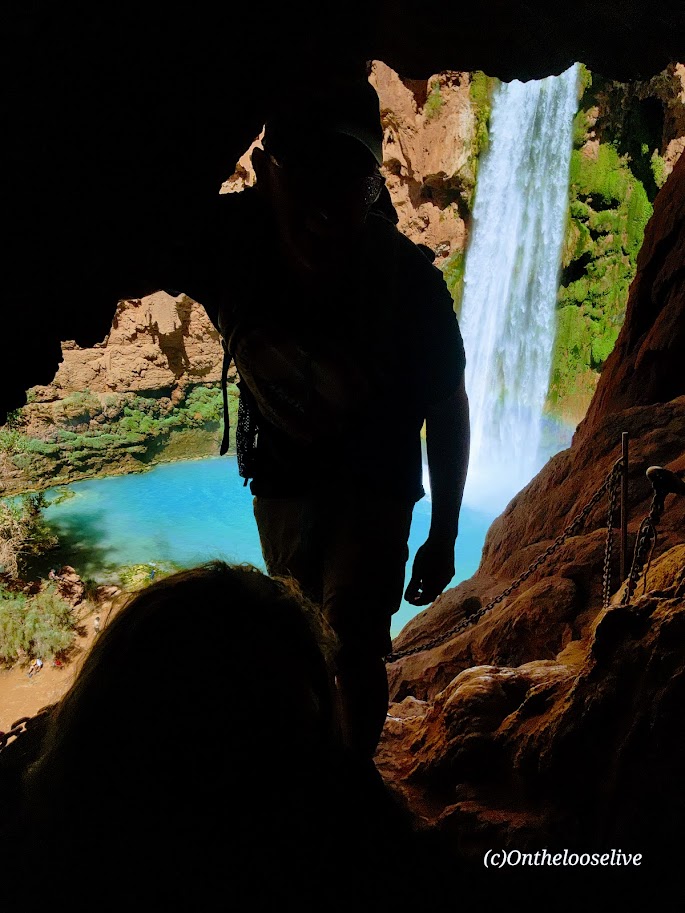
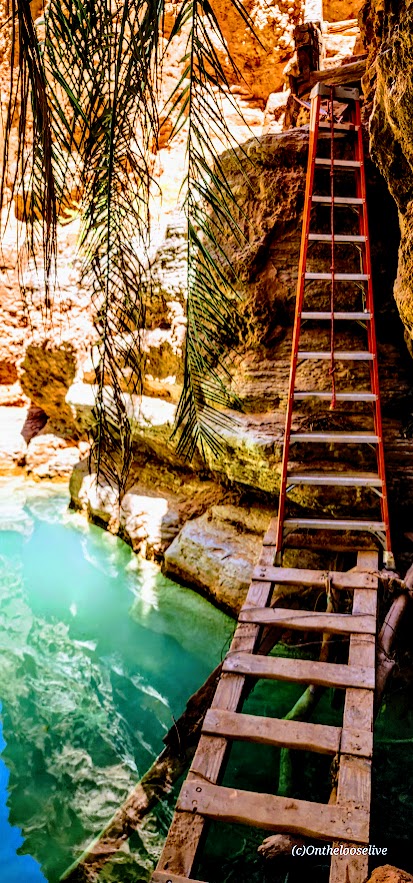
The descent to Mooney Falls requires ducking through a narrow, low sandstone tunnel carved into the cliffside, followed by cautious navigation down eroded and slippery sandstone “footholds” to the ladder far below. While there are chains bolted into the rock for handholds in the most exposed sections, even with them, it feels a bit sketchy. The new wood ladder was slick with mud and mist, and its rungs were spaced wider than a comfortable leg stretch for me. With 6 years of rugged hiking, scrambling, and the occasional canyoneering adventure in Utah under my belt, you’d think I’d have less trepidation navigating this than I did in my younger years. But still, it gave me moments of pause. (On the way back up, I saw a toddler and a young boy scramble ahead of their parents up the cliffside. Yikes!)
The power of the waterfall and the amount of mist the rushing water created were tremendous! The sunlight through the mist caused a magical effect in my photo on the right.
Beaver Falls
~3 Miles from Mooney Falls
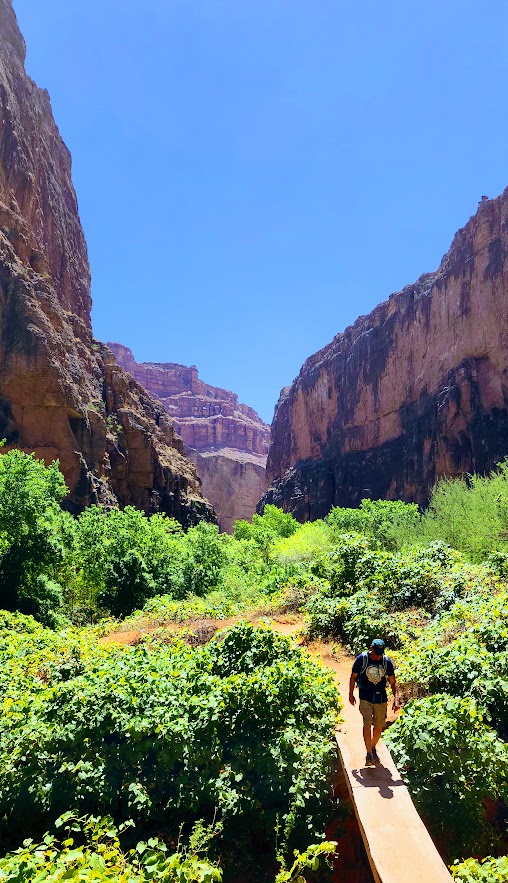
I’d never ventured beyond Mooney Falls before—there was never enough time. So I was especially grateful for the chance to explore further on this trip. The 3-mile hike from Mooney Falls to Beaver Falls is both enchanting and engaging, winding through a lush corridor of vines and trees along the turquoise creek. It feels like stepping into a jungle, with hidden oases revealing themselves around every bend.
After a few refreshing creek crossings, the trail leads you through a striking sandstone archway to a short make-shift mini-bridge water crossing, followed by a ladder cliff climb. Thankfully, the footing here was drier and more stable than the slippery ladder at Mooney Falls.
Beaver Falls was truly stunning—cascading tiers of turquoise water —but it was also crowded. I hardly took any photos. A brief moment of uninterrupted zen there below.
Thankfully, there were plenty of quieter “private” oases along the way, perfect for a peaceful dip or simply taking a moment to soak it all in. Beaver Falls is absolutely worth it, and the hike to it is fun—just be sure to get an early start if you’d like to experience it in solitude.
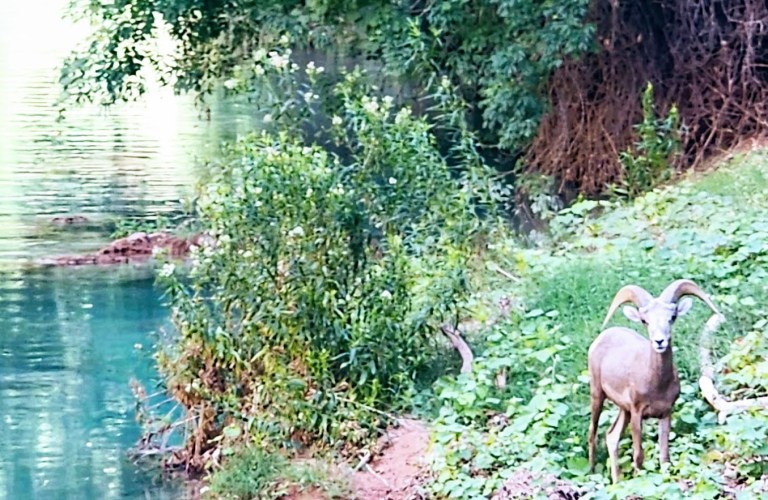
On the hike back, it was nearing critter hour. Much to my surprise, a bighorn sheep was just off the trail, seemingly scouting out a peaceful spot by the water to settle in for a nap. I had no idea that there were big horn down here!
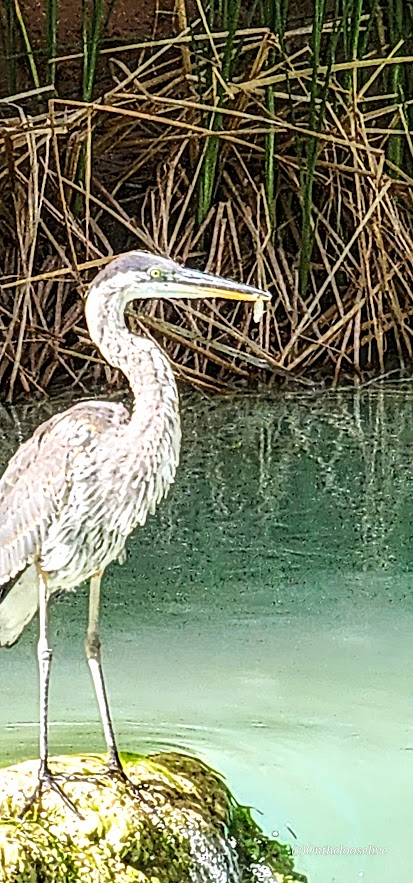
Closer to the campgrounds, I spotted a blue heron, focused, mid-hunt—clearly having some luck with its evening catch. Pics are a bit blurry due to distance.
Leaving Eden
We started our return hike from the village just after dawn, hoping to beat the heat. Fortunately, most of the trail remained shaded until the final climb out of the canyon, which is fully exposed. Fortunately, there are a few rocky overhangs along the way—perfect spots to catch your breath and escape the unforgiving sun for a moment.
This adventure was nothing short of epic. I felt a pang of sadness as it came to an end, but also immense gratitude for the chance to return (thanks to my friend Bernie for securing the permits) and the opportunity to explore more than I ever had before. Among all my adventures near and far, the exquisite beauty and spiritual essence of Havasupai will forever hold a special place in my heart. I’ve never experienced anything quite like it. It remains one of my all-time favorites.
After a solid night’s sleep and another heavenly breakfast buffet, we hit the road for biking day 3 with Top Bike Tours Portugal.
We rolled through peaceful countryside and farmland on a mix of paved roads and dusty trails.
After huffing our way up a steep cobblestone hill —legs burning (well, those of us on regular bikes that is), spirits high—we were rewarded with a surprise at the top: a cluster of unlikely expats appearing like a mirage. Apparently, residents of the Safari Lodge Kuanza.
Our next surprise was a private tour of the legendary “Queen of Fado”, Amália Rodrigues’ spectacular cliffside estate. Telmo casually tapped in the code at the remote entrance gate and guided us in. Privileged!
Amália wasn’t just a singer; she was a force of nature. A poet, lyricist, actress, and Portugal’s most iconic voice, she poured raw emotion into every note of Lisbon’s soulful folk music. Her songs of longing and love captivated not just Portugal but the entire world, earning her accolades and honors from every corner of the globe.
Before the grand house took shape in the 1960s, Amália made her home in this cozy “cottage” tucked into the property.
Sign me up! Is there a more splendid setting than this for a B&B? Imagine waking up to the sounds of waves crashing into the shore of the rugged wild beach below, and surveying the last untouched, preserved coastal stretch of the Algarve, Vicentina Coast Natural Park. Oh my! If you’re in the area, I highly recommend that you book a room or at least take a tour.
The estate is hosted by Amalia’s charming cousin and engaging storyteller, Antonio Felipe Gomes, who gives tours and shares highlights and personal anecdotes of Amalia’s life and legacy.
From “Herdade Amalia’s”, we continued our cycling journey along dirt roads with grand views of the coast, whitewashed houses, and verdant countryside.
Our next surprise stop was at Junior Jaques Medronho Distillery, where one of the owners, Alfonso, passionately shared the story behind their journey to honor a cultural pastime and involve the local community in its revival. At the heart of it all is medronho, the fruit of the wild medronho tree.
Smoother than vodka, richer than whiskey with a fruity kick that leaves gin in the dust, it’s a flavor that tells a story. For centuries, locals in this region have handpicked medronho berries, using them in everything from homemade recipes to secret family distillations. Now, thanks to Alfonso and his team, that age-old tradition is being shared with the world, one handpicked berry and one sip at a time.
Of course, the experience couldn’t be considered complete without a tasting—there were a few varieties to sample. We politely sipped the tantalizing, heady spirits—it was 2PM, we’d long since burned off our breakfast buffet, and we still had a couple of miles to ride before lunch.
From the distillery, we rode back down the gravel road, crossed a short bridge, and followed a narrow, surprisingly busy, paved road into the picturesque village of Oxienta, nestled between the sea and the River Seixe.
At this point, we were all a bit overeager for lunch. The hollowness of our bellies had been punctuated by the intensity of the medronho spirits.
Along the road into the village was an amazing, vibrant, dynamic 260-foot mural. The group rode on, but I had to stop to marvel and capture pictures, only fragments, which don’t do justice to the splendor, scale, energy, or impact of this magnificent work of art.
A serene, beautiful native woman framed by hibiscus (mother nature?), and two birds anchors the far left of the mural, blue and red foxes spring into the air over mushrooms on either side of a hybrid fox man holding a rooster, a sea bird feeds her young, and at the other end a white-bearded, wool- capped fisherman amidst colorful fish and birds in flight (didn’t capture that section). See the entire span of the mural and learn about the artist, OZEARV, and his work here and on IG as OzeArv.
Commissioned by the Odeceixe Parish Board, Lisbon-born artist OZEARV, describes his work, “110 Steps to the Sea” on IG as follows: “[…]a reflection on the natural landscape and the socio-cultural fabric of the territory. I intended to celebrate the biodiversity[…]A painting that accompanies the River Seixe in which I tried to convey the feelings inherent to the transition from the past to modernity, reflecting the customs and traditions of the village that marks the border between Alentejo and the Algarve and what I consider to be a meeting place, inclusion and respect for nature. [Also, from the first to the last step, this is a mural that reflects on the journey of life, even if you are a human or any other animal, it’s part of life to take that walk from birth till death.
I would humbly ask the Odeceixe Parish Board to consider creating a walking and cycling path across from the mural so you can appreciate the artwork at your own pace without concern for traffic. After hastily snapping my pics of the mural, I joined the others for lunch in the delightful village square.
I devoured a fresh poke bowl.
After lunch, came a bit of unintended excitement.
We kicked off the final stretch of the day toward our overnight stop in Aljezur—riding along a fast, smooth, scenic section that hugged the river and ended with a punchy little climb that came out of nowhere. The group was riding faster than they had yet. (Yes, all but 3 of us were on ebikes, but despite being on ebikes, their pace had been surprisingly slow previously. You’ll understand why this is relevant in a moment.)
Just as we were gearing up for that ascent, I noticed something strange: no sign of Bradley. Usually, at the front of the pack with his clip-in bike shoes and steady pace, he was MIA. I turned around and sprinted back, calling out and checking with everyone I passed. Even our trusty volunteer “sweeper” gave me a clueless “nope” (though I’m pretty sure he mentally handed in his sweeper duties right then and there). Where’s Bradley?
So, off I went again—sprinting back up now to catch our fearless leader, Telmo, who was already powering up that hill. I shouted, but the wind swallowed the sound. It took some serious effort, but I finally caught up with him, and between gasps for air, I explained the situation. Cool and collected as ever, Telmo gathered the group in a scenic pullout to wait, then turned back and took off like a hero on a rescue mission.
With no cell service, it felt a bit hectic for a minute… until, moments later, who rolls up in the van with Pedro but Bradley, grinning sheepishly. Turns out he was head down strapping on his bike shoes when we disappeared into the cobblestone mini maze, all of us assuming he was right behind us. Luckily, he saw Pedro, our ever-reliable driver, and the van just around the corner. In the end, Telmo and I got some bonus cardio, and Bradley has a story to tell about that time he was “almost stranded” on a bike tour in Portugal.
After that hill I mentioned, the scenic, winding road continued to climb steadily for a few miles. Then suddenly, we were flying, soaring downhill for miles on a world-class descent straight into Aljezur. I do believe it was the longest downhill I’ve ever ridden. So smooth and fast that you forget every uphill pedal stroke that came before it. (Would certainly make for an “interesting” ascent.)
Whoohoo, what a day! We had just enough time to check in, freshen up, and swap out our bike outfits for something civilian. As the sun dipped low, we wandered over to the restaurant.
The restaurant was quite unassuming from the outside. Our host greeted us with a knowing smile and led us through a discreet side entrance. We ducked under the low stone arch entrance and stepped down into a hidden underground cavern with a private dining area for our group—it felt like we were guests in a medieval castle. Yet another unexpected and enchanting twist to end the day.
While the details of this meal are a bit fuzzy (we were all a bit wiped out from our full day at that point), I do recall the stroll back to the hotel in the magical moonlight.
Speaking of castles, little did we know then that the next morning’s first stop after a brutally steep cobblestone climb would be the ruins of an old fortress. Stay tuned for Biking Day 4 with Top Bike Tours Portugal.
Happy Adventures on Foot or Wheels! Loving Portugal! Can you tell?
Difficulty: Easy +, depending on your fitness level and altitude acclimation
Elevation: 9,174 – 9,519 FT
Named after the Bloods family, a pioneering family who homesteaded the area (not for what’s circulating in your veins or the lake color), the Bloods Lake trail is a short, pleasant stroll through the woods with a gradual incline on the smooth terrain of a well-groomed trail (trail runnable).
I wanted to make this shortie longer, but there was far too much snow beyond this lake. If you arrive after snow melt or have snowshoes, you can continue on to Lake Lackawaxen, named after its namesake river in Pennsylvania (2.6 miles, 1 way), Clayton Peak (2.7 miles, 1k FT elevation gain, 1 way), and Peak 10420 (2.5 miles, 1 way). Even if you hit them all, you won’t be able to get much mileage here.
This area is part of the Bonanza Flat Conservation Area, which was saved from development in 2017 thanks to a collaborative effort of various organizations and individuals. While that is indeed something to celebrate, they are recouping their costs aggressively, presumably to “manage increasing use, reduce congestion, and protect the area”. This is the most expensive trailhead parking scheme I have EVER encountered. They charge by the hour! It’s $5 per hour on weekdays and $8 per hour on weekends. Apparently, those who are privileged enough to live in the 84060 Park City zip code can apply for a free parking permit.
I paid $16 in advance, hoping I would make it to Clayton Peak and back. Deep snow stopped me at Bloods Lake, so I finished my hike within an hour with no recourse for a refund. Was it worth $8, yes – $16, no. As you can tell, I find this fee system utterly obnoxious. Though the silver lining is that it does motivate you to keep a fast pace, which I like- lol.
Getting there: The trailhead is one of several hiking trails along the super scenic Guardsman Pass.
Notes: Parking fills early on the weekends! Exorbitant hourly parking fees ($5 per hour on weekdays and $8 per hour on weekends)!