Magnificent Mammoth Lakes’ Duck Lake Trail, John Muir Wilderness

If you like pristine wilderness and glimmering, translucent alpine lakes, you’ll love this hike in the Eastern Sierras near Mammoth Lakes, CA. You’ll be rewarded every couple miles of effort with one of the 6 refreshing gems along the route.  (If you’re into trout fishing, you’ll definitely want to bring your pole. They say the higher you go, the bigger the trout.)


This slideshow requires JavaScript.

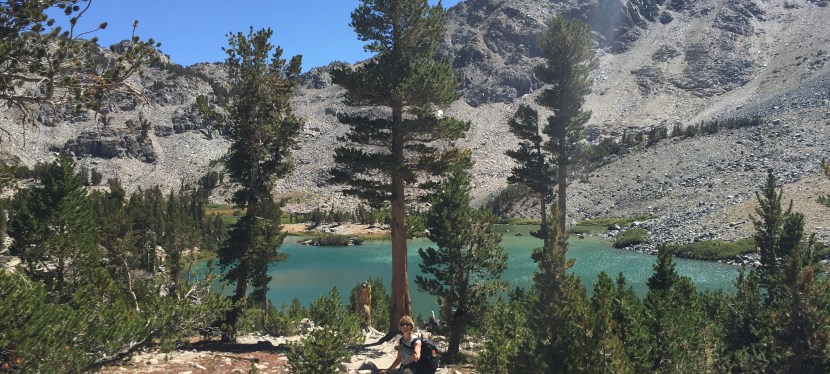
You’ll come upon the first lake, Heart Lake, at mile 1. While you might feel a little silly stopping so soon after embarking, you won’t want to miss this little gem. And given the altitude and incline, you find that you’d like to enjoy the view for a minute or two. Arrowhead Lake is next at mile 1.2 (9,680 ft) followed by Skeleton Lake and Barney Lake (10,022 ft) at 2.5. Once you tear yourself away from Barney, you’ll hit some switchbacks. Spectacular Duck Lake (10,850 ft) will reveal herself to you around mile 4. While you’re there you can visit her adjacent,charming  little sister, Pika Lake. If you continue on, the pines close in on the narrow trail as you continue climbing, descending, climbing  and traversing to Purple Lake (8 miles). (You can camp anywhere along the way as long as you are at least a 100 feet from lakes or streams.) We camped above Purple Lake, which was a bit anti-climatic after Duck Lake. Purple Lake has its own more subtle, woodsy allure, but the outstanding beauty of Duck Lake was mesmerizing and where I found my bliss.

For a quick overnighter, I pack some luxuries. For this trip that included the cozy, warm pants and fuzzy top you see in the picture. I also like to forgo a tent and just enjoy the night sky and wilderness. The gloves and the hat were necessities. It gets cold at night at altitude even when temps have been in the high 70s during the day. Despite my suggestion, my boyfriend did not bring a hat or gloves. He said. “It won’t get that cold.” I should have snapped a pic of him with his mummy back zipped all the way up with only the tip of his red nose sticking out. In the morning as our boots crunched along on the ice slicked trail, he conceded, “I guess it did get cold last night.” (Yes, we’re at altitude in the Eastern Sierra’s so even in late August, it can get quite chilly at night or when a storm front comes through.)

This trail is doable for a day hike, trail run or an overnighter. And it connects to the Pacific Crest Trail so there’s ample opportunity to just keep going.  Kind of wish I could have, but I’ll be back.


Scenery: AWESOME

Difficulty: Somewhat strenuous given the altitude and fairly continuous climb

Access:  Via Coldwater  Campground 

Starting  elevation: 8,900 feet

Permit required. Pick it up with your bear canister (if you’re over-nighting with food) at the local Forest Ranger Station.

Iconic N. County Camp P Bike route & a chance encounter with the “Starving Cyclist”

A great iconic North County ride and one of my favs is through Camp Pendleton, a US Marine Corps base, to San Clemente State Beach. Bring your driver’s license as they check IDs at the gates both entering and leaving the base.

It can be a little tricky merging with traffic to get onto the base from the South in Oceanside, but once you’re through that – it smooth cycling with minimal traffic and very few lights or stops signs. The roads are generally in good shape, but the rain storms have beat them up a bit so be alert to debris and bumps. Just one hill and the rest is flat with a couple rollers. (I’ll have to film it for you.)

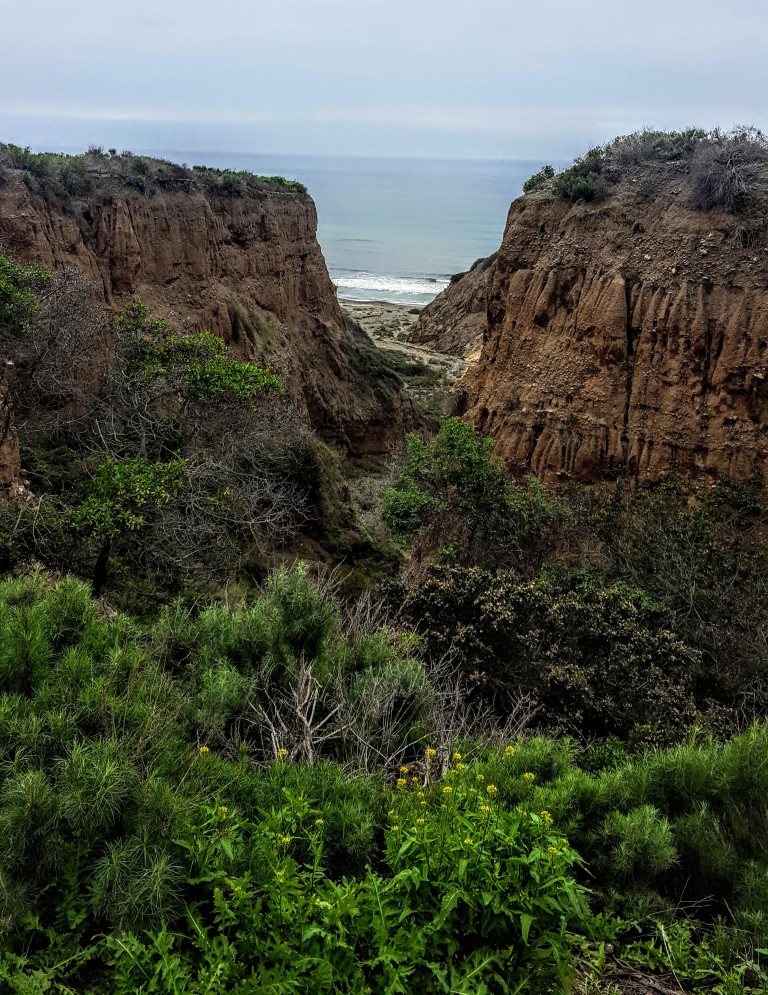
Once you exit the northern gate of Camp Pendleton, / Las Pulgas exit off Interstate 5, you’ll be in the blissful no car zone along the old airstrip and out to the San Onofre bike trail and the beach. Cruise along enjoying fantastic vistas of bluffs, beaches, and the Pacific. In the summer, you do need to be on the watch for campers, kids and surfers running amok. There’s camping, picnic and restrooms available throughout the park.

20170205_122303

Yay, getting back in the road bike saddle. This was my 5th and longest ride post kidney stone surgery (see my Honoring the gift of health post). (Yes, I drank my H2o on the ride.) I cut it about 10 miles short for a total of 46 miles with 2,015 elevation gain/loss. 20170205_122412

Speaking of camping and biking, I ran into the “starving cyclist” , AKA Greg Valenzuela, on my ride. He’s been on the road for nearly 5 years biking around the world on his Cannondale. Greg didn’t want his picture taken so here’s his rig instead.

I asked Greg some questions about his adventures .

How many miles do you ride a day?

Between 40 and 100 depending where I am and where the next stop is.

Where’s the best place to ride in the States?

Washington and Oregon as there are so many cyclists who live there and the scenery is great.

Where have you felt the least safe?

Mexico and Nicaragua are sketchy (understatement).

Did you get any tickets?

4 tickets in New Zealand for not wearing a helmet.

How much does your rig weigh?

Got it down to about 121lbs…

Have you been in any accidents?

Yeah, a couple, but nothing serious.

Any tips?

If you’re riding in hot climates like Thailand, take saunas in the morning if you can. It will help you acclimate to the heat.

Where to next?

Dana Point on my way to Redondo Beach and then off to Morocco.

Who inspires you?

Check out the inspiration page on my blog.

And who inspires your inspirator? (Some really great sites & videos here!)

http://www.bikewanderer.com/inspiration-1/

Happy adventuring!

Worth it: Grizzly & Wolf Discovery Center, West Yellowstone, MT

Just a block from the West entrance of Yellowstone National Park, the Grizzly & Wolf Discovery Center is worth a stop. And you might find you’ll want to stay a while and even come back the next day. And that’s okay because the  admission fee (just $13 for adults, $8 for kids 5 years and up) is good for 2 consecutive days.

The not-for-profit wildlife center takes in orphaned grizzly bear cubs and adults from as far away as Alaska and as close by as Yellowstone Park. Most adult grizzlies are those that have become habituated to human food due to campers and hikers not following proper food storage requirements. At the outdoor exhibit, you can watch the beautiful, massive beasts foraging under rocks and logs for the fruit treats that the caretaker hides for them.  In order to rescue more bears and provide habitat variety for the existing bears, the center will be creating a new exhibit called bear meadows that will feature mini river rapids and a trout-stocked pond. Note, because they are fed all year round, the bears don’t hibernate so you can see them all year round.  And any day you want because the center is open every day.

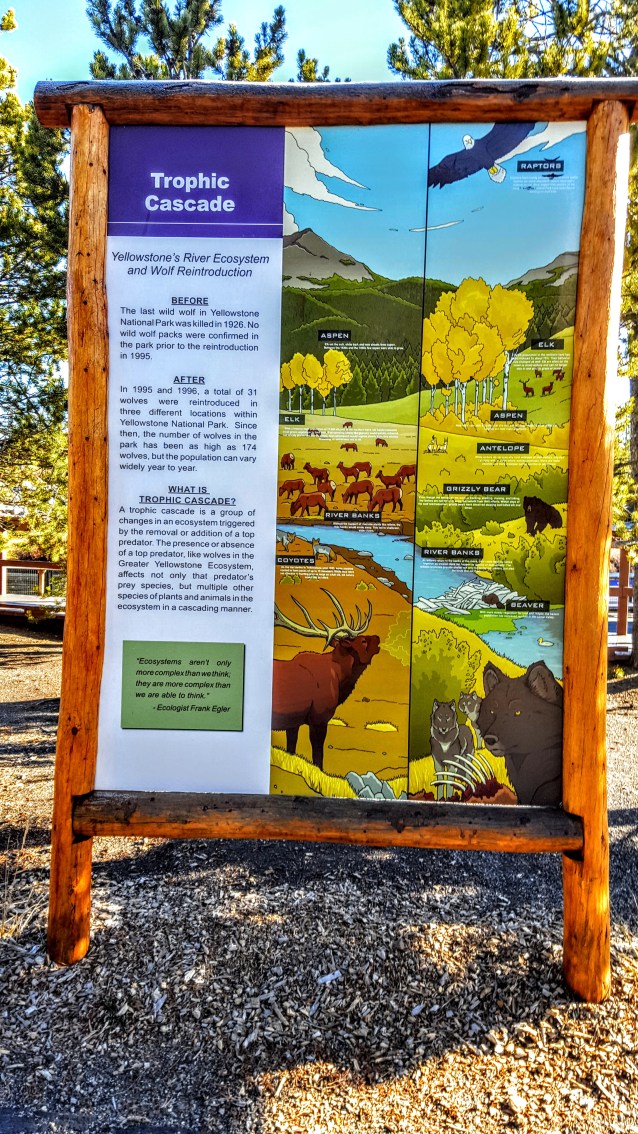
The outdoor wolf exhibit and information about the trophic cascade was well done too.

20161105_104304

There’s also an extensive, interactive bear exhibit inside and plenty of programs for kids and adults, including:

  • Bear-Resistant Product Testing (I would have liked to see that one.)
  • Keeper Kids (Kids get to help the caretakers hide food for the bears.)
  • Yellowstone Park Ranger Talks
  • Live Bird of Prey Presentations (A must! The naturalist delivers an engaging, incredibly informative, hands-on presentation.)

This slideshow requires JavaScript.

In the works is a River Otter Riparian Habitat that will highlight the interrelations of the critters who make up that ecosystem.

Young or old, you won’t leave the center without learning something new about the wild animals and birds of the region and the impact humans have on them and their habitat.

Dry Creek Falls hike, Cascade Locks, OR

Another trail misnomer as Dry Creek Falls are quite wet indeed and a quick, convenient and refreshing excursion.

The trailhead is near the Bridge of the Gods in Cascade Locks, a city in Hood River County, Oregon. Cross the road and head for the signed Pacific Crest Winter Trailhead. When you reach Moody Street (~.1 mi), go under the freeway and veer right then straight onto the gravel road and left at the trail junction. (A bit anticlimatic to start, but you’ll be disappearing into the trees before long.) The PCT Dry Creek on a wooden bridge. Instead of crossing that bridge take a right and head up toward the falls, which is only .2 miles away. Head back on the trail the same way you came.

Take a leisurely stroll on the friendly trail or get your blood pumping with a quick, out and back trail run. Enjoy the woods, ferns and streams along the way. (Fall colors and wildflowers depending on the season.) If you work up a sweat, look forward to dousing yourself in the 75-foot waterfall that cascades over the colossal wall of columnar basalt. You may want to bring water shoes, the bottom is rocky and difficult to navigate in bare feet.

Below the falls you’ll notice remnants of an old water control structure that once provided water for the city. Dry Creek remains a municipal water source here. If you’re up for something longer, you can also explore the PCT where it crosses Dry Creek on that wooden bridge and then just head back  the same way you came.


This slideshow requires JavaScript.

Distance round trip : 4.4 miles

Difficulty: Easy

Rating: Nice!

Why? Because it makes me feel alive.

I’ve often been asked, “Why climb that mountain, or slog through a grueling hike?” Is it the accomplishment, the vistas, the solitude, the workout, the total immersion in nature? Yes, but more. Doesn’t it get old? No, never.

After a vigorous day hiking the Pioneer Cabin Trail in Big Sky, my partner summed it up when he said, “That was something, I really felt alive.” Later, apparently suffering from fatigue induced amnesia, he asked me if I ever get tired or bored of hiking. I replied, “No, and you know why? It makes me feel alive.” If you’re reading this post, chances are you’re a kindred spirit and you get it. It’s primal, natural and great way to nurture our minds, bodies and spirits. Of course, hiking is not for everyone, luckily the options we have to get physical in the great outdoors are virtually limitless. What’s your favorite pursuit?

What makes you feel alive?