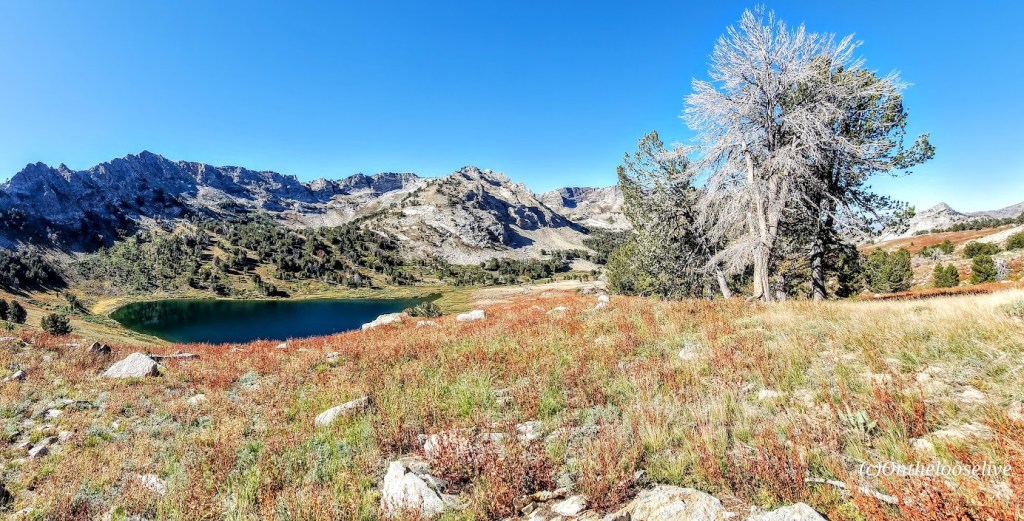
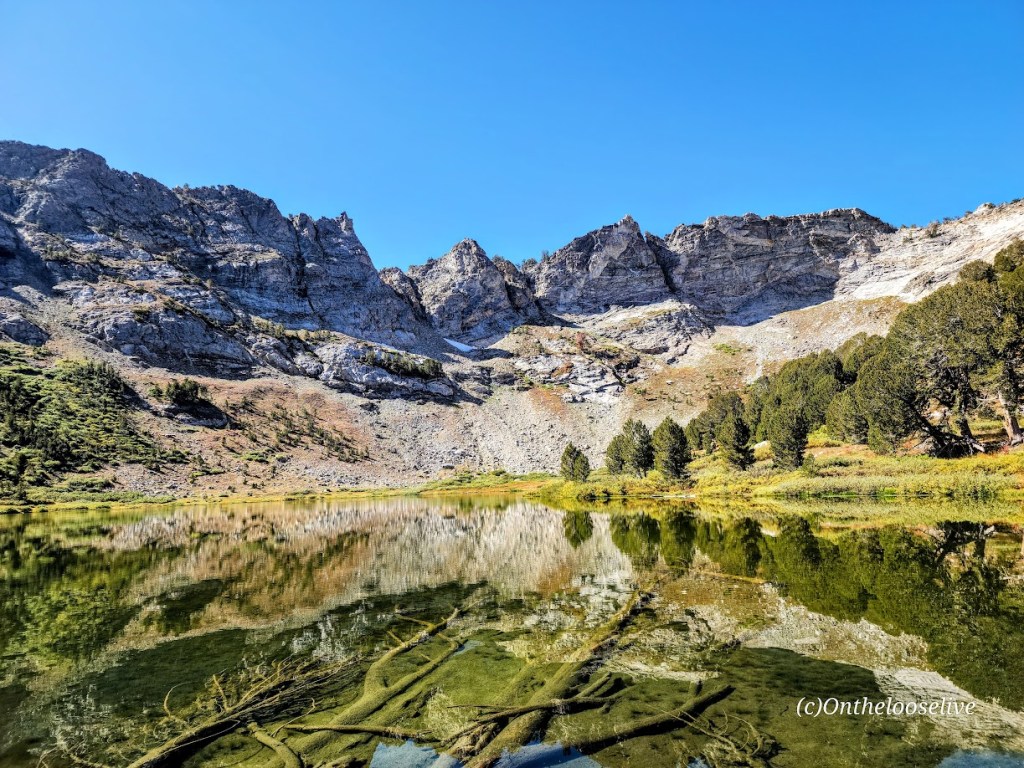
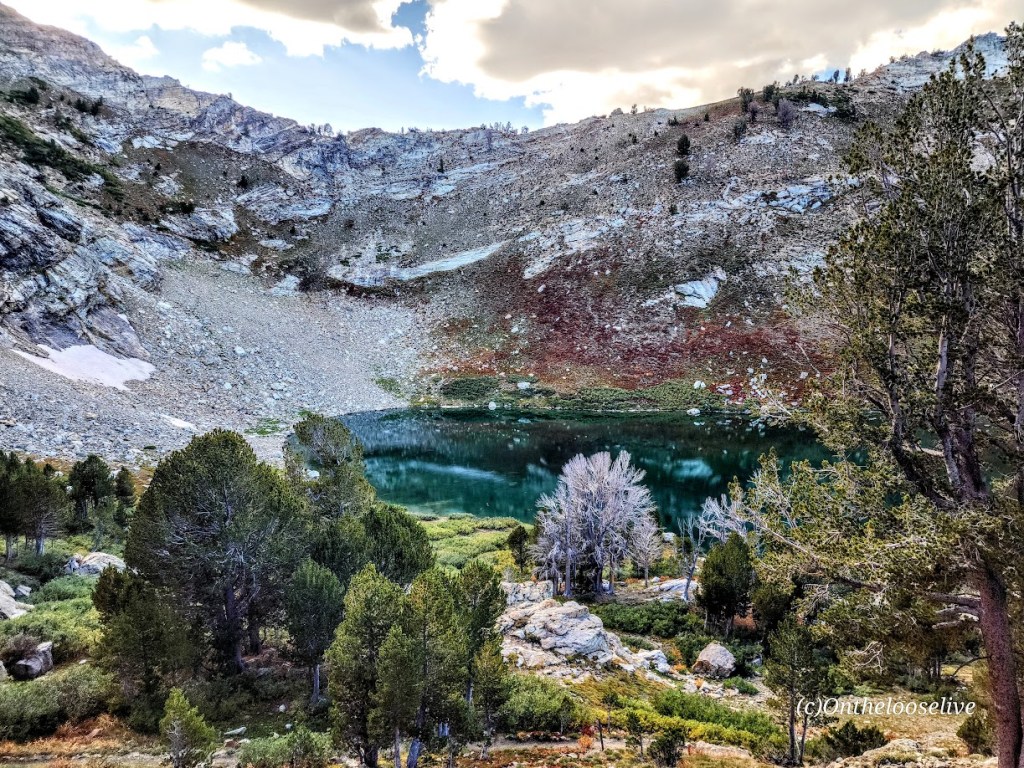
Ruby Mountains, a Sparkling Crowned Jewel in the Humboldt-Toiyabe National Forest, NV

The Eastern Sierras Ruby Mountain range (often compared to the Alps) was named for the gems found there during the gold rush. The name is a misnomer, though, as the dark red gems discovered in these mountains were garnets, not rubies.

While no gold was ever found in the Ruby Mountains, treasures abound—two dozen dazzling alpine lakes and streams lively with Rainbow, Brook, and Lahontan Cutthroat Trout, meadows, and healthy forests. This rich wilderness area is home to one of the largest mule deer herds in Nevada and populations of mountain goats, bighorn sheep, and Himalayan Snowcock. (Oddly, I didn’t see any of them on my overnight backpack.)

The Ruby Mountains’ craggy, glacier-carved peaks rise nearly 5,000 feet above the valley below and are capped by Ruby Dome at 11,387 feet. The elevation on the trails ranges from 7,ooo ft to 11k. Trail length varies from a couple of miles to multi-day thru-hikes—choose your adventure. The main trails are well-marked and maintained, easy to follow, and easy on the feet. Explore for an afternoon or overnight backpack, as I did. If you’re like me, you’ll be dazzled by the glimmering alpine lakes and the sparkling night sky.

I went on an overnight backpacking trip here in September 2023. Yes, I’m way behind in my posts (understatement). I explored half a dozen lakes, including Liberty Lake, Lamoile Lake, Farvre Lake, and Castle Lake. I shall return and will provide more details then. Until then, click here for more info about the Rubies from “Travel Nevada.”
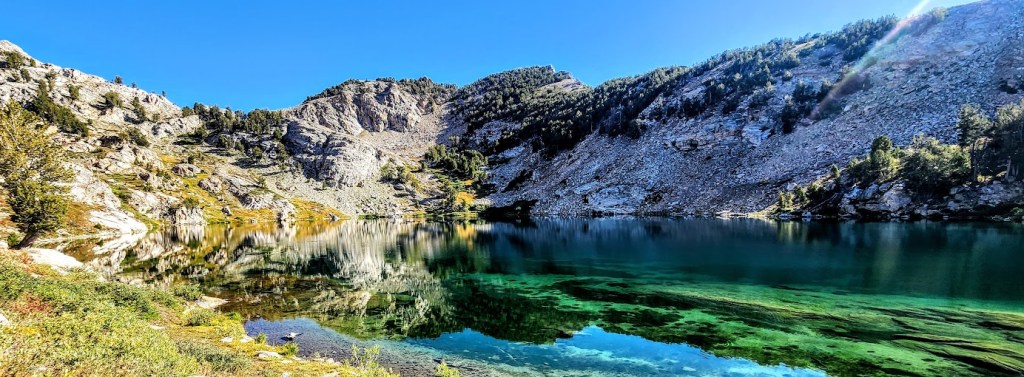
By now, you know that I have a thing for alpine lakes. While I could have lingered for days at any of the gems I visited, I did venture up above the treeline to take in the grand views as well. As you can see, it’s a completely ifferent vibe at a higher elevation – there are ten peaks over 10k feet here, and the highest is Ruby Dome at 11,387 feet

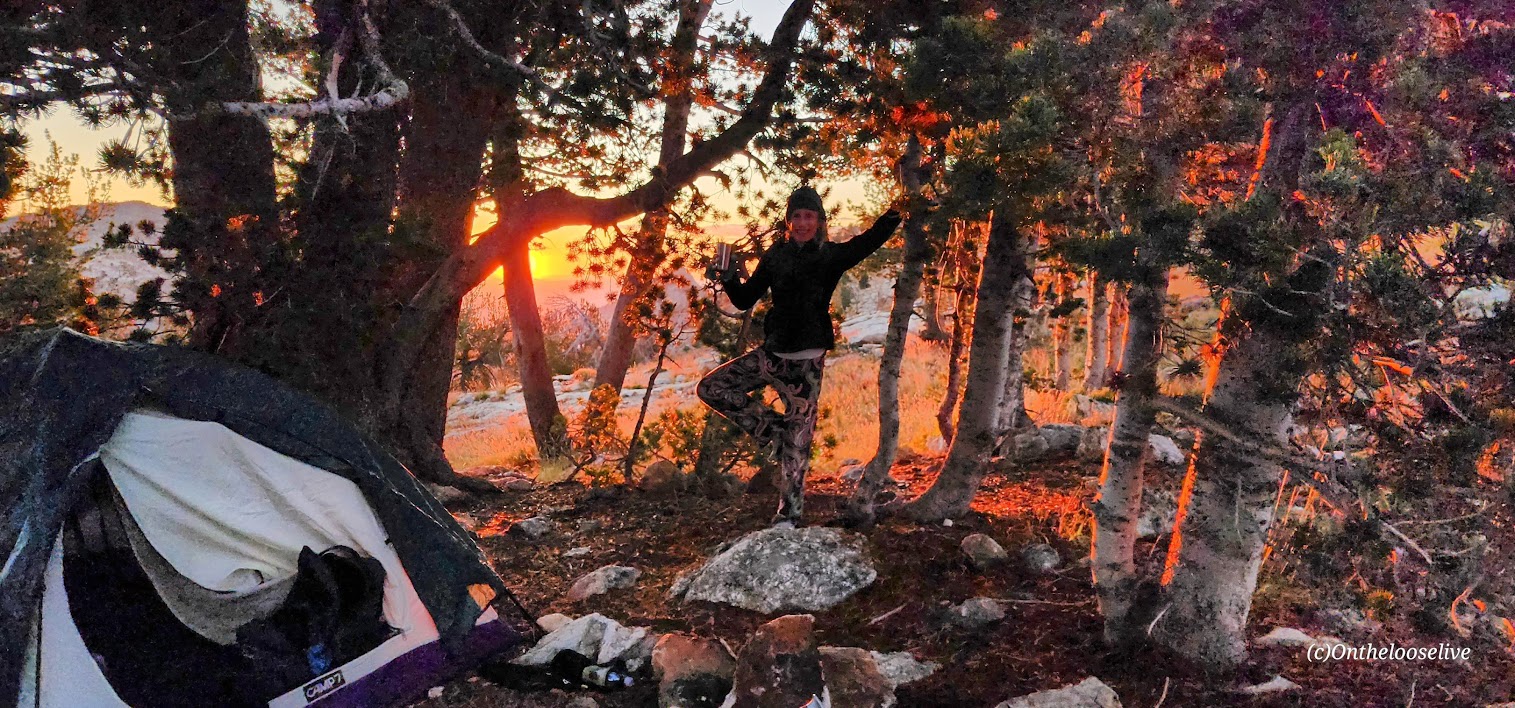
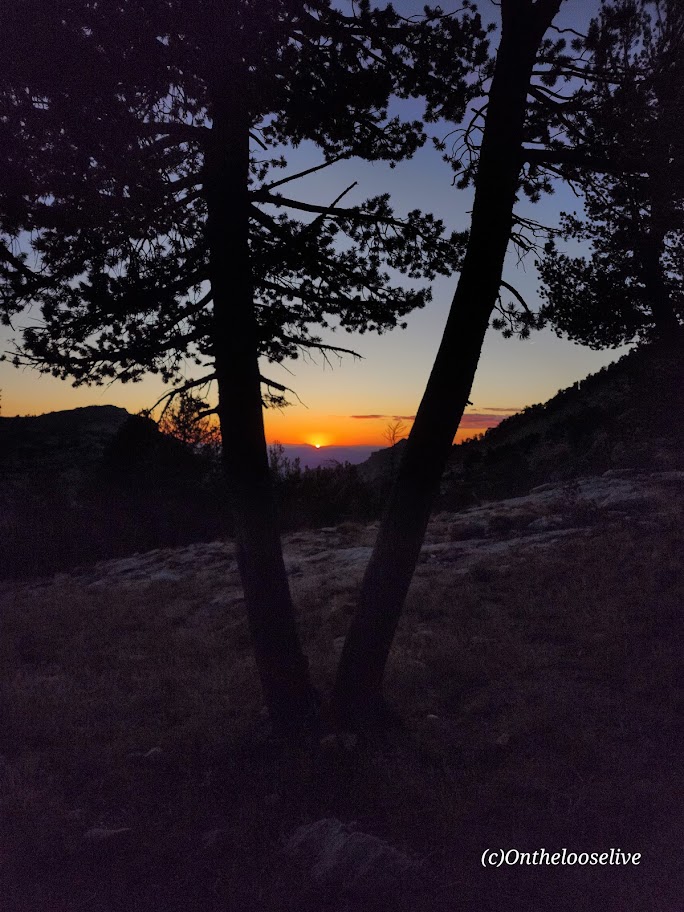
Night skies are wonderful here (Saw a rocket launch and a huge meteor!) And even on a weekend, solitude abounds!
Note of caution: Elko is 21 miles away from the Ruby’s; you’d think a place so close to this spectacular wilderness area would take pride in its gateway status. Sadly, Elko has one of the highest crime rates in America compared to communities of all sizes. (Elko’s population is only 20K!) The chance of becoming a victim of violent or property crime is 1 in 30. YIKES! Making it your adventure base camp, especially if you are a woman traveling solo, is ill-advised. Bring a hiking buddy and head for the mountains. (Common sense—don’t leave any valuables in the car.

Elko history: Elko was settled in 1869 with the development of the Transcontinental Railroad and became a base for gold and silver mining and livestock ranching. Unfortunately, it seems that it’s been downhill since then. There are 6 legal brothels in this small town of 20k, and the seedy element they attract is

Getting there:

From Elko, follow State Route 227 southeast toward the tiny town of Lamoille. Just before entering Lamoille town limits, turn right on the paved 12-mile Lamoille Canyon Scenic Byway and follow it to the parking area at its terminus.

Happy Trails!

(Here I am overloaded with my old heavyweight gear (3 lb surf backpack, 3.5 lb sleeping bag, 7.5 lb tent, 4 liters/8 lbs of water, etc., etc.). My last overnight backpack was years ago on Mt. Whitney. I guess my knees and back could still handle a heavy, poorly distributed load then. This time, the struggle was real. In the picture here, who knows if I’m grimacing or smiling in relief that most of the climbing was done. Since then I have opted for ultralight camping gear, which cuts my load by more than half. Stay tuned for an upcoming gear post.
Getting Wonky on Wheeler Peak—A Sobering Bout of Altitude Sickness

RT: 8.6 miles (started from the campground and added on the Alpine Lake Lake Loop)

Elevation Gain: 3,000ft

Peak Altitude: 13,065 ft

Difficulty: Moderate to Hard, depending on your fitness level and altitude acclimation…

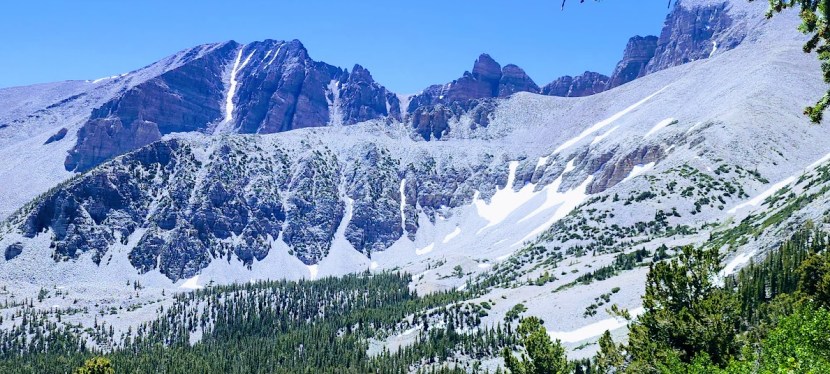
Located in Great Basin National Park (Nevada), Wheeler Peak is a relatively easy peak to bag with a short hike up (<4 miles) and a total elevation gain of 3k. The hike doesn’t get serious (intense) until you hit the 3-mile mark. By then, you’re at about 12,000 ft elevation with another 1,000 ft of climbing packed into the last scrappy scree and talus-filled mile.

At 13,065 ft, Wheeler Peak is the tallest mountain in the Snake Range and the second-highest peak in Nevada. (Boundary Peak is the highest at 13,147 ft.) For perspective, in the first picture above, those tiny linear marks are people on the scree and talus section of the”trail”.

By “I got wonky”, I mean I got altitude sickness. And I don’t mean to downplay the potential seriousness of it. I’ve done higher peaks (Mount Whitney 14, 495 ft) and experienced headaches, but I’ve never experienced altitude-induced “aphasia.”  It happened on the way down after spending over an hour taking in the views from the top. (Apparently, too long for me.)
After descending about a mile, I said something to my hiking partner, and my words came out jumbled. (I knew what I wanted to say, but the wrong words were coming out in random order.) Either I was having a stroke or experiencing altitude sickness. My heart rate was relatively low, 75 bpm, and I’m relatively fit – while that doesn’t rule out a stroke, altitude sickness was more likely. There were no other symptoms, although I stumbled a couple of times towards the top and on the way down, which I attributed to the loose, rocky terrain (talus and scree) and my bad knees.

It didn’t help that we drove from an altitude of 3,000 feet directly to the campground and trailhead, which sits at 10,000 feet and started hiking vigorously immediately. (We made it to the top in 2 hours.) In retrospect, this was probably not the best plan, but I’ve never experienced more than a headache at altitude, so I considered myself relatively impervious. (False; just because you haven’t had altitude sickness doesn’t mean you won’t get it. No one is impervious. Altitude sickness strikes randomly.) I had hiked in the local mountains to 10,000 feet that week without incident.

What to do? The best treatment for altitude sickness is to descend immediately, so I did. It took another 1,000 feet of descending before my ability to speak coherently returned, much to my relief. I count myself lucky, as there have been incidents of high-altitude hikers experiencing aphasia for as long as six months—yikes!

Of note, a thin 20-something-year-old man dressed in a black sweatshirt and sweatpants (overdressed for 70-80-degree temperatures) appeared to be having some difficulty as he approached the last 100 feet of the climb. He seemed out of it, angry/unfriendly, as we gave him the right of way on the single-track trail. As we were hiking out our last mile, a ranger approached us and asked if we’d seen a young man dressed in black as they’d received a distress call about a fellow with altitude sickness…

Flash forward to the following weekend; on my way down from Mount Timpanogos Peak (11,752 feet) a slight teenage girl was curled into a fetal position on the side of the trail, holding her head. Her father and brothers stood around her. They had brought her down as far as they could, but she was incapacitated with severe nausea and a headache. The rescue team was on its way.

Other than my bout of altitude sickness, Mount Wheeler is a “relatively easy” peak to bag though the last steep slippery scree and talus section isn’t much fun if you’re not nimble-footed or if you have knee issues. Both apply to me. I used a pole on the way down to keep myself from taking a spill.

I was back to feeling fine, so we added on a leisurely stroll around the scenic Alpine Lakes Loop Trail for views of Teresa and Stella lakes, both of which looked more alluring than the last time I visited them. Perhaps I just caught the light right this time? If you’re not into bagging peaks, the lake loop is an easy 2.6 mile trail, but the altitude of 10,000 feet can still be a factor.

Altitude Sickness PSA

There are 3 syndromes of altitude sickness: acute mountain sickness (AMS), high-altitude cerebral edema (HACE), and high-altitude pulmonary edema (HAPE)

Acute mountain sickness (AMS)

Symptoms: Headache, Dizziness. Loss of appetite, Nausea, Vomiting, Fatigue / Loss of Energy, Shortness of Breath, Irritability, Dizziness, Muscle Aches, Insomnia

High-altitude cerebral edema (HACE) is a potentially life-threatening form of AMS where the brain swells due to lack of oxygen. Symptoms: Extreme fatigue /Drowsiness, Confusion, Loss of Coordination, Hallucinations

High-altitude pulmonary edema (HAPE) is also a potentially life-threatening form of AMS that impacts the lungs. It can occur in rapid ascents above 8,200 feet when blood vessels narrow due to lack of oxygen, leading to fluid build-up in the lungs. Symptoms: Shortness of breath, Weakness, Cough

Altitude Sickness Facts

  • 75% of people experience mild symptoms of AMS at elevations over 10,000 feet, dependent upon the elevation, the rate of ascent, and individual susceptibility.
  • 14% of people with HAPE will also have HACE
  • Anyone (fit/unfit, old/young, male/female) can get altitude sickness
    • Men are more susceptible
    • Obese individuals are more susceptible
    • Genetics play a role
    • Fast rate of ascent can play a role
  • Your body loses water through respiration at high altitudes twice as fast as it does at sea level

Preventive Measures

  • Hydrate well
  • Carb load
  • Allow at least a day to acclimate to the altitude if possible
  • Take it easy (rate of ascent)
  • Descend at the first sign of altitude sickness

Happy and Safe Trails!

Fresh Perspectives on Valley of Fire State Park, Nevada

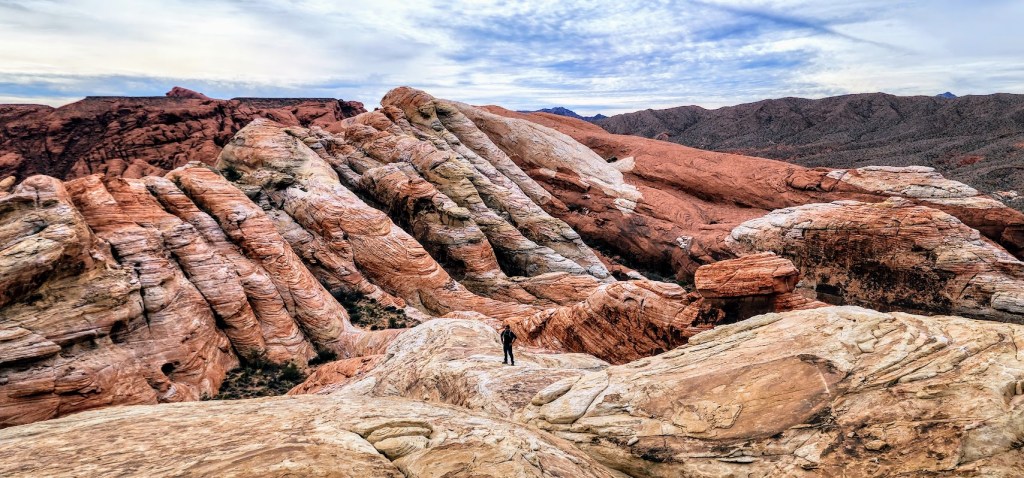
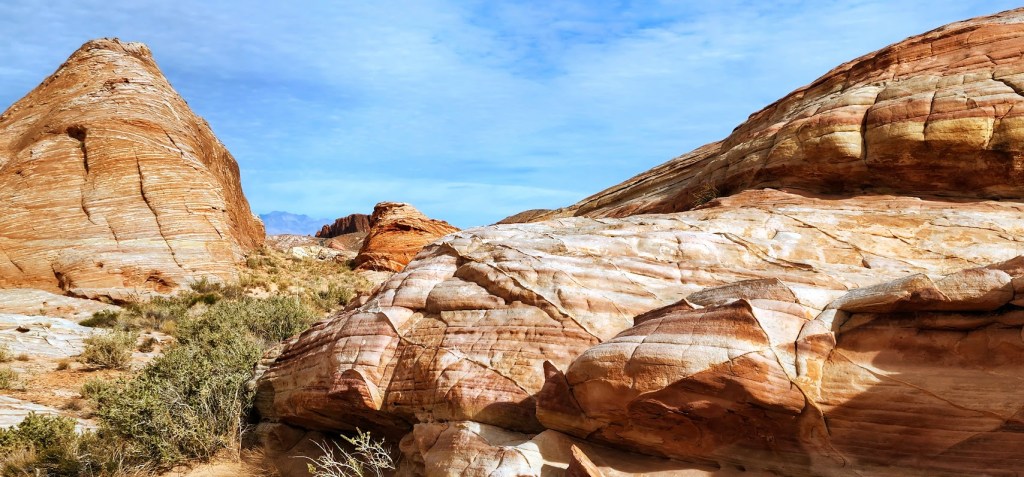
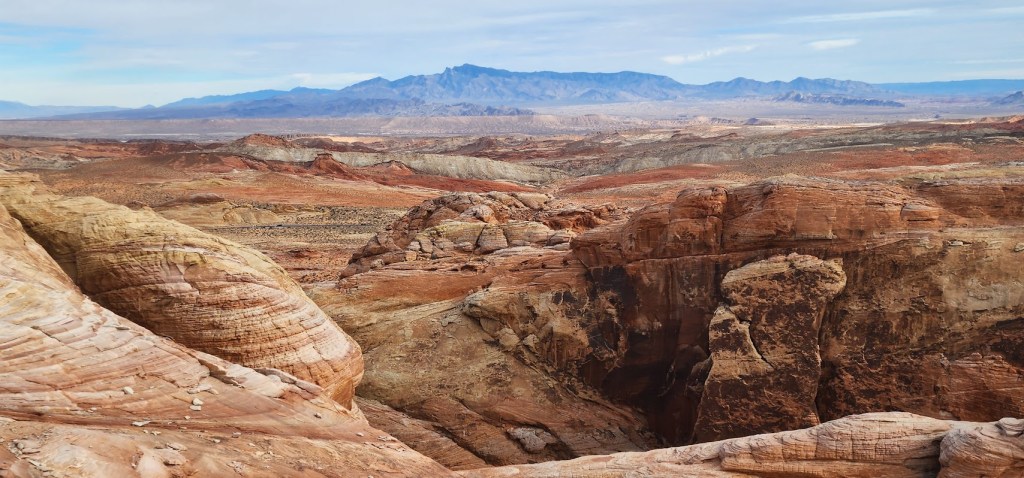
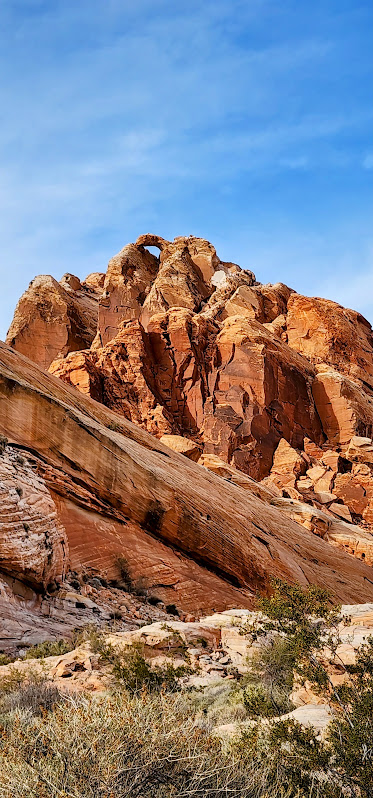
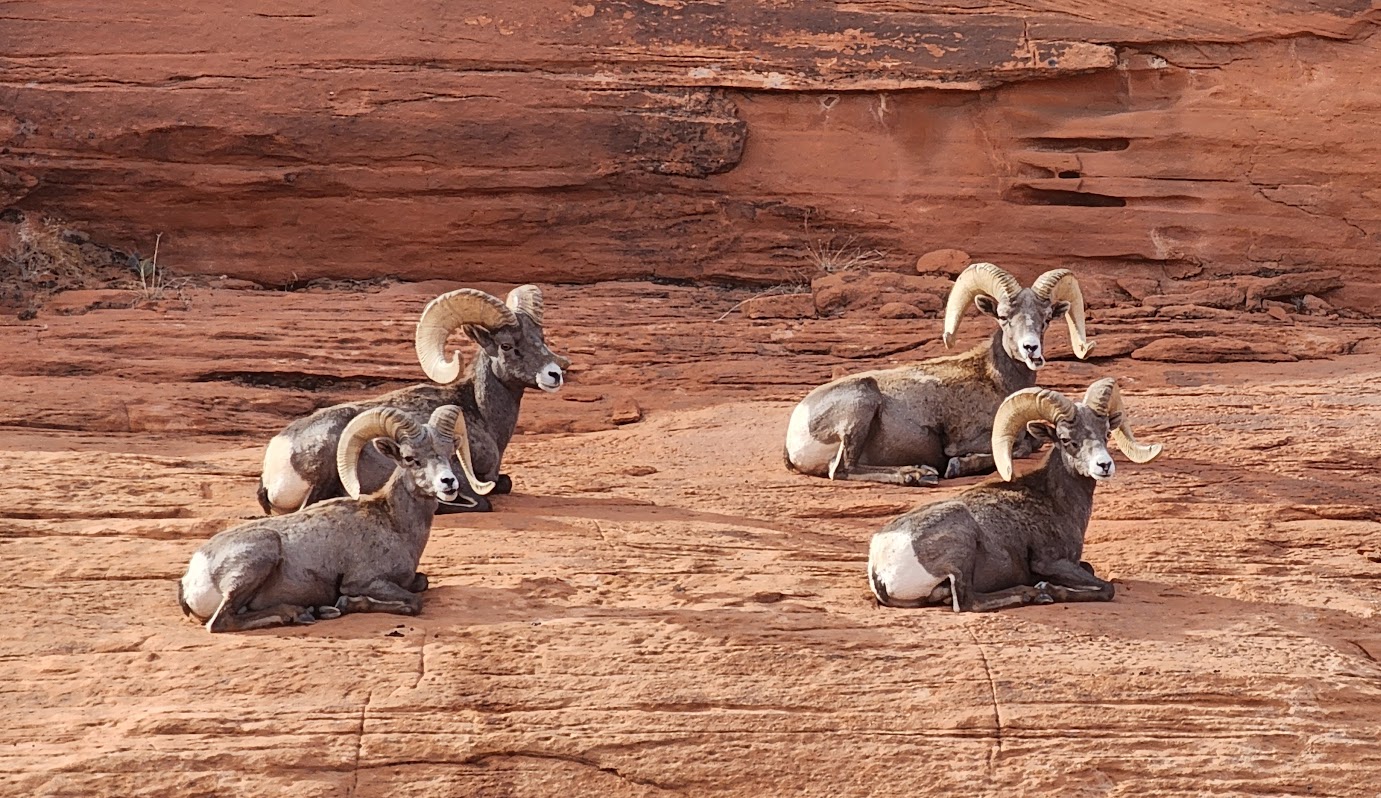
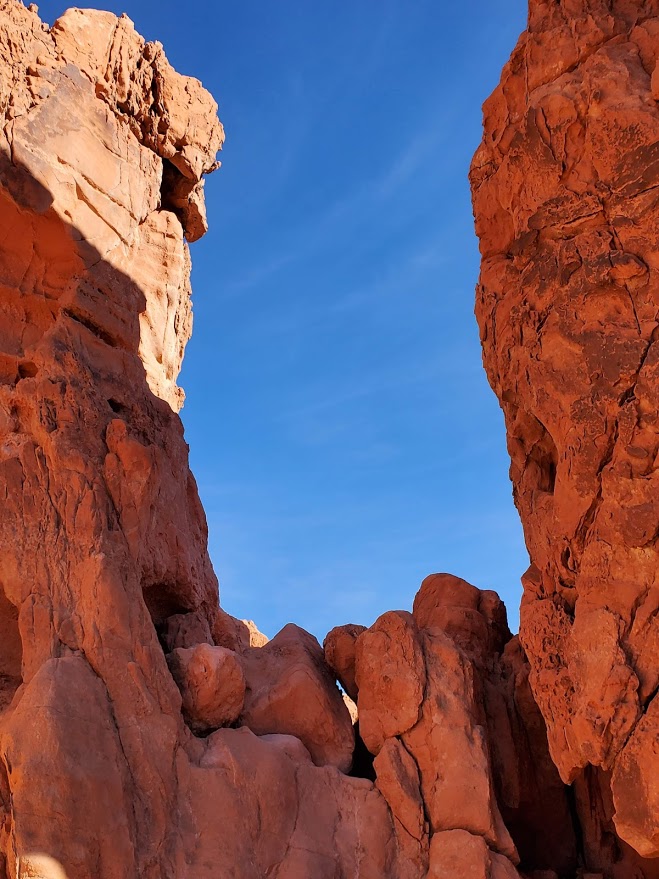
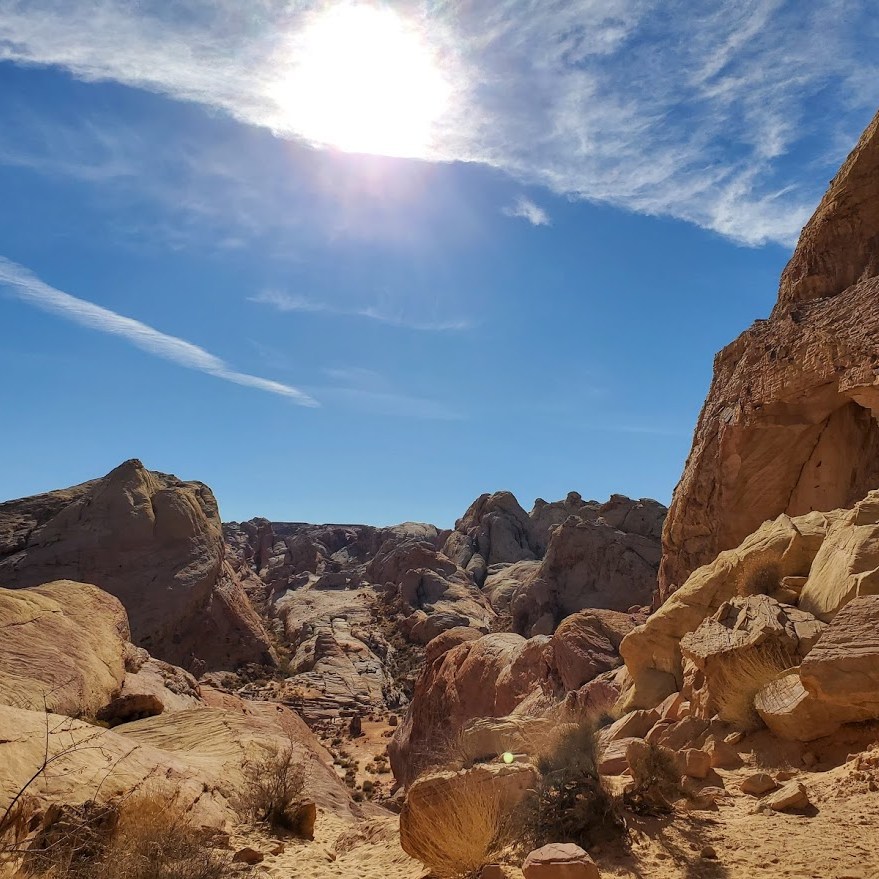
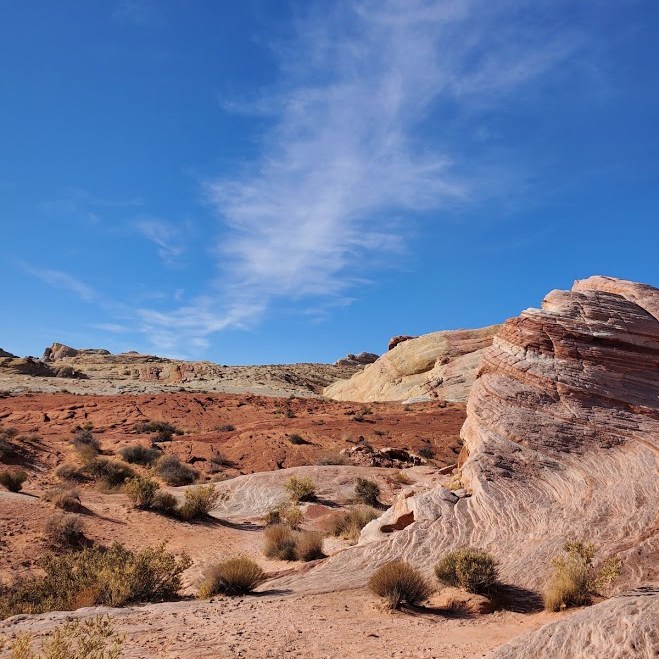
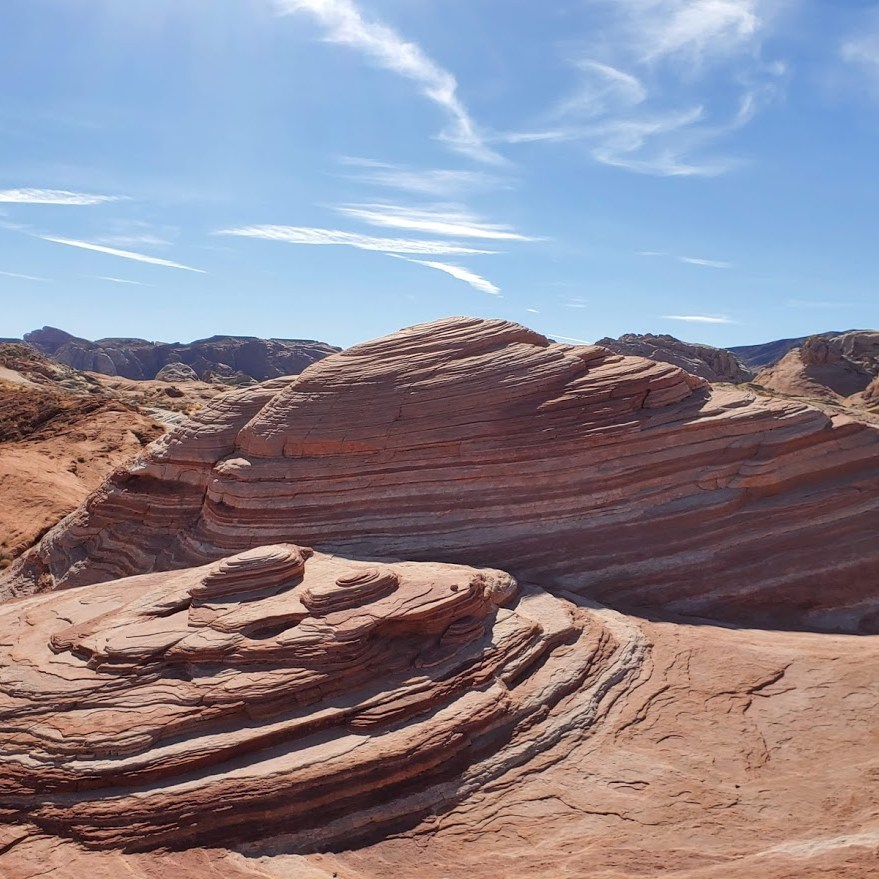
Slick rock explorations yield new perspectives on the park with the added bonus of big horn sheep sightings. My previous VOF post was luke warm. Let’s just say I’m warming up to VOF. I’ll let the pics speak for themselves.

So fortunate to be graced by my spirit animal on this adventure! Note, my camera has amazing zoom power. I kept a respectful distance from them.

Happy Trails!

Caves, Caverns, and Catacombs—Oh My! Cathedral Gorge State Park, Panaca, NV

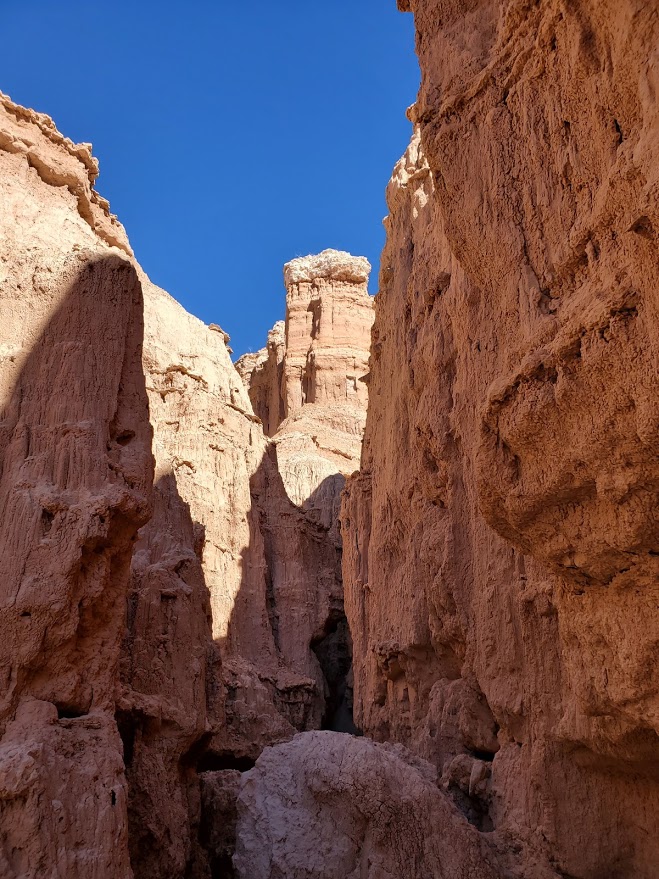
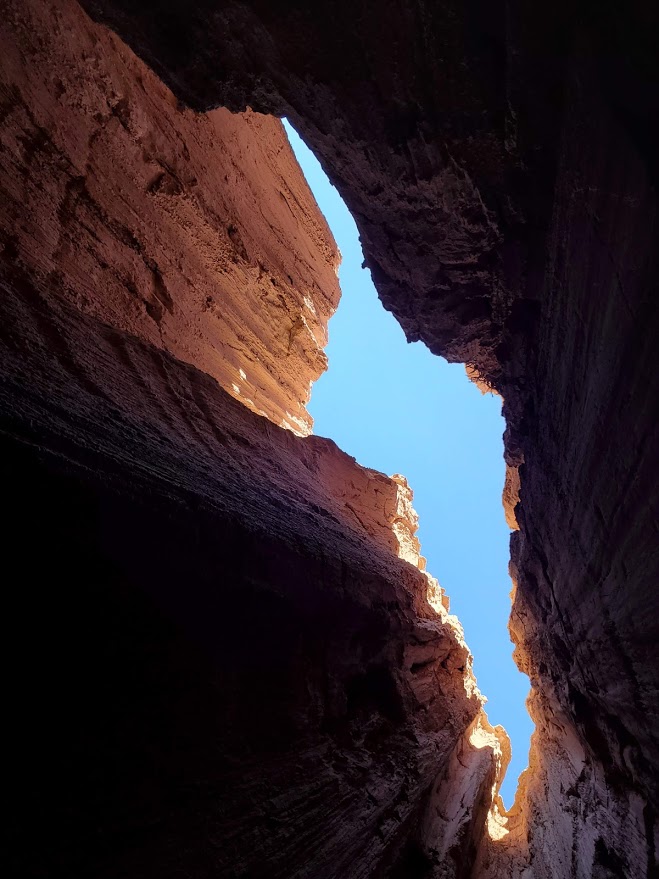
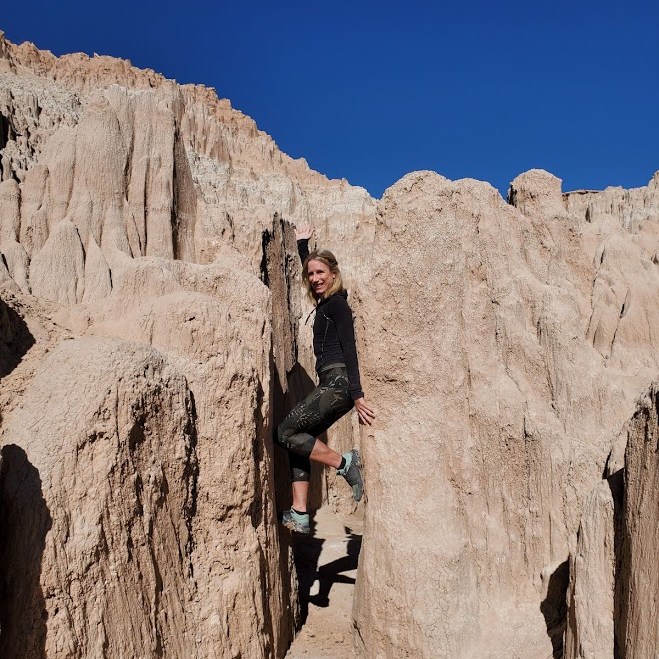
While there’s not much hiking to be done here (a grand total of 5.5 miles if you hit all 5 trails), what you will find is an otherworldly playground of caves, caverns, and catacombs. Between the spires and bluff-colored cliffs, you can follow one slot canyon into the next in aMAZEment.

One of Nevada’s first four state parks, Cathedral Gorge was established in 1935 as a geologic preserve. It features dramatic, other-wordly landscape of eroded soft bentonite clay that covers close to 2k acres. The amazing spires, cliffs, and slot canyons are the result of millions of years of geologic activity sparked by volcanic eruptions that dispersed layers of ash hundreds of feet deep to the region. Faulting formed a valley over time, which eventually filled with water and became a freshwater lake. Over the centuries, this prehistoric lake began to gradually drain, and erosion began to expose and form the ash and pumice.

Enjoy the incredible views from the Miller Point Overlook gazebo (originally constructed by the CCC) and then create your own adventure in the abundant caves, slot canyons, catacombs, and slot canyons. 

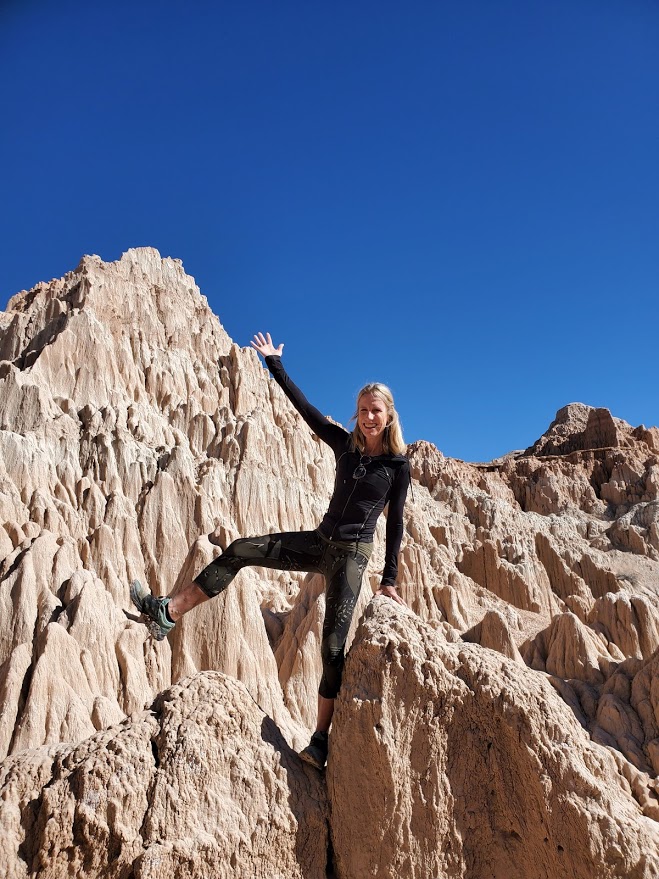
The formations at Cathedral Gorge remind me of the sand castles that my brother and I used to create by squeezing wet sand through our hands and letting the drips accumulate into peaks of various heights and girths. Indeed, the firmness and stability of the formations in Cathedral Gorge vary substantially so you must be alert at all times, taking care that you don’t break through the surface or fall into a chasm. (The trail guide included stats on trail firmness and stability.) Yes, it’s a bit sketchy, but totally cool. Kids would be amazed by this place and entertained for hours. For safety’s sake, I’d suggest that you keep them and pets on a tight leash!

Address: 111 Cathedral Gorge State Park Road, Panaca, NV 89042, a must-do, easy day trip from my base camp, St. George, UT, and about 2.5 hours northeast of Las Vegas on Highway 93,

Notes: $5 day use fee, camp at one of the 22 camp sites for $15 per night (first-come, first served), each with a table, grill and shade. Electrical hookups are available for an additional $10. Water and flushing restrooms with coin-operated showers are open year-round, with handicap-accessible sites available. Pets must be kept on a leash of < six feet.

Hiking Guide:

Happy trails!

Luke Warm on Valley of Fire State Park, Overton, Nevada

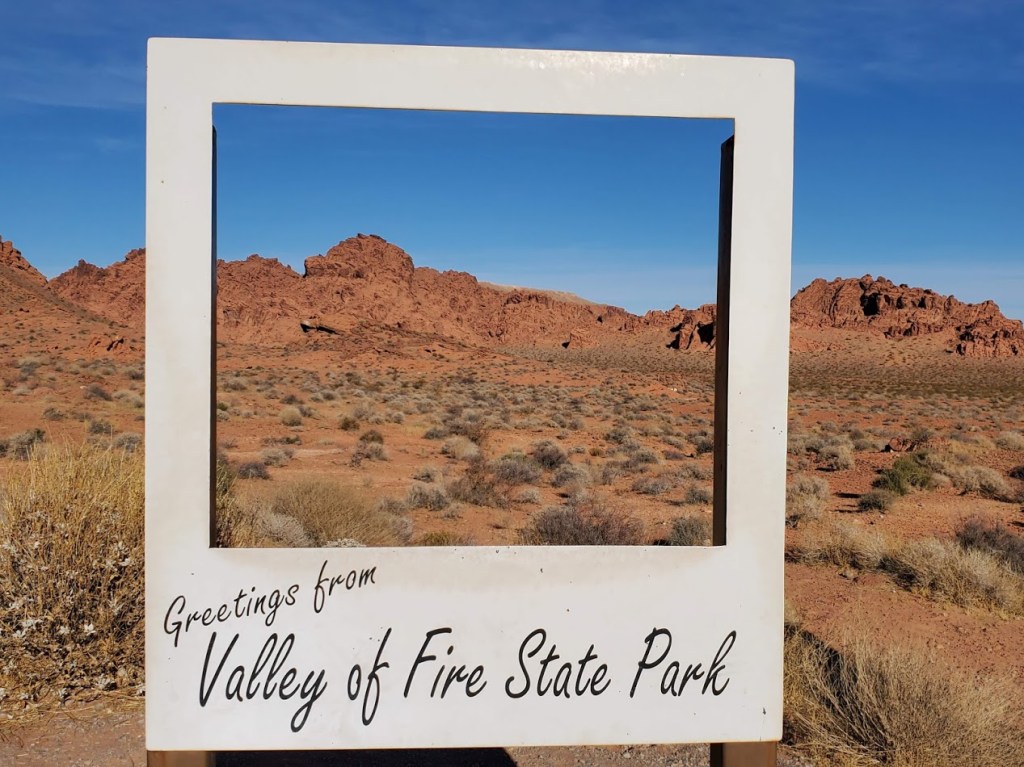
Why luke warm? I’ve seen some spectacular photos of Valley of Fire on social media–sometimes it’s hard for real life to live up to the hype—even in nature. The day I was there the light was not magnificent and the place was overrun with humans. The park’s close proximity to Las Vegas (55 miles) makes it an easy road trip for many (too many). (Granted, I made the rookie mistake of going on a weekend.)  Also, I was disappointed by the hikes—the majority were short—just park and walk a mile or so on heavily stomped paths. Basically, you can see most of the park without much effort, which is great for families and those who can’t or don’t like to walk far.

I covered 7 of the hikes/ attractions in a half day. There were a couple of longer hikes that interested me, but 1 had signs warning about the trail not being marked, and the other 2 were slogs through deep sand. Since I was solo, I opted out of the poorly marked hike, not wanting to become another hiker lost, wandering in the desert…

Elephant Rock Loop (1.25 Miles) At the East Entrance of the park, Elephant Rock can be seen from your car. Like me, you may opt to stretch your legs and take a hike here. (Note half of the hike runs parallel with the road with the road visible so it’s a tad anticlimactic.)

Clark Memorial and [Charlie’s Spring (4.6 Miles RT, Natural Arches Trail] The Clark Memorial commemorates Sargent John J. Clark, a pioneer traveling cross-country who died of dehydration at the spot. There are 2 trailheads for longer hikes on the right side of the road. Both invite you to slog for miles through deep sand in either direction for negligible rewards. (The sign at the beginning of the Arch trail notes that the arch has crumbled and Charlie’s Spring starts with a tunnel under the road and offers a spring at the end…) While I wanted to a longer hike, I wasn’t enticed by the prospect of slogging through deep sand. Perhaps after a rain if the sand firms up instead of muds up?  I went a half mile on through the tunnel into the wash on the Charlie’s Spring hike before I opted out.

Petrified Logs and historic CCC cabins Another roadside stop, this attraction features logs from an ancient forest of 225 million years ago. You can keep driving another ½ mile or so, or hike from the petrified log site to the historic native sandstone cabins built by the Civilian Conservation Corps in 1930s to provide shelter to travelers.

White Domes (1.36 miles) This was the most scenic of the hikes that I did. Several western movies were filmed here. There are arches, cool rock formations, and even a slot canyon to discover here.

Fire Wave (1.74 miles) This rock formation is most likely one of the most popular in the park. Since I’m accustomed to seeing this type of formation where I live, I was underwhelmed by the sight and overwhelmed by the crowd.

Rainbow Vista (1 mile) Single track stroll to a colorful rock overlook.

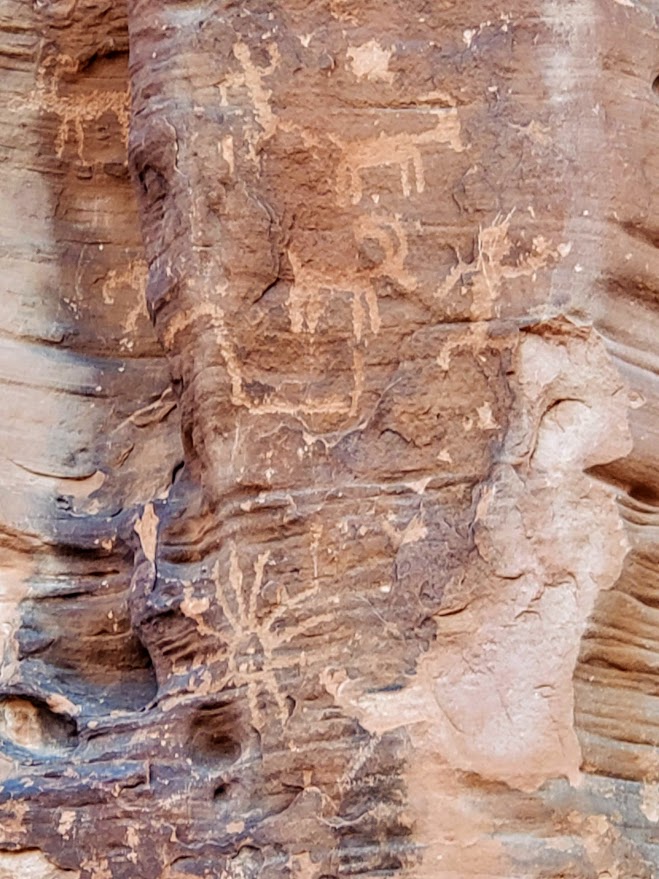
Mouse’s Tank (.78 Mile) This interesting little trail takes you to some of the best petroglyphs I’ve seen.

Don’t get me wrong, there’s plenty of breathtaking sights to see and lots of variety in the half dozen short hikes I mentioned, and more if you venture beyond. I’m just spoilt-rotten because but I happen to live within a couple miles of a similar stunning destination—Snow Canyon State Park, St. George. ( See Scout’s Cave, one of my favorite hikes.) Personally, I won’t go out of my way to return, but if it’s on your way—go for it.