While it was bittersweet to leave lovely Vila Nova de Mil Fontes behind, we were all looking forward to what the new day with Top Bike Tours Portugal would bring.
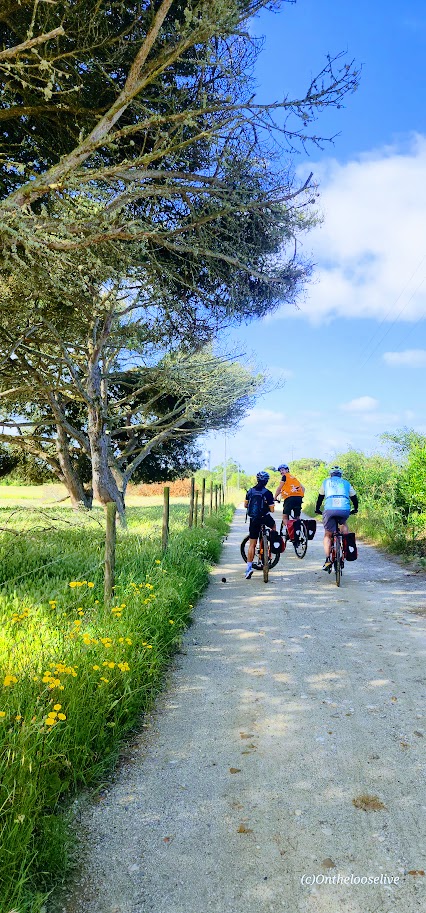
Once again, we followed our trusty guide, Telmo, through a maze of paved and gravel roads.
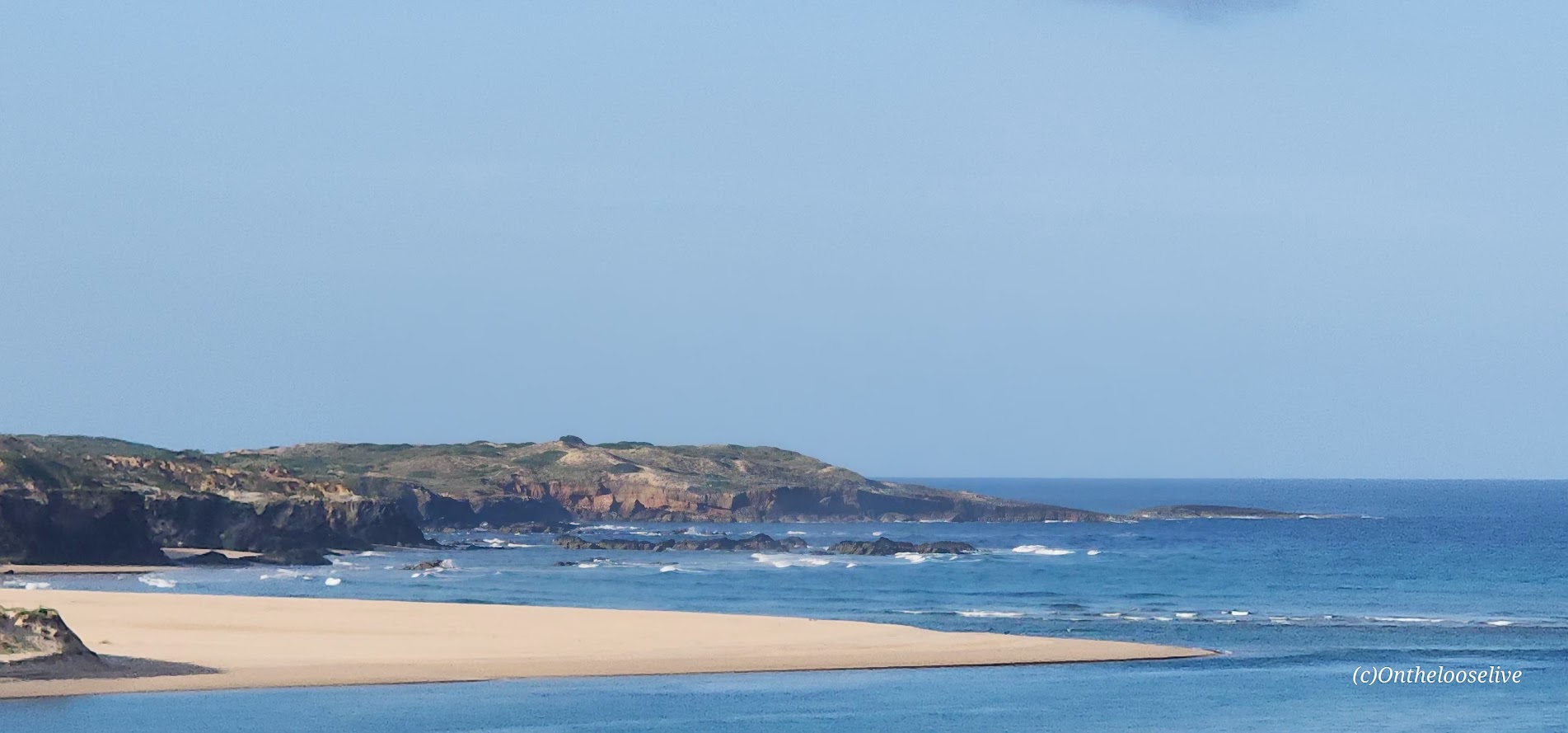
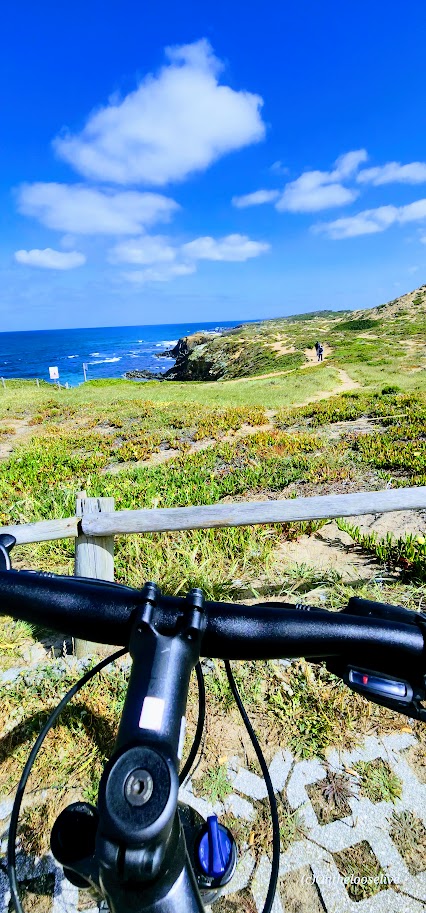
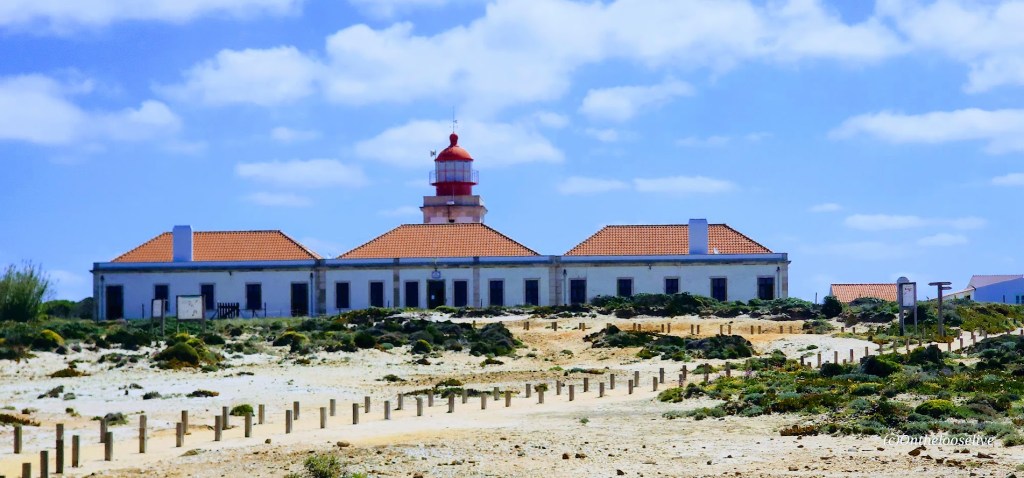
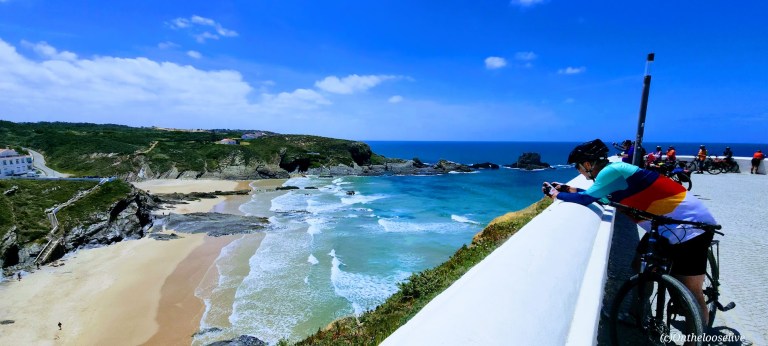
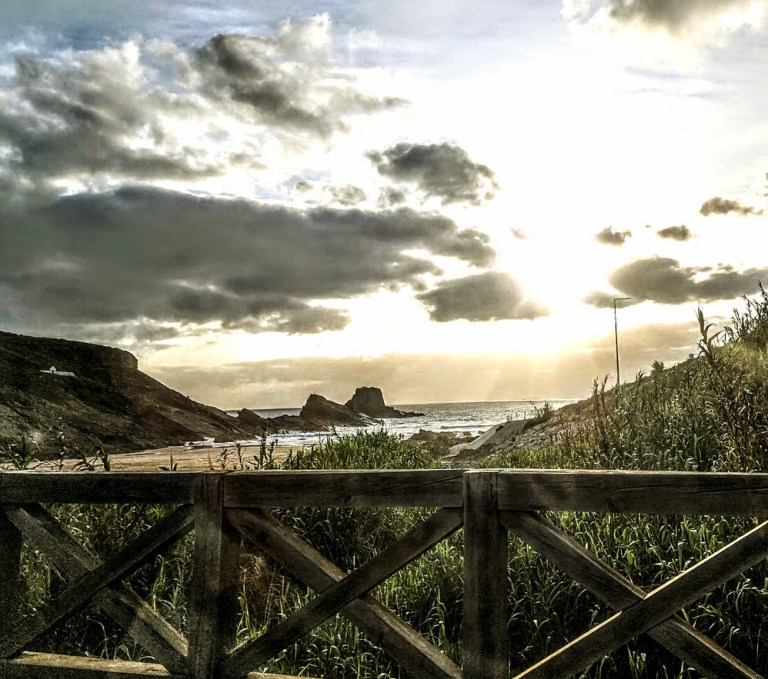
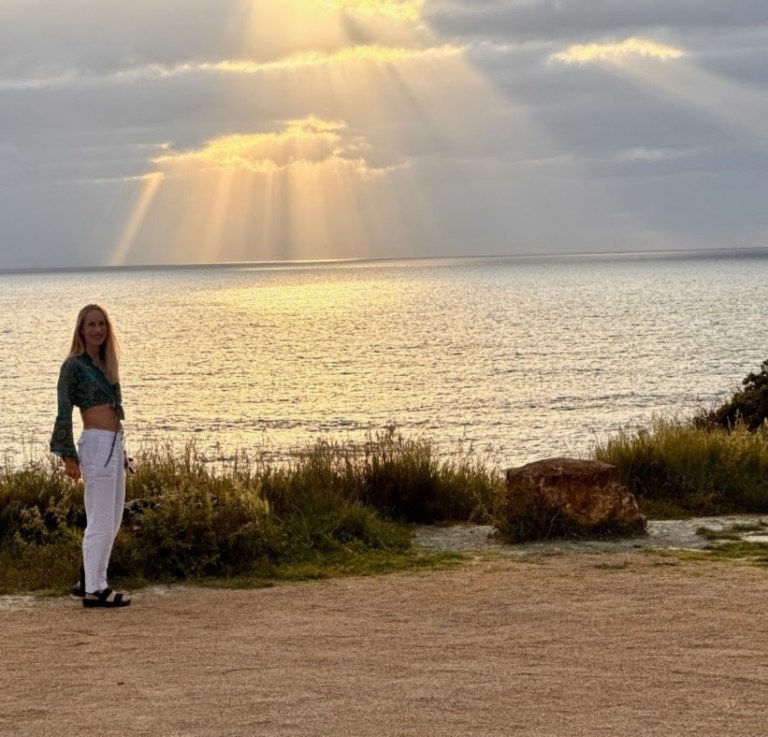
One of our scenic stops was at the picturesque Zambujeira do Mar Cabo do Sardao Lighthouse, where the striated and serrated rocks in the sea meet the flowered-top cliff for postcard-like photo ops.
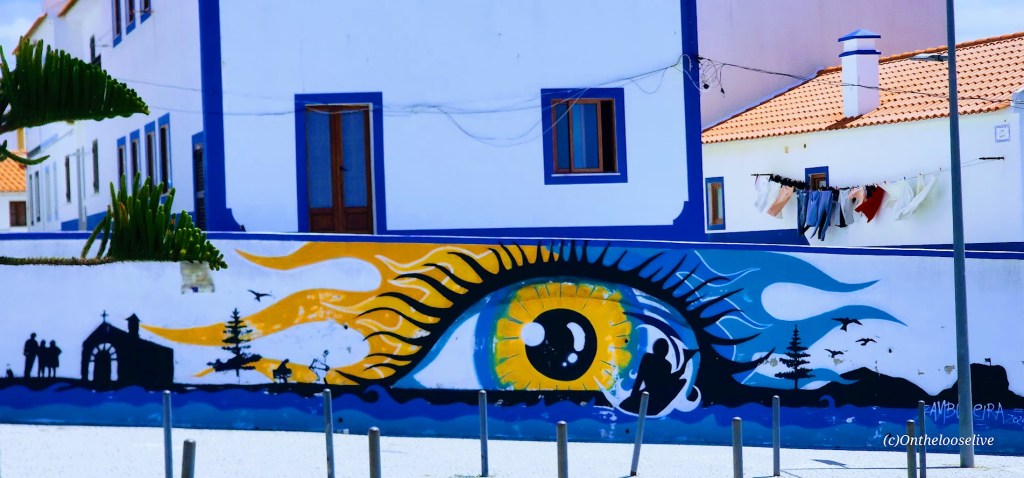
Gosh, I could spend days immersing myself in this splendid scenery, but we were off again to take in the beauty and charm of the tiny seaside village of Zambujeira (population 911). Zambujeria would later stand out as one of my many favorite hamlets. We enjoyed a refreshing lunch and gelato treat in a restaurant on the cliff overlooking the sea.
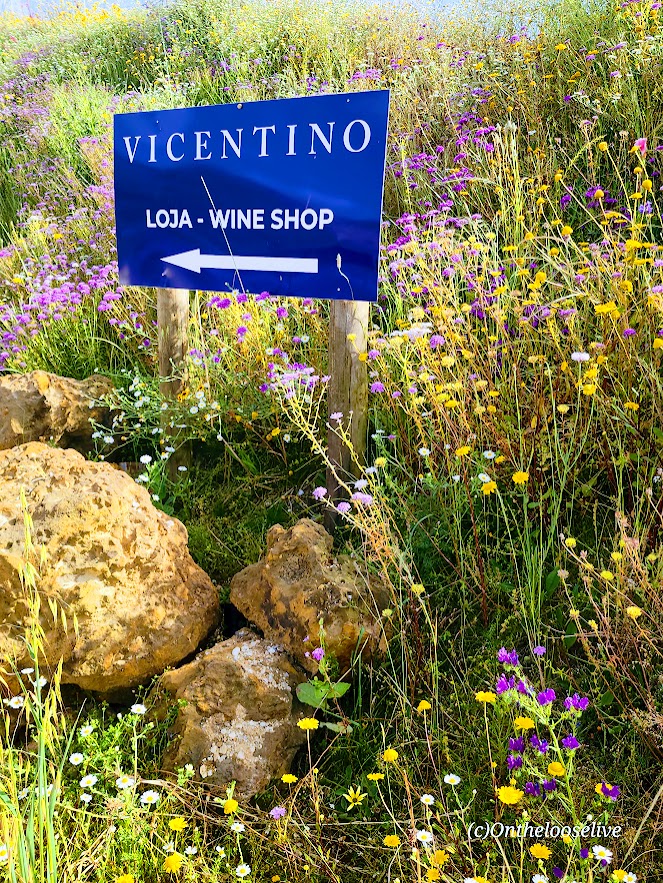
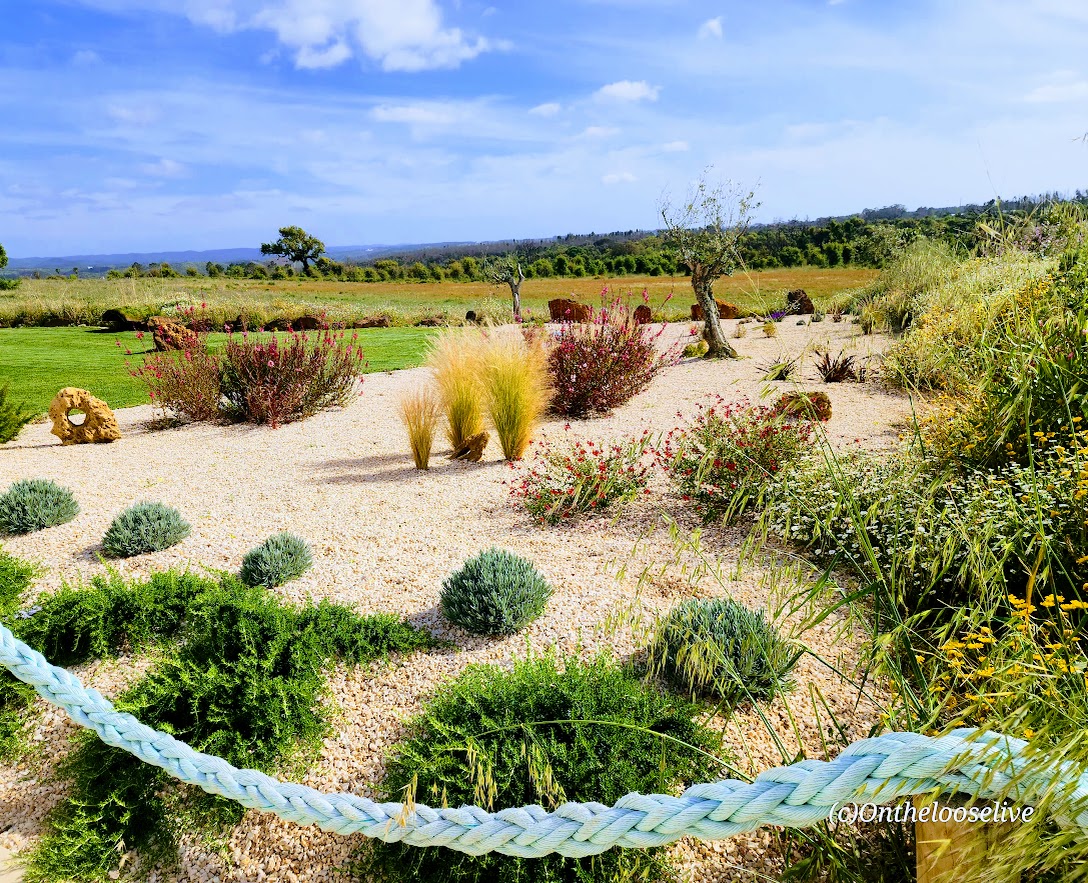
Top Bike Tours Portugaloutdid themselves with an amazing itinerary today, including a private tour and tasting experience at the splendid Vincentino winery (as nice or nicer than Napa and Sonoma wineries that I’ve been to and as delightfully palatable).
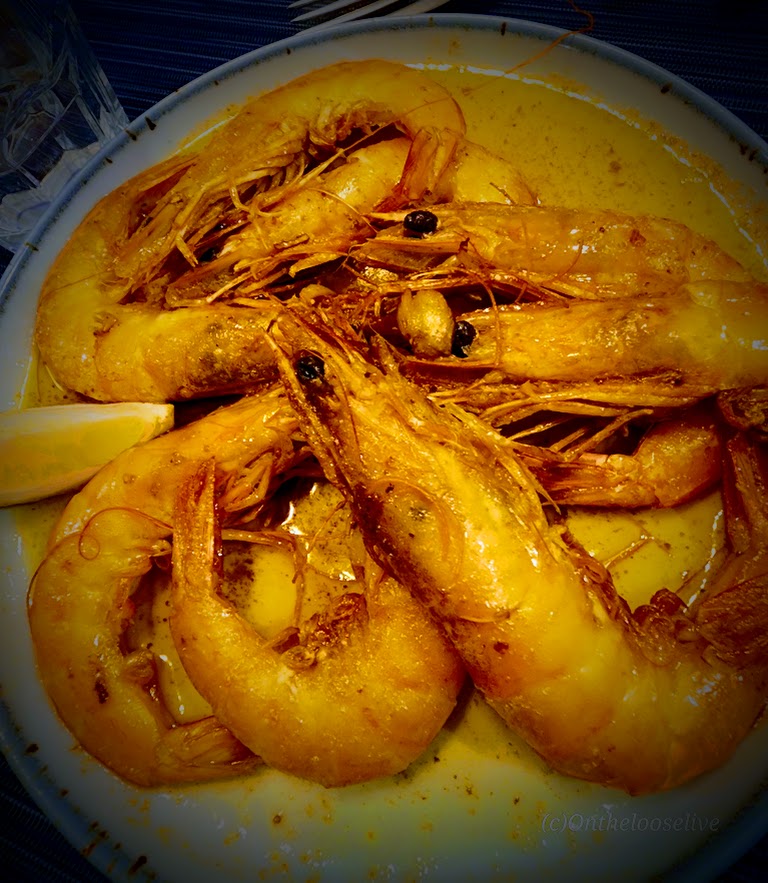
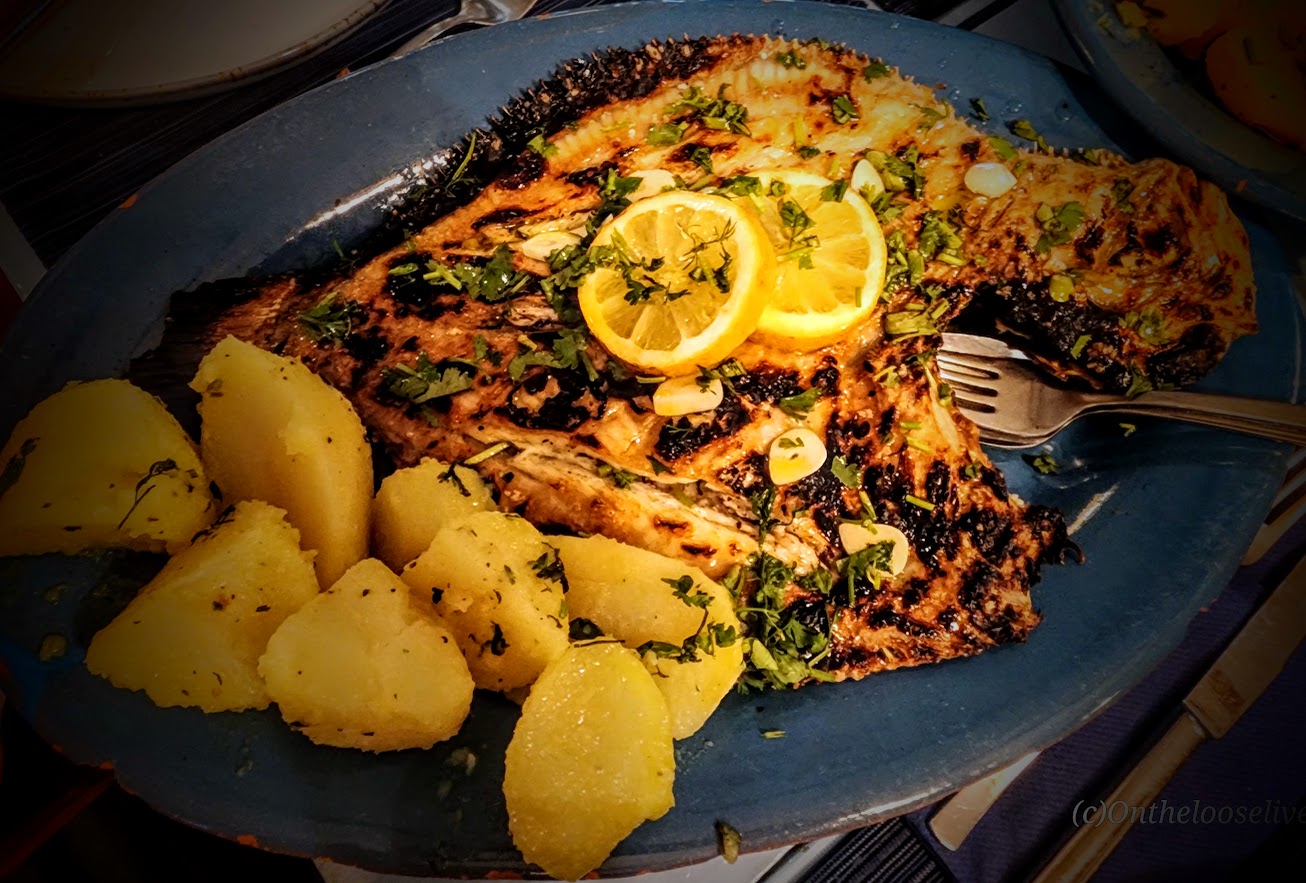
A sumptuous seaside dinner feast followed at a local, seaside, family-owned restaurant.
And if all that wasn’t enough, when we returned to the hotel, we were treated to a surprise, private, traditional Portuguese Fado concert—“Oh, my!”
Without question, this was one of my “top” days in Portugal, but then again, it seems so was every day that I spent with Top Bike Tours Portugal.
SPOILER ALERT: This was one of the best bike tours and active vacations I’ve ever taken by far—the guides and support van, the challenging, engaging road and gravel routes, the quality of the hotels and restaurants, the spectacular scenery, and ALL the cultural add-ons – private tour of Amalia Rodrigues, Portugal’s “Queen of Fado” spectacular Frank Lloyd Write inspired cliffside. seaside home, the surprise private Fado concert, fortress tour, winery & distillery tours, etc. (As you probably know by now, I’ve taken a few bike tours and travel adventures, including Cuba, Thailand, etc.)Top Bike Tours Portugal exceeded expectations across the board. (Note: I tried to be expectations-free, but let’s face it, I’m spoiled by all the beautiful places I’ve seen and the excellent adventures I’ve been privileged to have.)
Thelmo, Pedro, and Top Bike Tours made my first encounter with Portugal not only unforgettable, but it’s no overstatement to say, life-changing, as it was a scouting trip for me to find a new EU adventure base camp and home.
From the warmth of the people, the ravishing, pristine beauty of the coastlines, the exquisite cuisine, the extensive and challenging road and gravel biking, the surfing, and the enchanting, white-washed villages, I was spellbound. I left my heart in Portugal, and I’ll reunite with it sometime in the not-too-distant future… In the meantime, I’ll relive my incredible journey along the Vincente Coast and the Algarve in the posts to come.
After conducting some research, I chose Top Bike Tours Portugal because I’d read a couple of rave reviews on an international middleman site that mentioned the company and guide by name. I also wanted to go direct to ensure that the local company would receive the entirety of my payment. While self-guided options were available, since navigation isn’t my strong suit, I chose the guided option with full Support and Gear (SAG) Van, which was only about $100 more per day and so worth it for the added peace of mind.
A break in my work schedule allowed me to join the “reduced” (shorter version) of the Vincente Coast Algarve 8-Day Bike Tour at the last minute. (Those who know me know me as “Last Minute Lydia,” and the way this trip and scheduling my subsequent eye surgery in Prague (more on this later) came together was in my typical spontaneous “if the stars align” fashion.
Total Distance and Mileage:141 miles with 8,290 feet of climbing.
Difficulty on regular bikes: Moderate ++, depending on your fitness level – the hills are no joke here, and they are plentiful – 16% grade was not an anomaly. Also, having some off-road bike handling experience is important. Many in our group were not experienced with the rougher terrain of off-road gravel biking, and exercised good judgment by walking the sketchier sections.
Day 1 – Arrival Lisbon and van transfer to Santiago do Cacém
Day 2 – Santiago do Cacém to Vila Nova de Mil Fontes
Day 3 – Vila Nova de Mil Fontes to Zambujeira do Mar
Day 4 – Zambujeira do Mar to Aljezur
Day 5 – Aljezur to Carrapateira
Day 6 – Carrapateira to Sagres
Day 7 – Sagres to Lagos
Day 8 – Departure
Arrival Day 1
We arrived at Lisbon Airport in the afternoon (after a long travel day from Utah) and were met by an Uber driver who took us to a hotel.
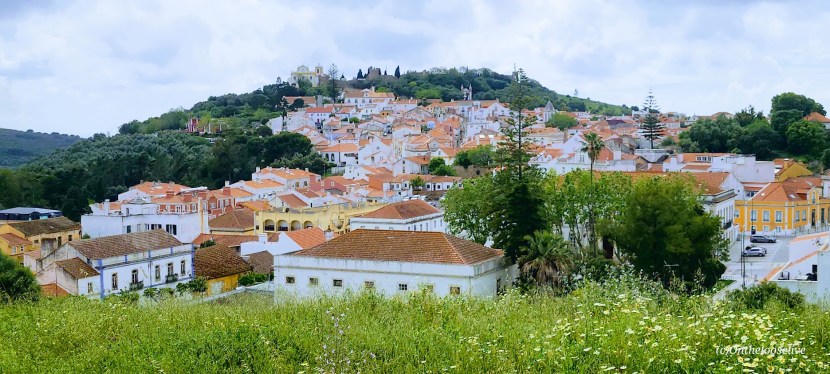
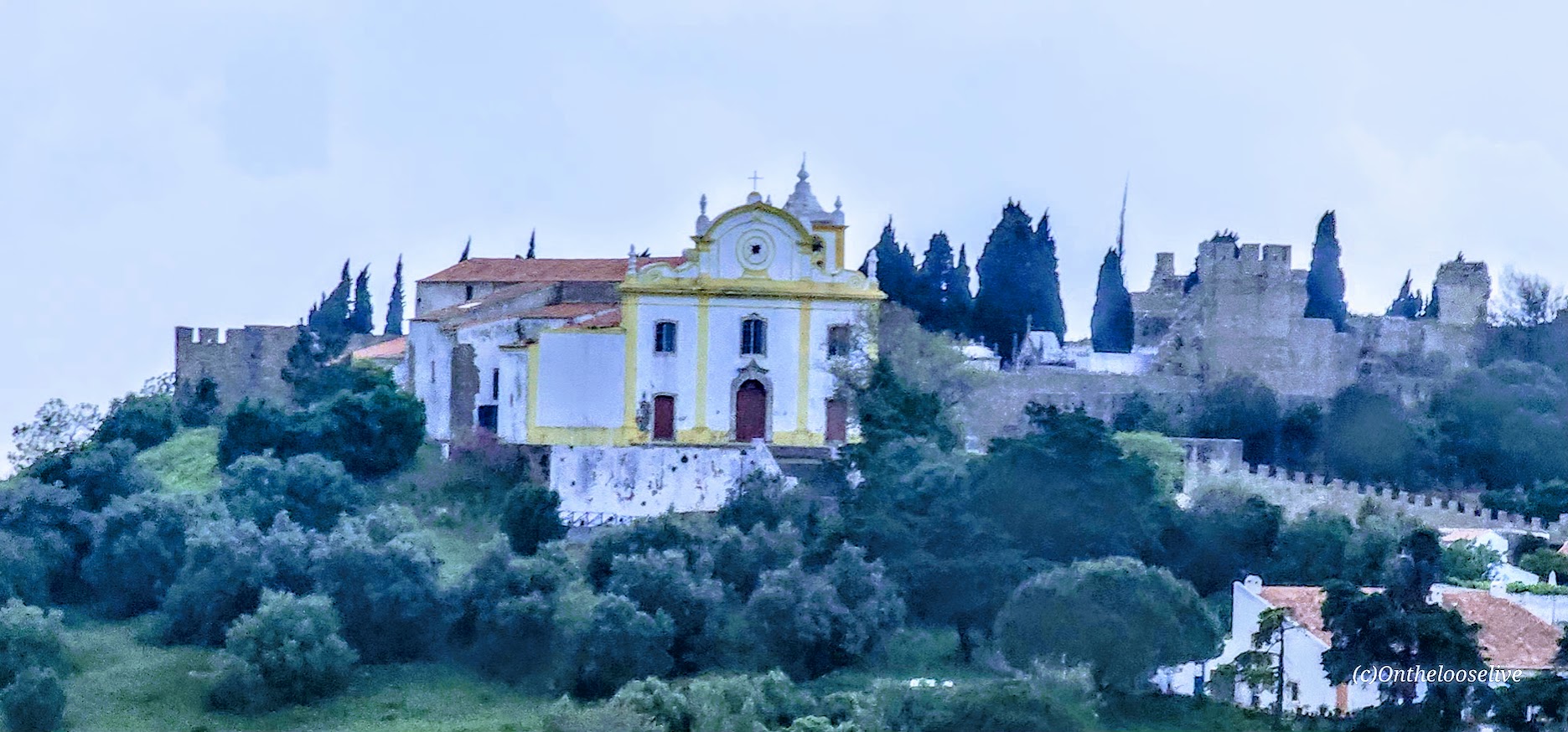
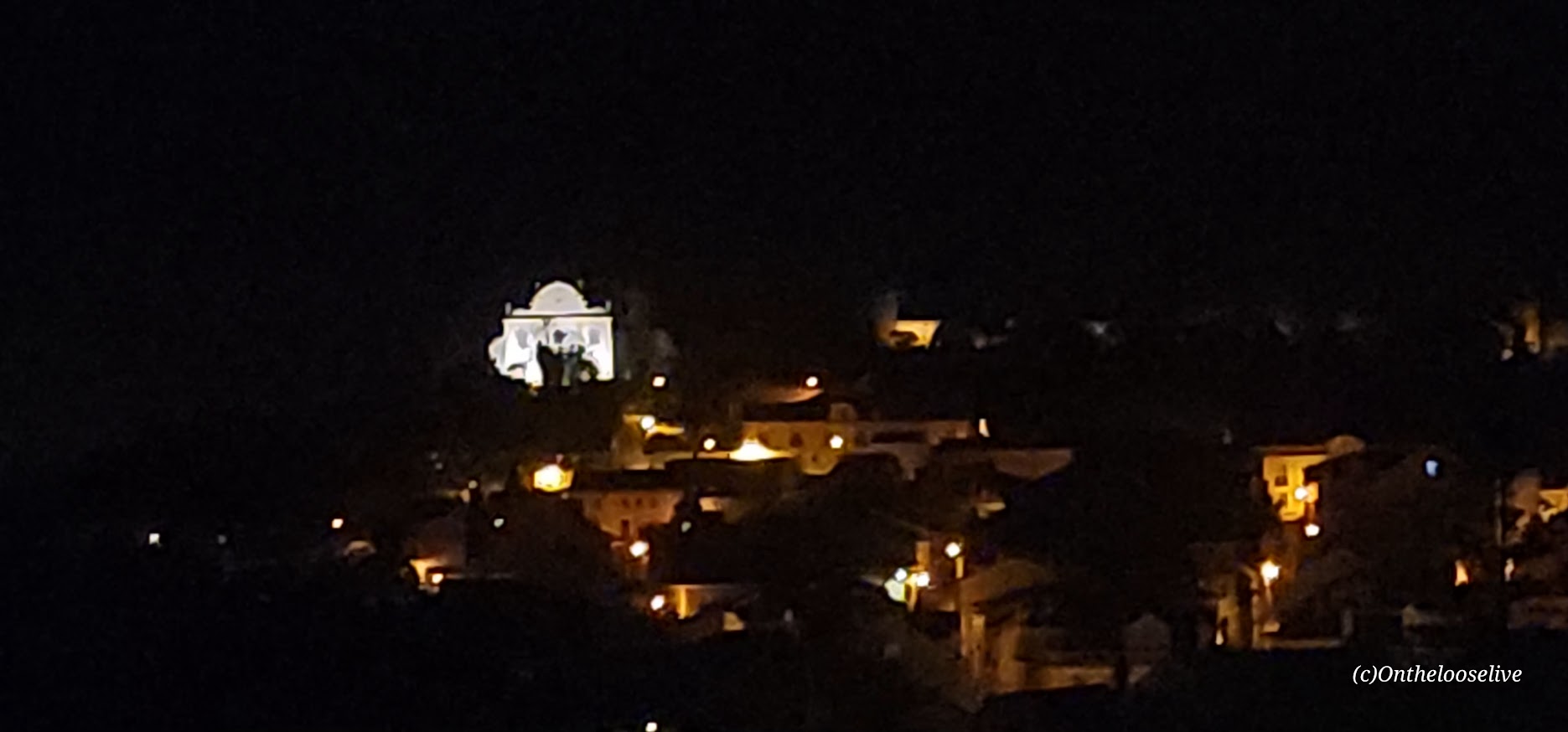
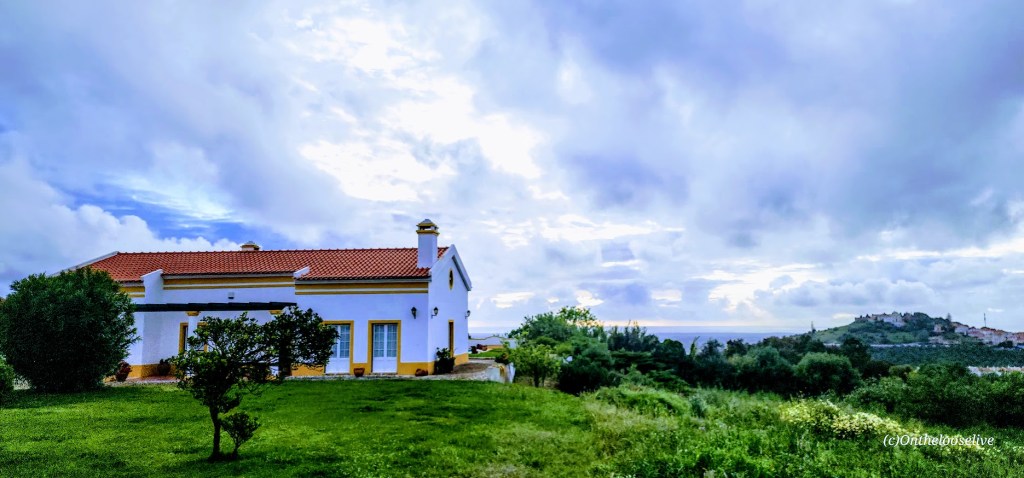
The featured image and the 2 images below are taken from my hotel room’s grass patio. In the distance, rooftops and a distant sea view. Across the way, a church and a castle dating back to the 5th century (didn’t realize it was there until I blew the photo up to write this blog).
At the hotel, we met with our guide, Thelmo, our support van driver, Pedro, and the rest of the tour group for introductions and bike fittings. Surprisingly, the group was comprised primarily of Americans (the exception being 2 Brazilian ladies). Out of the 14 of us, only 3, my friend Bradley, another fellow, and I opted for regular bikes; the rest chose e-bikes.
Much to my dismay, despite many valiant attempts by my friend, Bradley, and Thelmo and Pedro, the bike cleats I brought failed, so I would be left to ride on flat pedals without the knee-saving advantage of being clipped in. This would present quite a challenge on hills with my bone-on-bone knees, but I had to try. Of course, they offered me an e-bike, but, as you may know by now, I love challenges and being vigorous, and being a die-hard former triathlete and cyclist, I didn’t want to surrender my will to self-propel.
To shake off the effects of 24 hours of travel and give my legs a stretch, I took a quick walkabout before dinner. On my short scenic stroll, I encountered a couple of the well-fed local feral felines and discovered a windmill and Roman Ruins, which were closed for the night. I also saw what would be the first of many Cork Trees in the countryside. (Portugal is the world’s largest exporter of cork.) Cork trees typically take 25 years to reach maturity and then can be harvested every 10 years or so. The number on the tree connotes the next decade in which it can be harvested. Families that planted and cultivated cork trees leave an ecological, aesthetic, and financial legacy for whoever inherits or purchases the property, though climate change is beginning to compromise this, too.
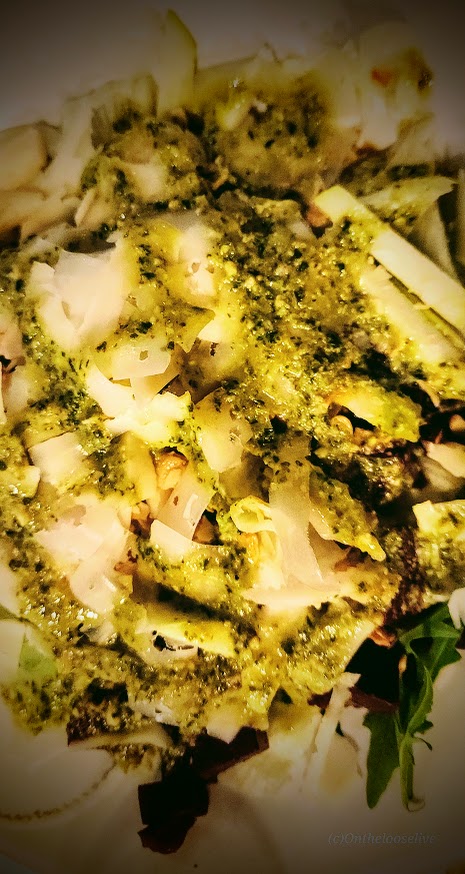
And dinner, let’s just say my first taste of Portugal was savory, delicately seasoned, and one of the healthiest meals I’ve had in a long while. I enjoyed the pesto salad and grilled fresh fish, both of which were outstanding, while my friend savored the octopus. The fragrant local olive oil is the best I’ve tasted, and it added a wonderful, subtle flavor dimension to both the pesto and the fish.
And then it was off to bed for some much-needed sleep, dreaming of the days to come…
Day 2 was one of my favorite days on my Cuba cycling adventure: a tranquil coastal ride, a swim in turquoise waters, a tour of Matanzas art district and historical square, and a modern art luncheon experience, followed by beach time and a decadent lobster feast back in Varadero.
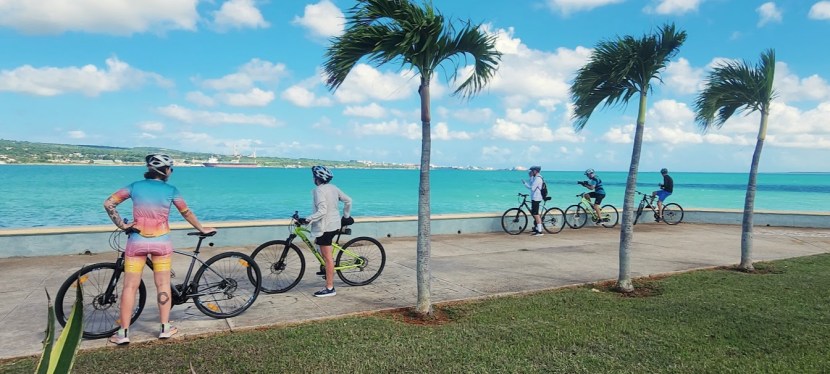
In the quiet of the morning, a white heron took flight as we rode by a lush green wetland area. The many shades of the shimmering turquoise sea were mesmerizing. Lucky me, I had the opportunity to immerse myself in the tropical sea at a secluded cove while we waited for the rest of the group to catch up.
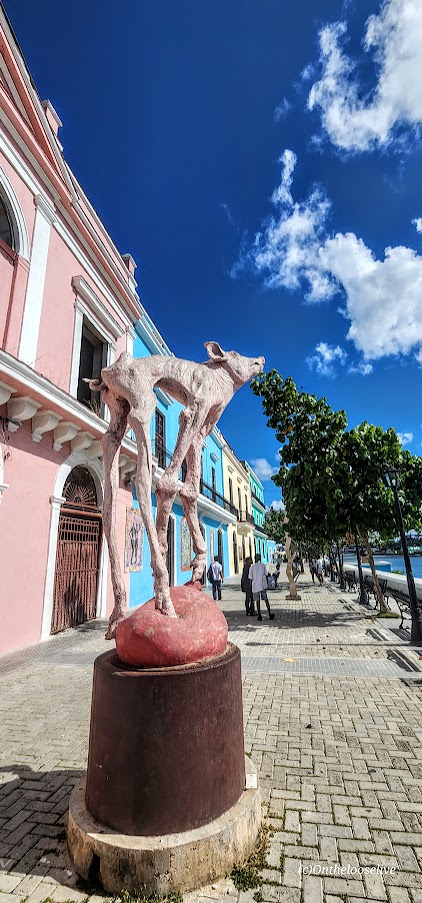
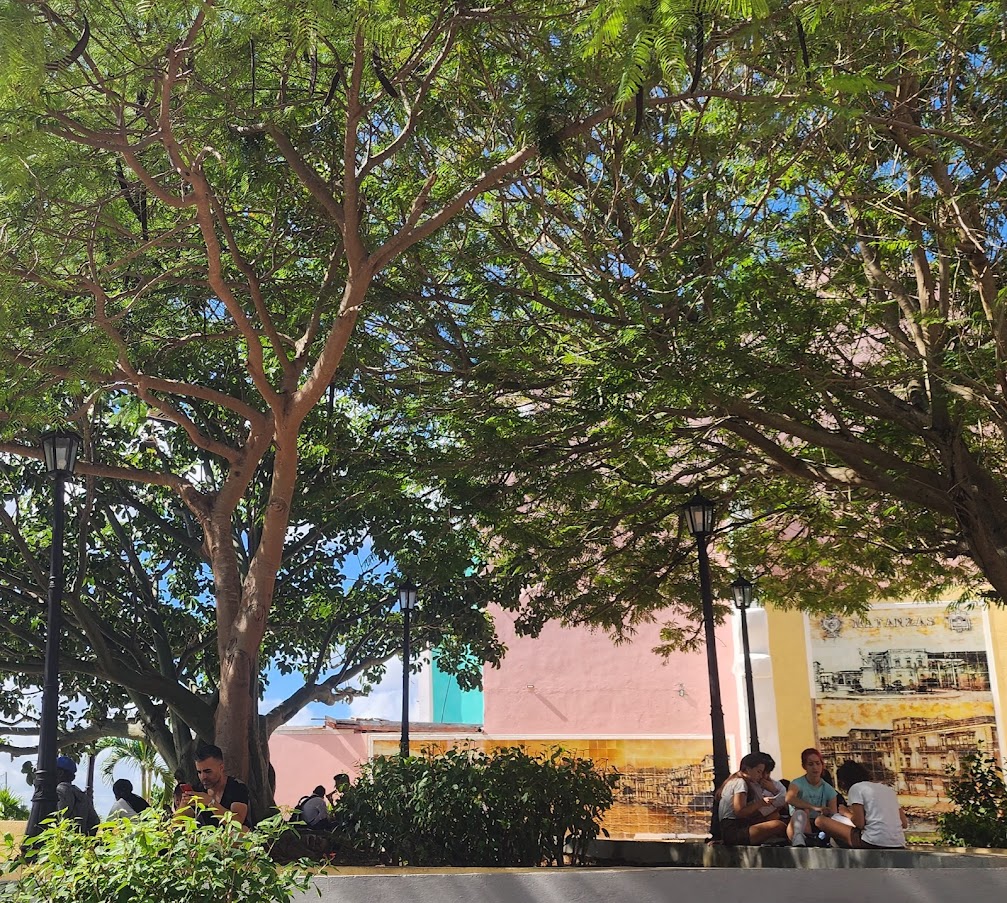
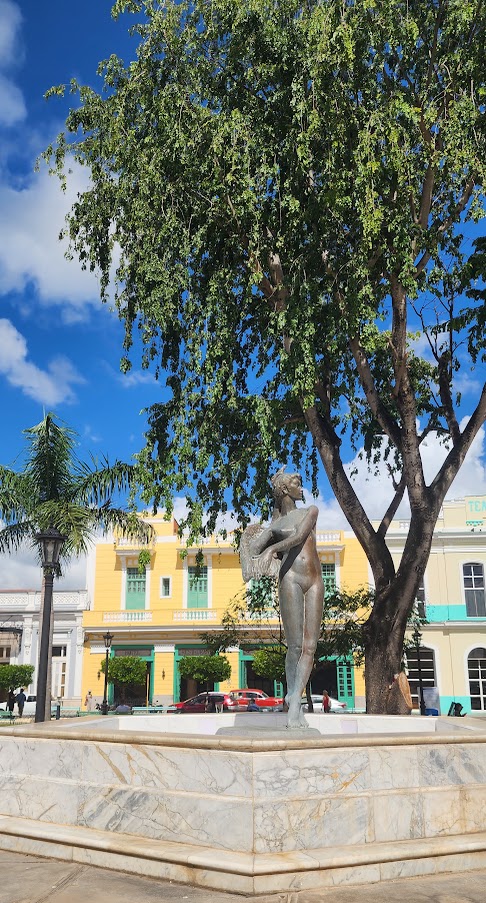
Back on the bikes, we rode along the beautiful beach esplanade, discovering one magnificent sculpture after another. It was a perfect prelude into the art-filled, picturesque town of Matanzas (known as the Venice of Cuba or City of Bridges).
In Matanzas, we enjoyed a casual stroll along the canal way that was lined with more sculptures, tile art, frescoes, galleries, and restaurants.
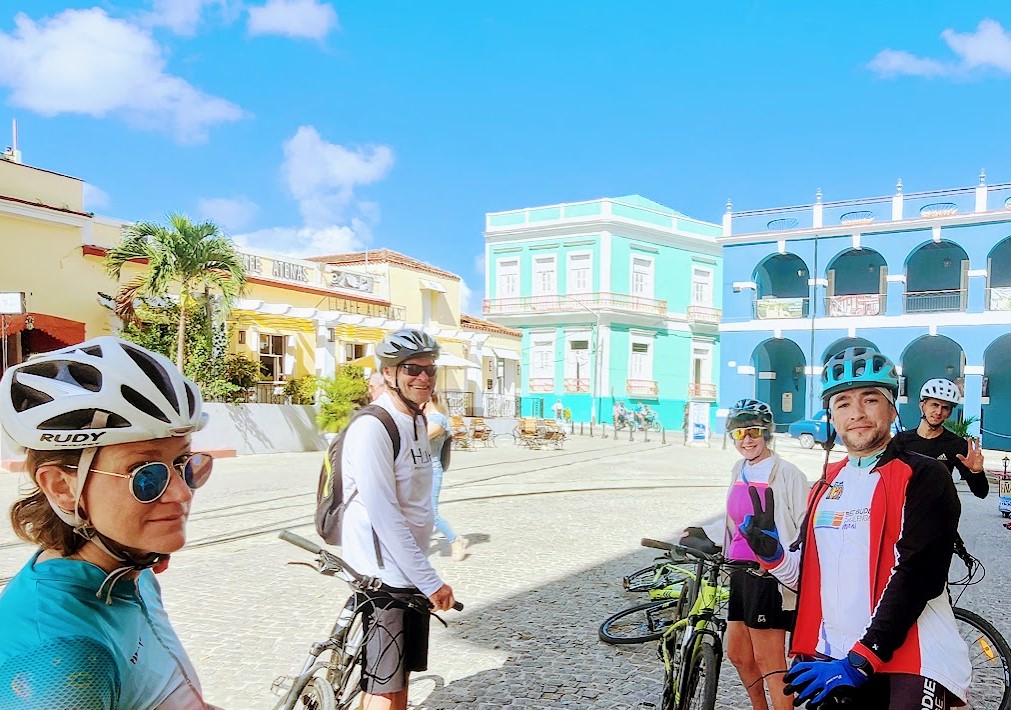
Next, we explored the charming town square.
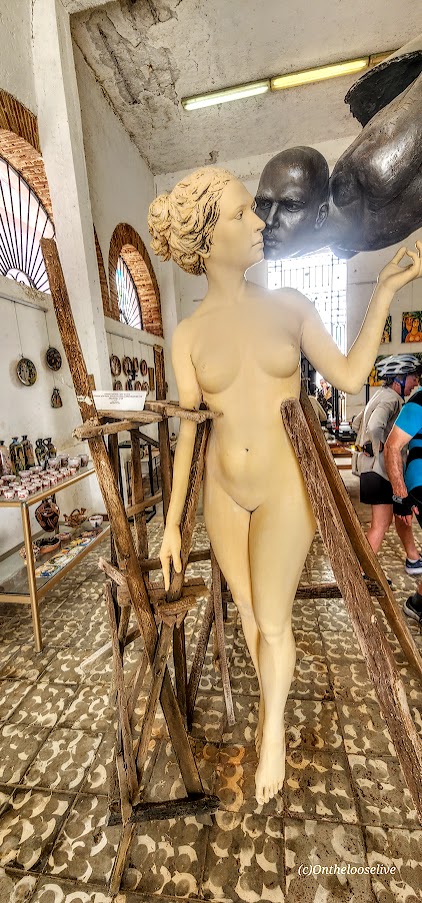
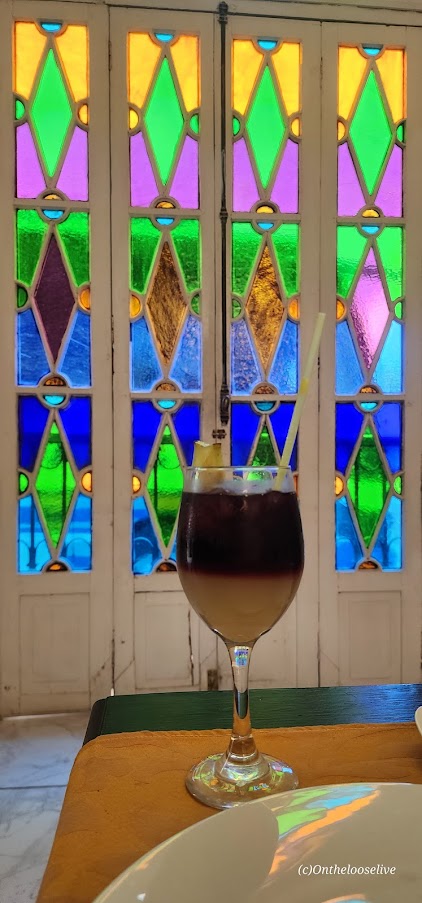
It was lunchtime next, and we dined in fine style—indulging in the local flavors and feasting our eyes on more colorful art and stained glass windows.
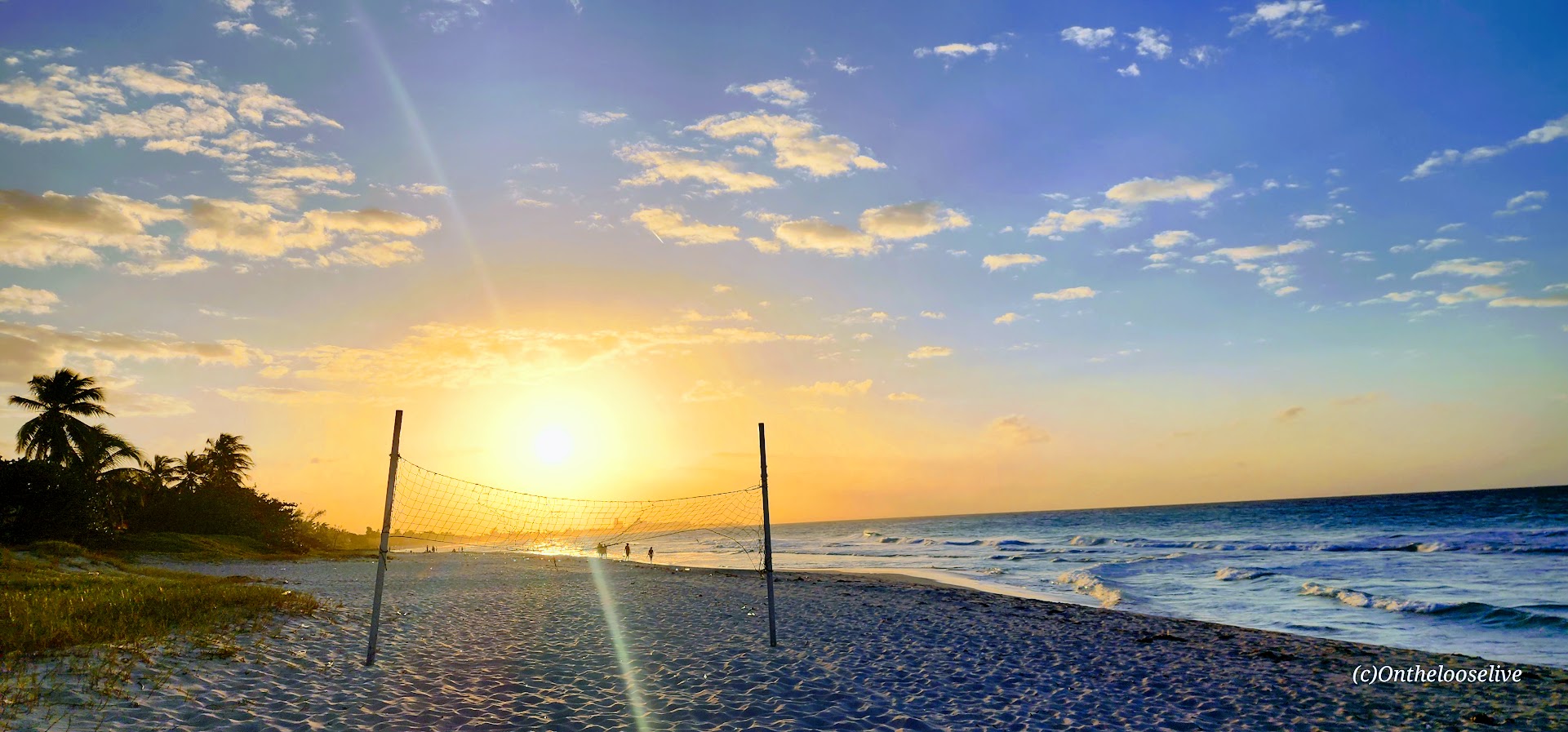
Upon return to Varadero, we enjoyed some beach time followed by another decadent lobster feast for me.
And so another amazing day with Cuban Adventures and my new friend, Vanessa, came to an end. Fortunately, the tour was just beginning! Stay tuned for the next postcard.
On Day 1, we took a short, easy bike cruise through the neighborhoods of Vedado, Nuevo Vedado, and Miramar. So many sights to see. We packed in as much as we could, including the gorgeous architecture, the embassy district, historical monuments, a forest oasis, ancient town squares, and so much more. I apologize in advance for the poor photo quality—all were taken on the fly, but hopefully, they will still give you a good feel for the spirit of Havana.
All along the way, we saw art flourishing everywhere from sculptures to colorful building tiles and whimsical street art. Interesting that a communist country would have so much exuberant individual expression.
Plaza de la Revolución / Revolution Square
Part of the wave of architectural and infrastructure works carried out by the Batista government, this square features a monument to Jose Marti, and steel memorials to the two most important deceased heroes of the Cuban revolution Che Guevara (Fidel’s right-hand revolutionary man, until he wasn’t) with the quotation “Hasta la Victoria Siempre” (Ever Onward to Victory) and Camilo Cienfugus(Fidel’s left-hand revolutionary man, until he wasn’t), with the quotation “Vas bien, Fidel” (You’re doing fine, Fidel).
Havana Forest
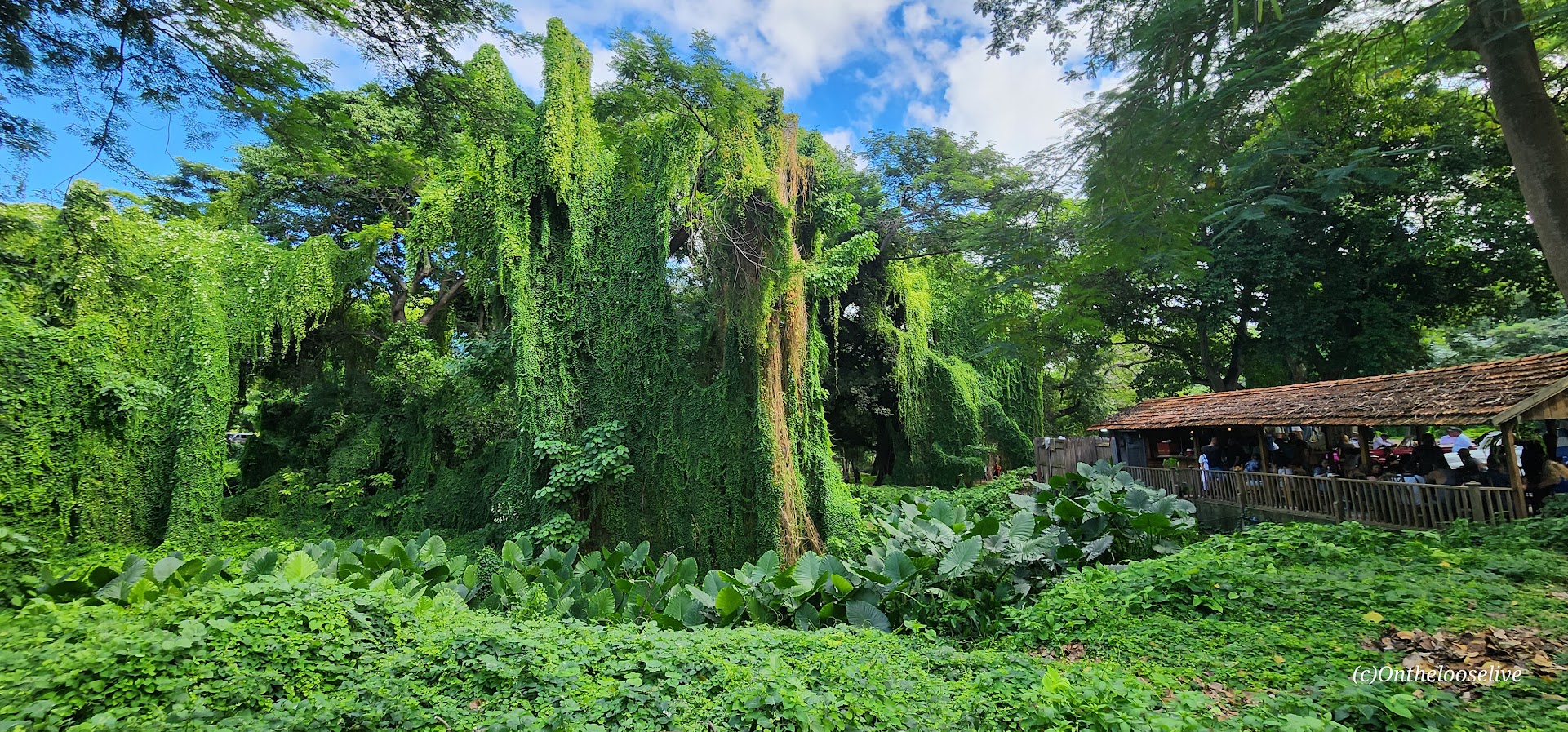
What a wonderful surprise to come around a suburban corner, cross a bridge over the Almendares River, and suddenly be enveloped by the lush green canopy of the Havana Forest, a protected tropical oasis between the municipalities of Plaza and Playa.
Hotel Nacional
A couple of us stopped at the Hotel Nacional for some refreshments. Built in 1930, the Hotel Nacional is a national monument and part of UNESCO’s Cuban National Memory.
Strolling with the peacocks and other tourists through the lovely grounds, enjoying the expansive view of the Malecon and the shimmering seas, you’d never guess this grand hotel’s dark and bloody history.
October 2-3, 1933, The Battle of the Hotel Nacional of Cuba
A bloody siege known as the Battle of the Hotel Nacional of Cuba was led by Sergeant Fulgencio Batista against the previously high-ranking military officers who were regrouping in the hotel. During the battle, thirty Batista soldiers were killed on the grounds, as were 2 of the high-ranking officials during the battle. Batista’s soldiers subsequently killed the remaining high-ranking officials from the previous government.
1946 Havana Conference Did you know that from the beginning of the 20th century until the Revolution in 1959, Havana was known as the playground of US Mafia bosses? (I didn’t.) From the 1940s, Mobsters made the Hotel Nacional their home away from home as they built their casinos and hotels and conducted their “business” in Cuba. Arranged by Charles “Lucky” Luciano, the hotel hosted the infamous Havana Conference in 1946. The US Mafia and the Sicilian Cosa Nostra leaders met to discuss their “business interests” in Cuba and around the world.
If you’re getting the impression that Cuba’s history was tumultuous, you’d be spot on. Watch the eye-opening Cuba Libra series on Netflix to learn more about Cuba’s history (and America’s questionable and controversial involvement).
In the afternoon, we enjoyed a walking tour exploring 4 of Havana’s 5 colonial city squares/centers—a must-do. Bustling with tourists and locals alike, you can immerse yourself in the history as you explore the cafés, restaurants, and galleries and admire artisans’ wares to the spicy soundtrack of street musicians.
Plaza Vieja, located in the central part of the Old Havana district, is a UNESCO World Heritage Site. It was first built in 1559 and boasts gorgeous buildings dating back to the 17th, 18th, and 19th centuries.
Plaza de la Catedral The Catedral de la Havana was built in the 18th century. One of 11 Catholic cathedrals in Cuba, it is best known for housing Christopher Columbus’ remains until the end of the 19th century, when they were moved to Seville.
Plaza de Armas is the oldest and largest square in Old Havana.
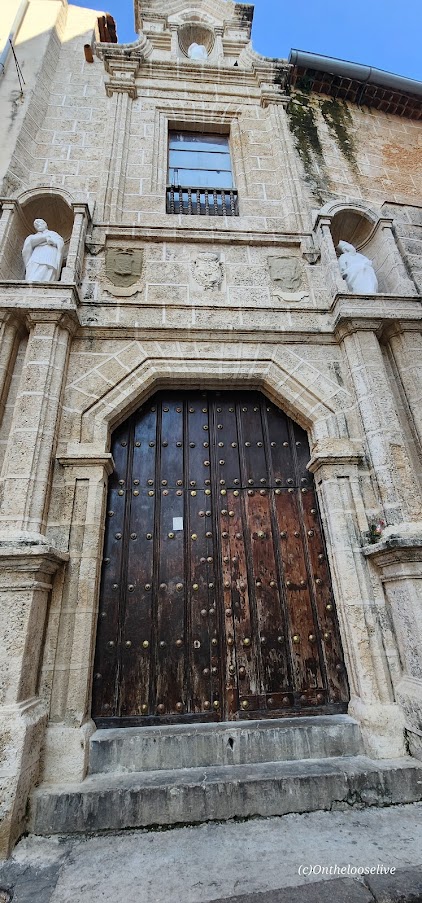
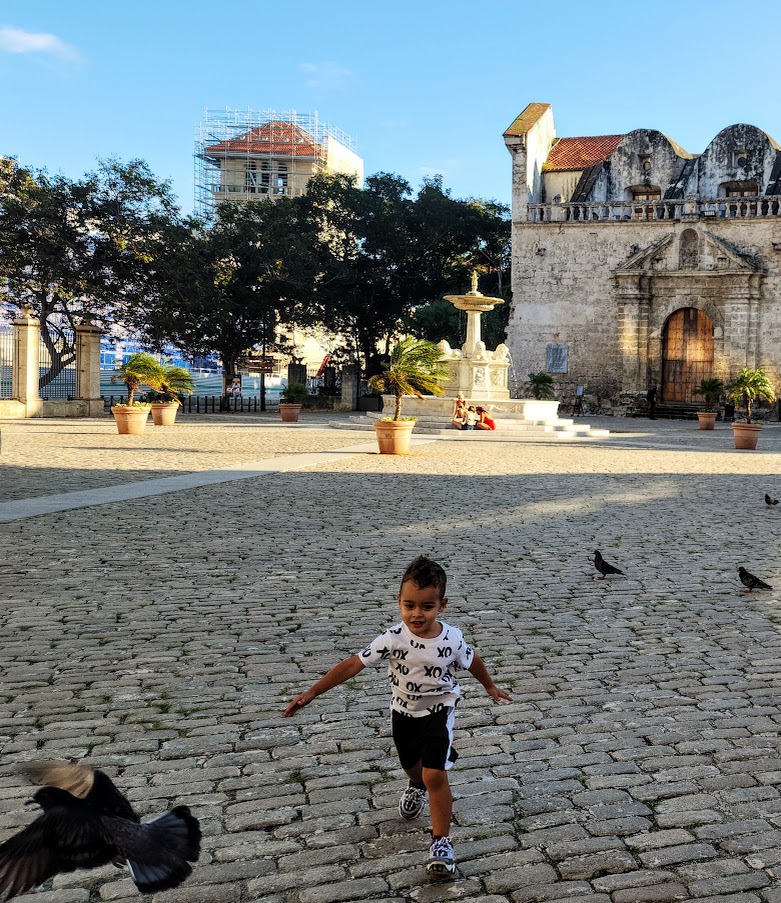
Plaza de San Francisco de Asis was the colonial center back in the 16th century. It was fully restored during the 1990s.
The food did not disappoint (understatement). Breakfast fruits. Lunch was the traditional dish of Ropa Vieja, shredded meat cooked with onions, peppers, olives, tomato sauce, and spices like cumin and oregano. For dinner, I indulged in a grilled lobster. All were delicious, especially the lobster – what a treat (that I would have to repeat, threepeat, and I confess too much)!
After taking in as many sights as we could, it was time to hop on the bus with our bikes and head to our next destination, the beach resort town of Varadero. To be continued…
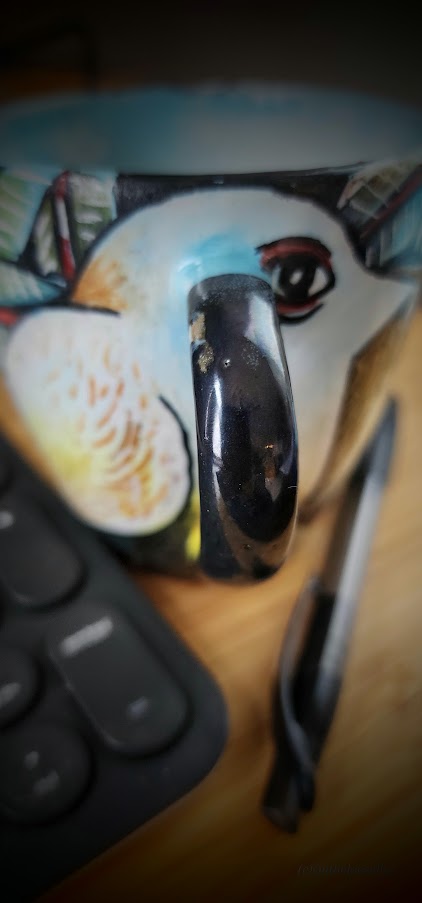
A yellow-breasted bird shines bright against emerald rainforest leaves, returning my gaze from the hand-painted coffee cup I bought from an artist in Cuba. As I sip my coffee, memories of my cycling adventure spin in my mind’s eye, a dazzling kaleidoscope of indelible impressions.
I was completely unplugged from the outside world for 7 days (my choice), which allowed me to immerse myself completely in every waking moment as we cycled off the beaten path and pedaled to the rhythm of Cuba’s heartbeat.
The sights—stone fortresses, historical monuments and statues, charming town squares, gorgeous architecture, and the art—everywhere— paintings, sculptures, street tiles, street art. The vibrant colors wrapped in the Caribbean island’s tremendous natural beauty— picturesque bays, verdant mountain ranges with hidden tropical waterfalls and cenotes, and sugar white sand beaches enticing you into the sparkling turquoise sea.
The sounds—the medley of sax, bass, drums, and guitar in the parks, at cafes, restaurants, and bars, the constant clip-clop of horses’ hooves, the rev of mopeds, the persistent punctuation of horns like exuberant exclamation marks to the improvised salsa music. And the contrasting silence of the countryside and the mountains, broken only by a bird call, the whisper of the wind through the trees, the rush of a waterfall, the gurgle of a stream.
The flavors—From sweet to savory and everywhere in between– fresh fruits and juices daily (mini-bananas, pineapple, guava), refreshing post-ride libations like Mojitos and Caipirinhas, and creamy Pina Coladas, delicious entrees like freshly grilled lobsters (my fav), fresh fish, and traditional, hearty dishes like Rope Vieja, beans and rice, pork in very variety (rips, chops, and morsels), crispy snacks of garlic and oil plantains. I know! Are you salivating yet?
The places: Old Havana, the seaside resort town of Varadero, Matanzas known as the “Venice of Cuba,” Santa Clara, home of the Che Guevara Museum and Memorial, the “colonial jewel” of Trinidad, Cienfuegos “The Pearl of the South,” and the infamous Bay of Pigs.
The people: A great group of people from our knowledgeable and personable Cuban Adventure’s guide Rayner, Alejandro our attentive bike mechanic and speedy rescue cyclist (story later-maybe), and “Manbey,” our bus driver who might be better nicknamed MacGyver to the 2 well-traveled couples from Canada (Mike and Jan, Kirk and Heather), my smart and fun roommate Vanessa from Denver, our casa hosts, and those we encountered along our journey, including 2 crazy old German gents who were solo cycling the entire island and kept popping up much to our surprise (we biked and bussed– they were cycling 100%).
The insights—into the history, politics, culture, and spirit and some of the mindsets of the Cuban people.
Hands down, this was one of the best adventure travel trips I’ve taken for many reasons. Hopefully, some of those reasons are already apparent. It was a spontaneous decision (like most of mine) made just 2-weeks before departure—everything lined up perfectly. With low to no expectations, the entire experience blew me away—outstanding, fantastic, fabulous!
In the following days/weeks, I’ll share some highlights and attempt to capture the experience here in this postcard series. The best part is that I get to relive it allas I go.
Arrival
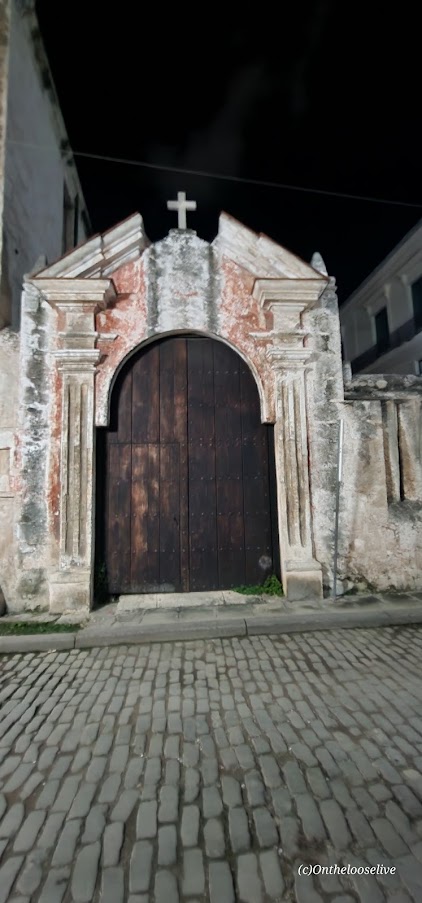
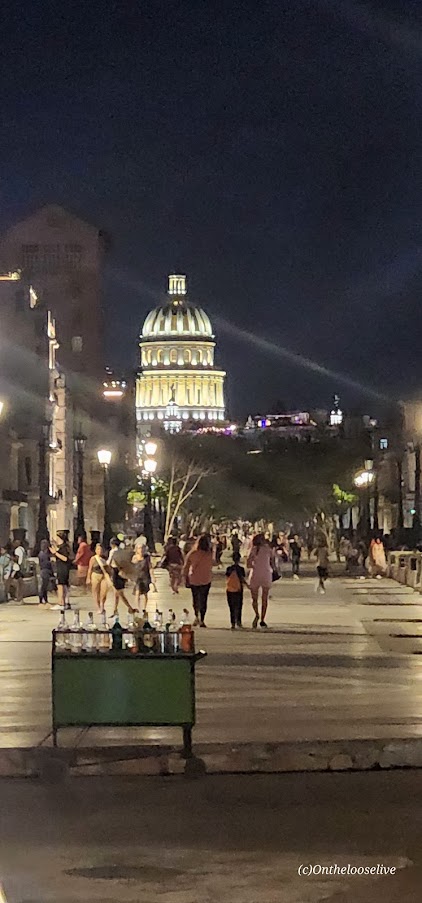
Walking through Jose Marti Airport’s exit doors into the warm tropical night was like arriving through a time portal into the past. From the backseat of the taxi, I was mesmerized by the blur of classic cars and horse-drawn carriages—racing side-by-side towards Old Havana. (Since the Cuban revolution (1953-1959), when Batista was driven out and Fidel Castro took power, there has been a ban on cars and other imports from America. Not to mention the difficulty of getting gas imports.) Here are a few scenes from my first night in Havana. I know the pictures are a bit blurry, and so was I after a long day of travels. I promise they’ll get better.
It was lights out after a quick nightcap and bite in Old Havana with my new roommate, Vanessa.
Throughout this postcard series, I’ll sprinkle in miscellaneous history, interesting facts, and some sobering statistics.
Jose Marti is the Cuban poet and philosopher who led the fight against the Spanish for Cuba’s Independence
~60,000 classic cars in Cuba (~50% from the 1950’s, ~25% from the 1940’s, ~25% from the 1930’s)
Only ~2% of Cubans own cars
Average monthly income range for 55% of the population is $50-$234, $600-$2,808 annually.


























































 On the Loose Live