Elevation gain: ~1K (Trail high point is ~2,900 feet.)
Difficulty: Moderate to strenuous depending on your speed and fitness level.
Popular with locals and visitors alike, this trail is a great go-to if you’re in the area and have a limited window for a hike or trail run. You’ll be rewarded with panoramic views and a great workout. I enjoyed jogging the climb so much, I forgot to take pictures-lol, so you’ll have to come see the views for yourself. The trail doesn’t let you scramble to the actual peak, but tops out and then drops you down the other side.
Notes: Parking is free, but limited. Weekdays are less busy than weekends. Pinnacle Peak Park has a visitor center and restrooms, interpretive signs along the trail, and apparently rock climbing routes too. They offer fun activities as well, including moonlight walks, astronomy talks, yoga classes.
Getting there: 26802 N. 102nd Way Scottsdale, AZ 85262 · (480) 312-0990.
Difficulty: Easy to moderate, varies depending on the trail(s) chosen, length, and your fitness level
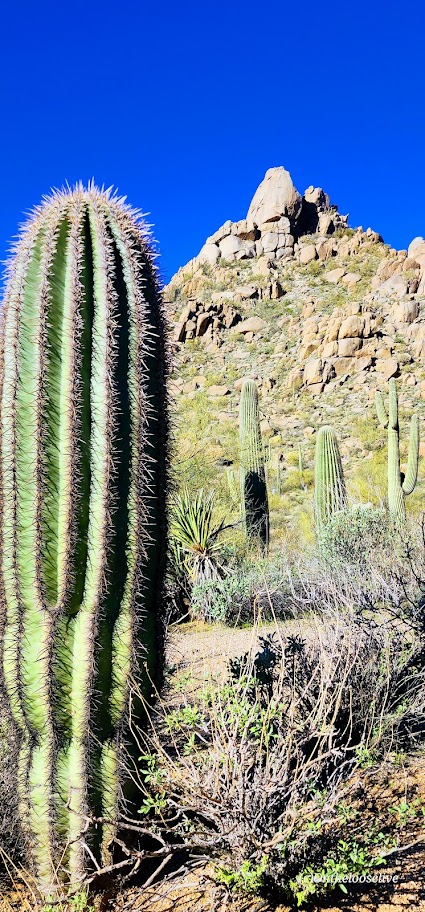
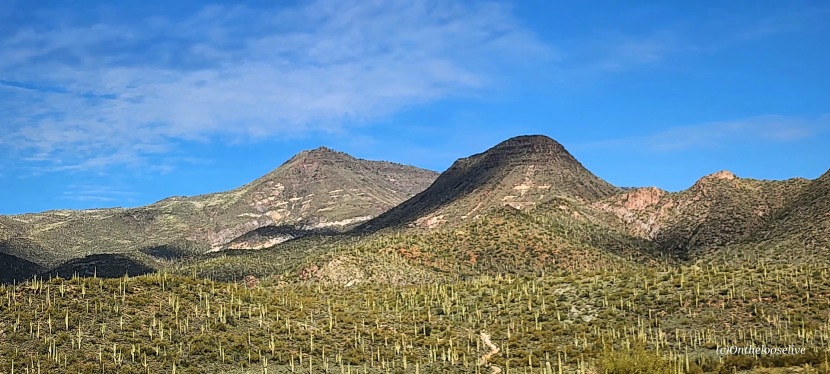
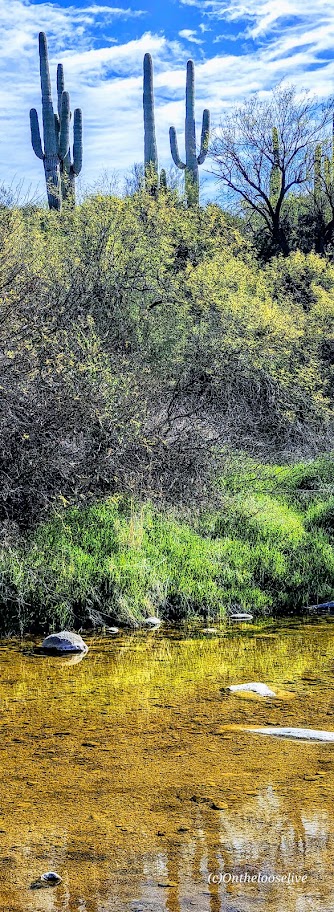
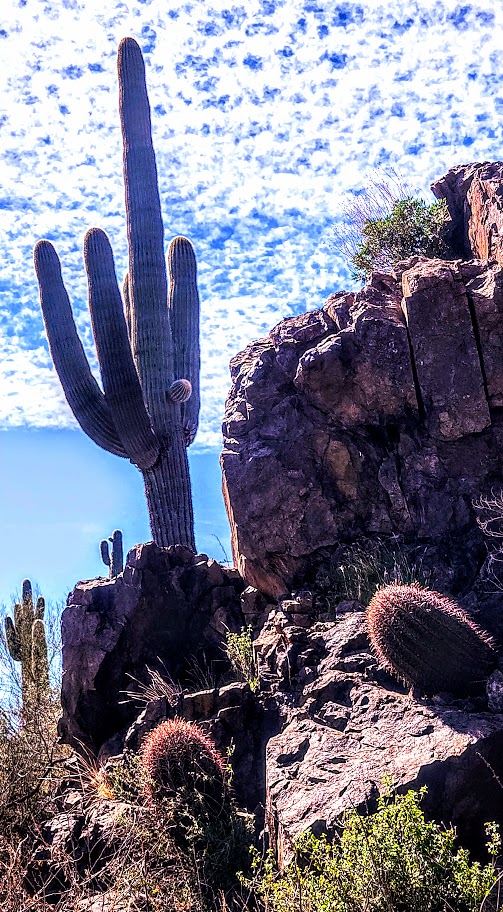
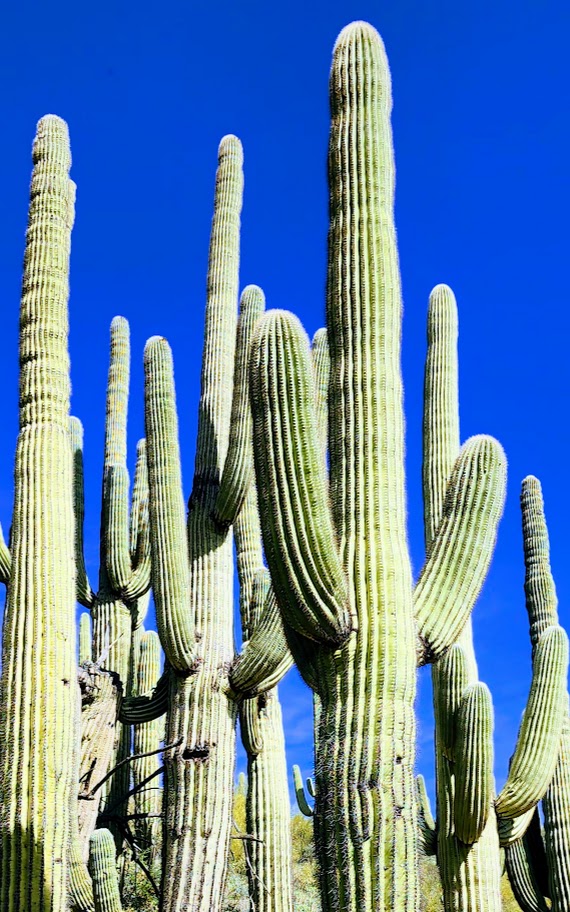
If you’re in the Scottsdale area and have time for a field trip, I highly recommend an excursion to Cave Creek. Hike the Spur Cross Ranch Conservation Area and enjoy the Saguaro “forest”, refreshing shaded creek-side trail, and if you keep your eyes open, you may get lucky and spot some petroglyphs too.
Choose your own adventure from 16 hiking and equestrian trails in this 2,154-acre area. My friend and I combined a couple of trails (Spur Crossing, Tortuga, and Dragonfly) for ~8 miles with ~1k of climbing. The terrain is mostly run-friendly.
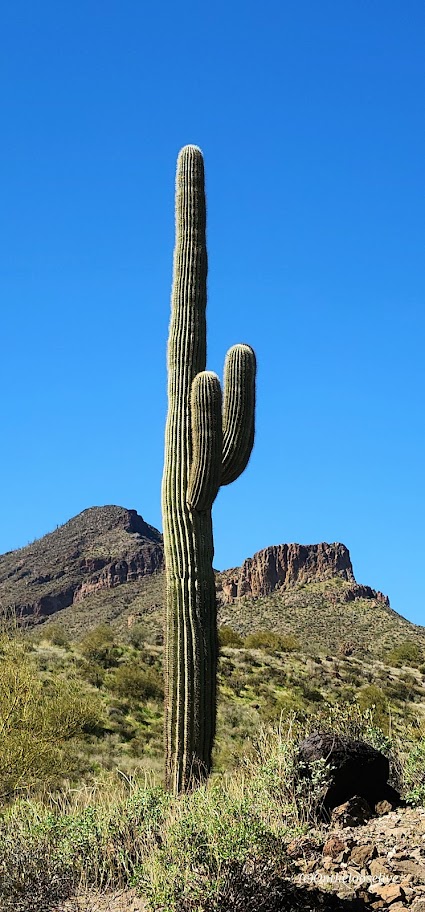
FUN FACT: Did you know that Saguaro “arms” typically appear at 50–70 years, and they can live over 150–200 years, growing up to 40-50 feet tall?!
After your adventure, head to town to quench your thirst, refuel, and shop in this blended authentic/tourist-trap Western town settled in 1870. If you’re a burger fiend, Big Earls is a sure bet.
Getting there: 29 miles from Scottsdale, via AZ-101 Loop N and N Scottsdale Rd, 44000 N Spur Cross Rd, Cave Creek, AZ 85331
Notes: Spur Cross Ranch Conservation Area $3 per person fee. Picnic tables and port-a-potties are available at the trailhead parking area. Leashed dogs allowed.
We all scream for ice cream at the City Creamery.
I had the best ice cream of my life at The City Creamery, home of handmade, small-batch ice cream in 16 favorite varieties and exotic seasonal flavors. (I’m not that much of an ice cream monger, but oh, my—delicious, chocolate infused with orange!) Also, their scoop portions are HUGE. However, I did manage to eat it all.
Difficulty: Moderate to strenuous, depending on your fitness level
Whether you go for dawn patrol or not, this hike will deliver a quick workout with great 360 panoramic views, seasonal wildflowers, and iconic Saguaro galore. Aptly named, this trail is rated the number 1 sunrise hike in Scottsdale so you may want to rise and shine for it. Several additional trails connect at the top to extend your adventure in the Sonoran Preserve Park.
Getting There: 2101 N. 145th Way, Scottsdale, AZ 85259. Trail parking is at the east end of Via Linda at 145th street
Difficulty: Strenuous to moderate, depending on your fitness level. Trail runnable until you reach the top scree and talus portion.
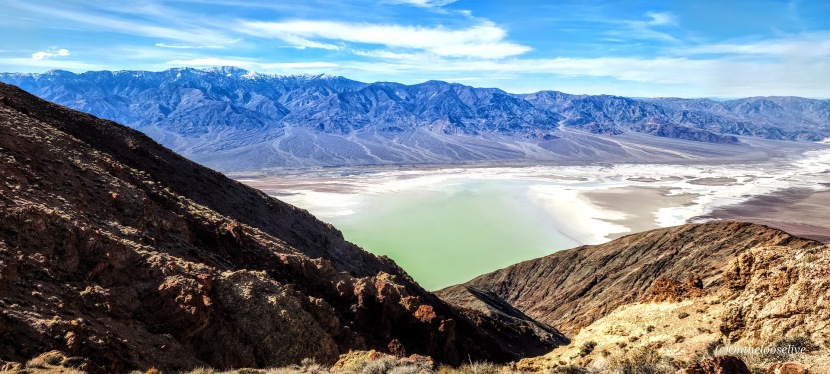
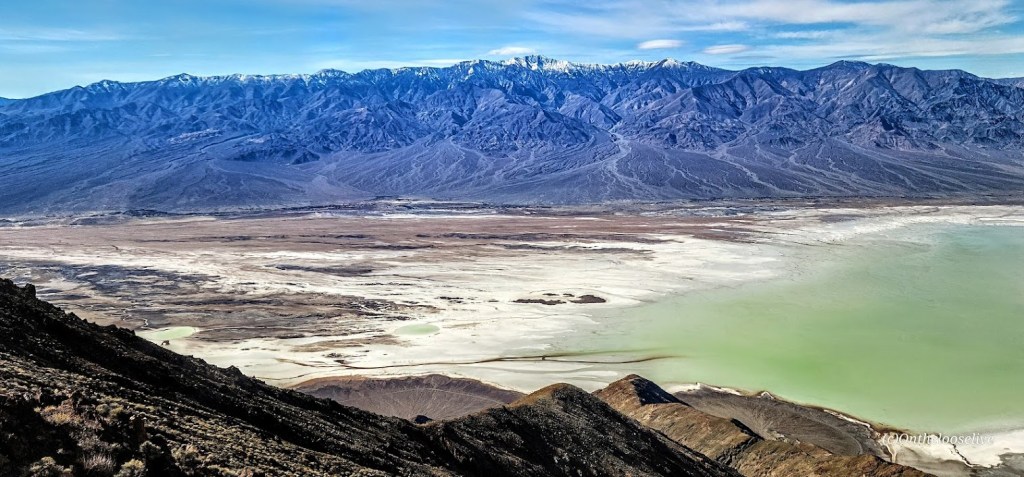
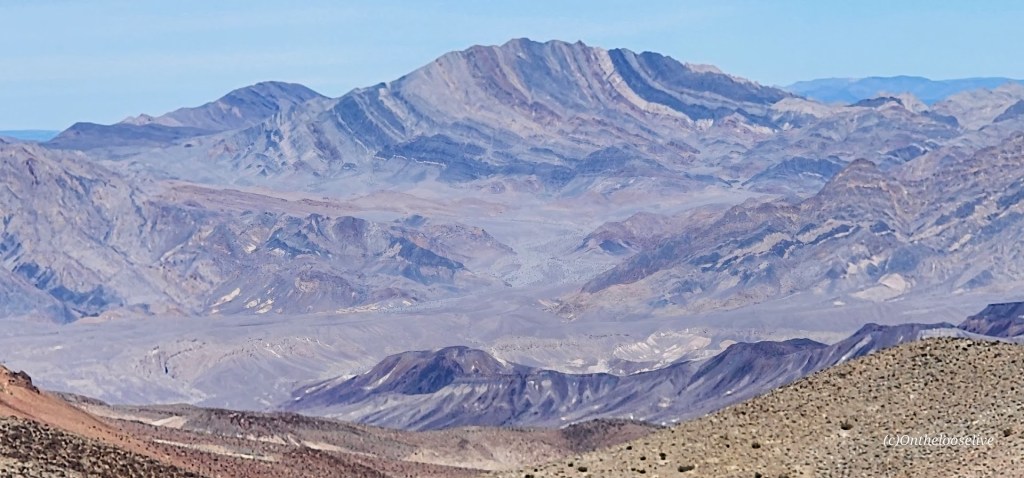
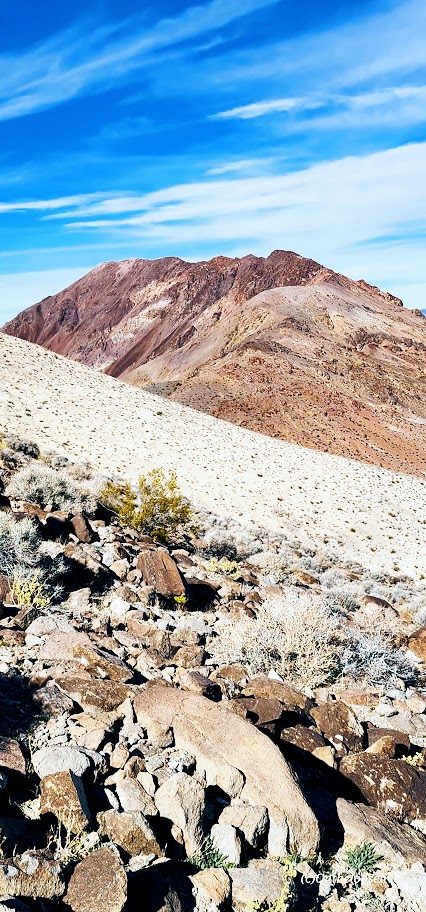
The unofficial trail begins at the north end of the Dantes View parking lot. The unmarked single-track rim trail climbs and descends different ridges eventually leading to the peak of Mt. Perry (5,378 ft). The vast views in every direction are enchanting—across the valley to snow-capped Telescope Peak and down to the mesmerizing turquoise, emerald waters of Badwater Basin below.
Towards the peak, the loose scree and talus field get gnarly and may require a “4 on the floor”(hands and feet) approach. There’s no shame in stopping short if the rugged terrain becomes too disagreeable—the view is spectacular all along the way and at any of 3 false summits.
If you don’t have time to hike, Dante’s View is worth the drive up, especially at sunrise or sunset.
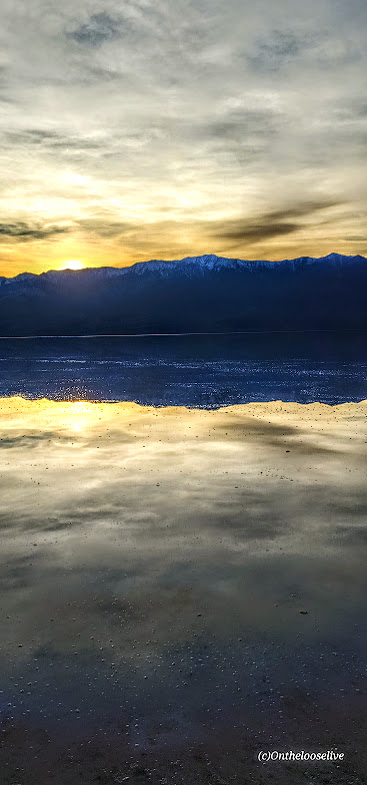
A once-in-a-lifetime opportunity to see Lake Manly/ Badwater Basin with water!
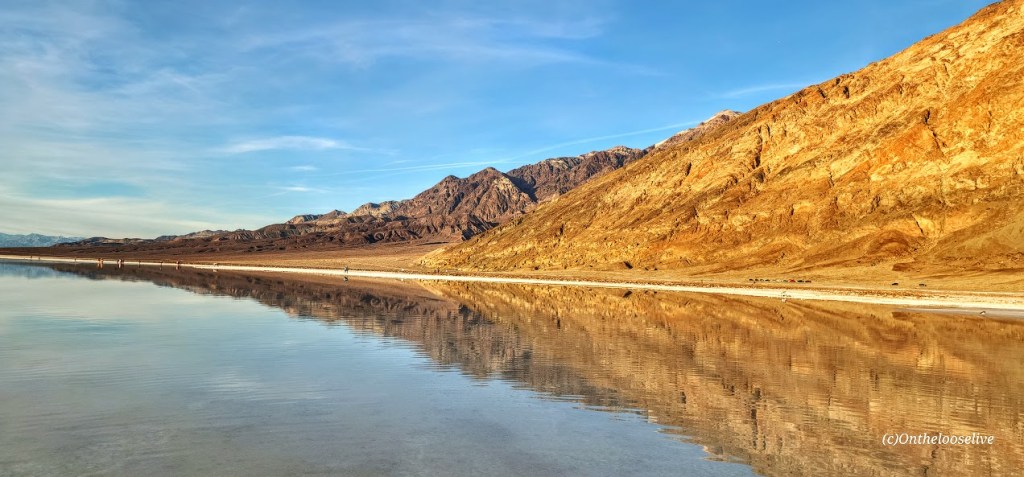
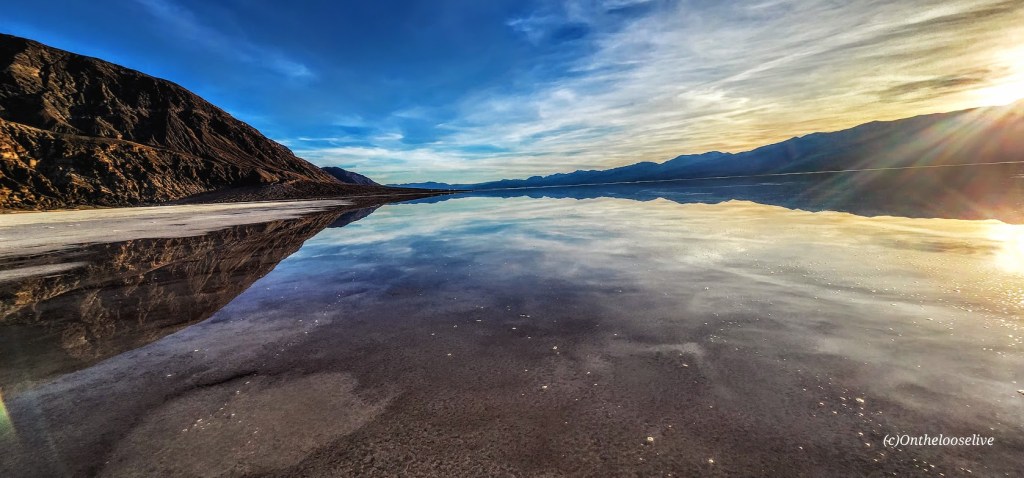
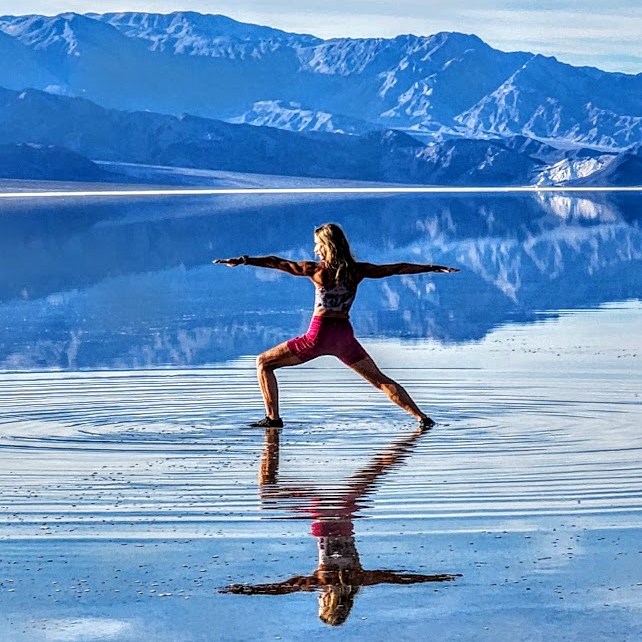
Whether you drive by it or up to Dante’s for the bird’s eye view, you must visit Badwater Basin, especially now! The lowest point in North America and the United States, Badwater Basin, an expansive salt flat, is the remnant of a vast and deep (600 ft deep) ancient lake that existed tens of thousands of years ago. During the past six months, thanks to the recent record-setting “atmospheric rivers,” the ancient “lake” has resurfaced into a 6-mile by 3-mile shallow (1 ft deep) “lake”. With warmer temperatures around the corner, the lake will evaporate before long, leaving only the vast, barren salt flat. For those lucky enough to see Lake Manly with water, that ephemeral glimmering experience will remain imprinted like a mirage flickering in our memories (and captured in our photos).
Happy Trails!
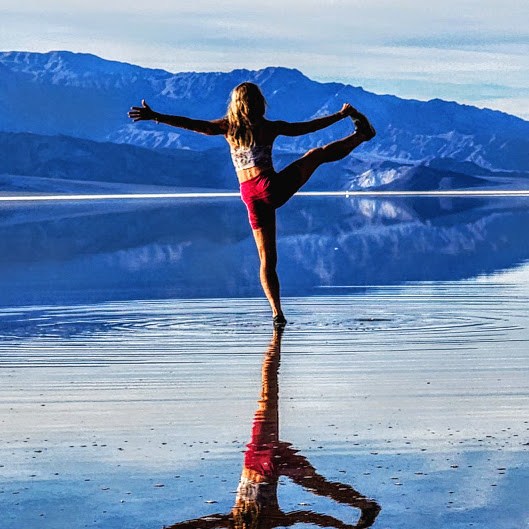
Couldn’t resist the once-in-a-lifetime yogi pose reflection photoshoot at Badwater!
Getting there: Dante’s View is a ~45-minute drive from Furnace Creek. Take the main Highway 190 route SE for 11 miles. Pass Zabriskie’s Point and turn right on Dante’s View Road (13 miles). Badwater Basin is a 17-mile drive from Furnace Creek via the 190, turn right on Badwater Basin Road.
Hike smart: Dante’s View to Mt. Perry is completely exposed. Summer hiking after 10AM is not recommended.
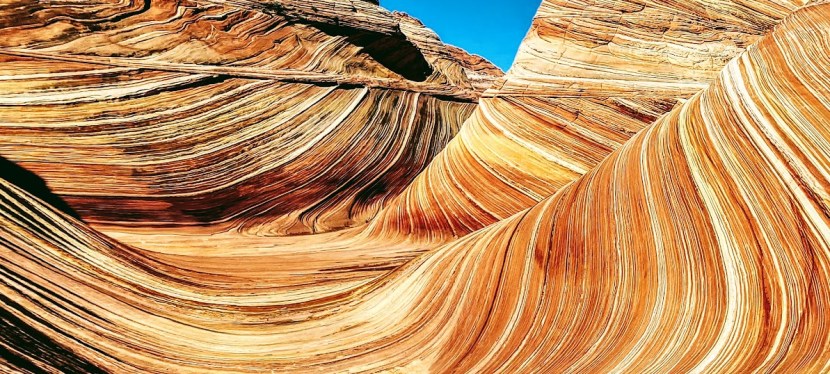
After diligently trying for 3 years, my adventure partner Bernie finally lucked out and won the highly sought-after lottery for “The Wave” / Coyote Buttes North—one of the most striking geological wonders of the world. The trailhead is in Utah, but the Wave and the 3-mile hike to it are in Arizona.
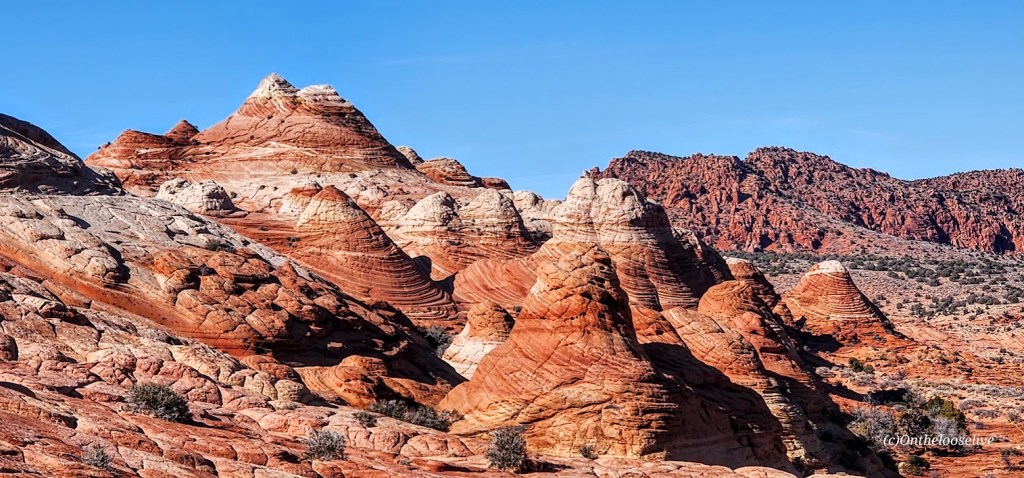
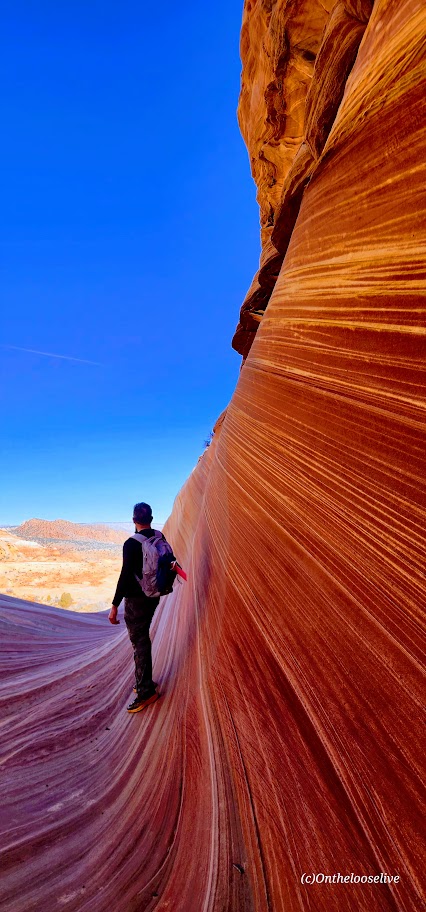
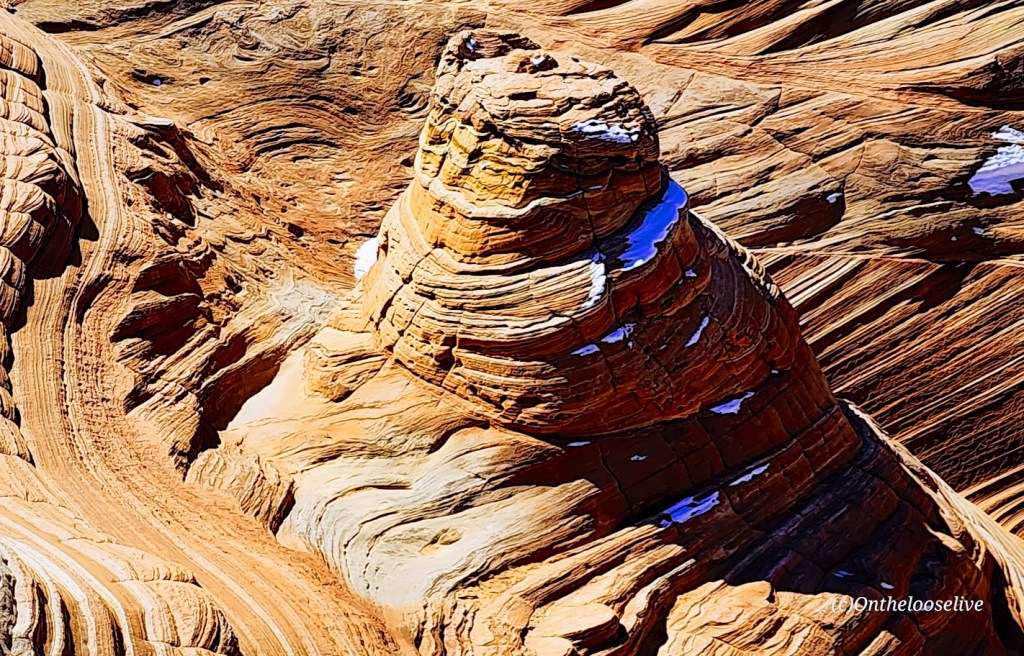
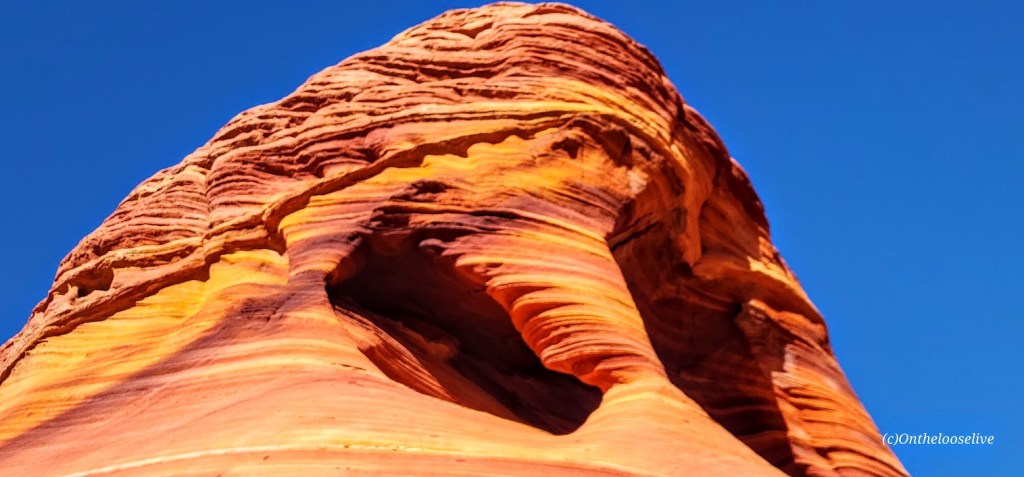
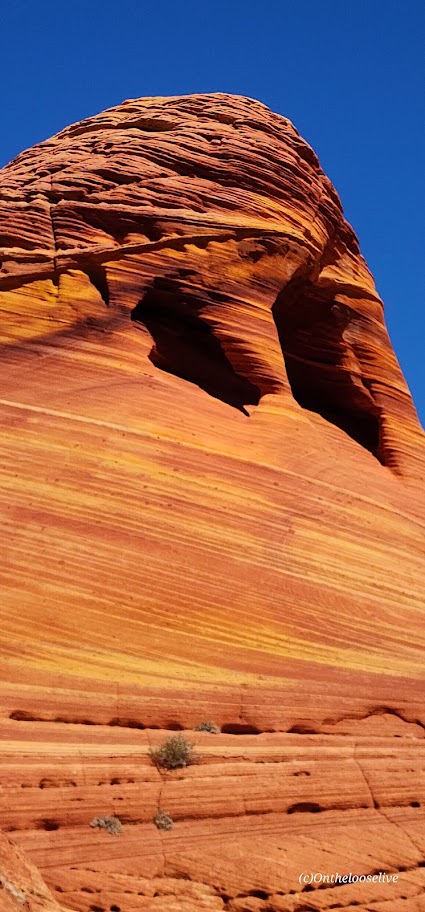
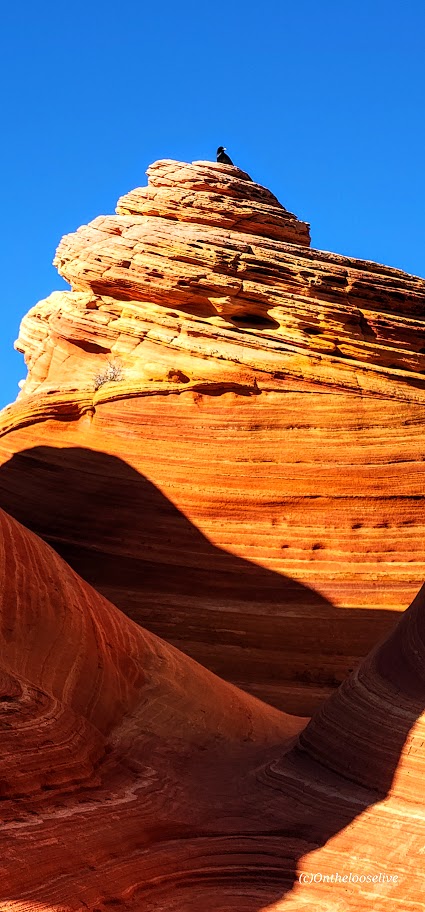
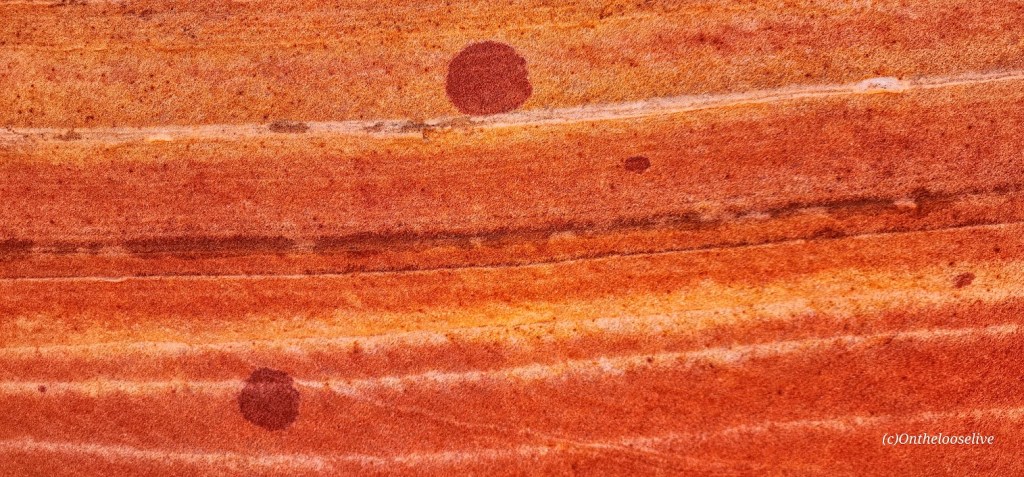
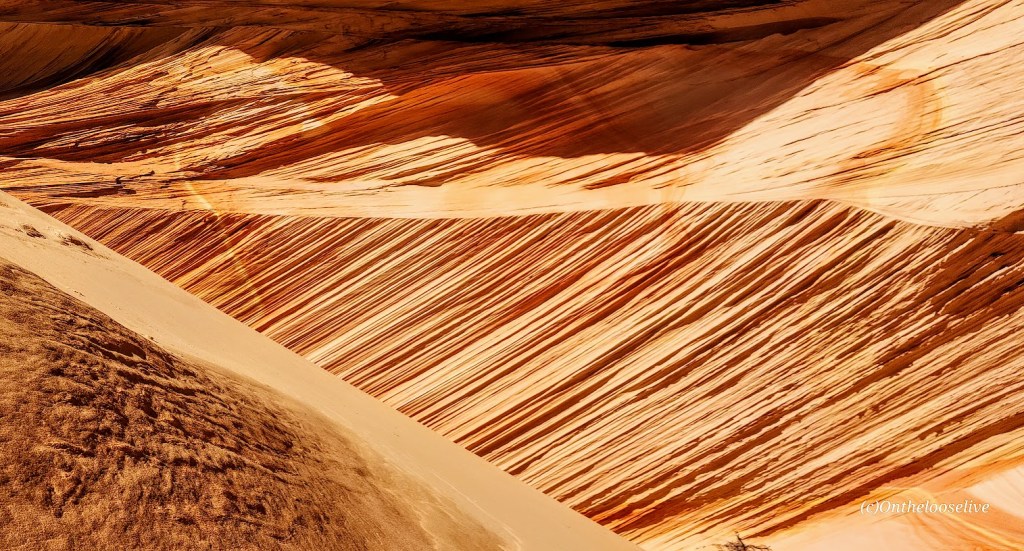
The landscape was enchanting from start to finish. The colorful, striped, groovy rock formations that comprise this mesmerizing geological wonderland are part of the 112K acre Paria Canyon-Vermilion Cliffs Wilderness.
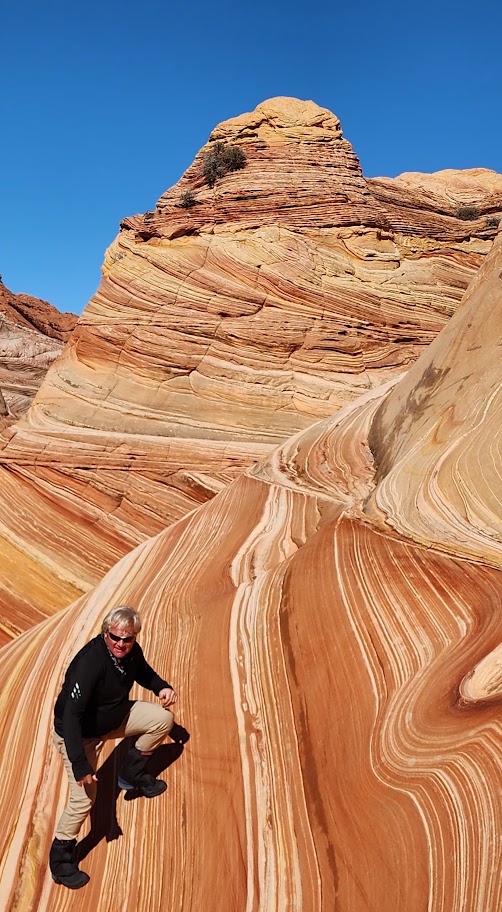
The Wave was awe-inspiring, though the area was much smaller than I’d envisioned. My photos don’t do it justice, but there are plenty out there that do.
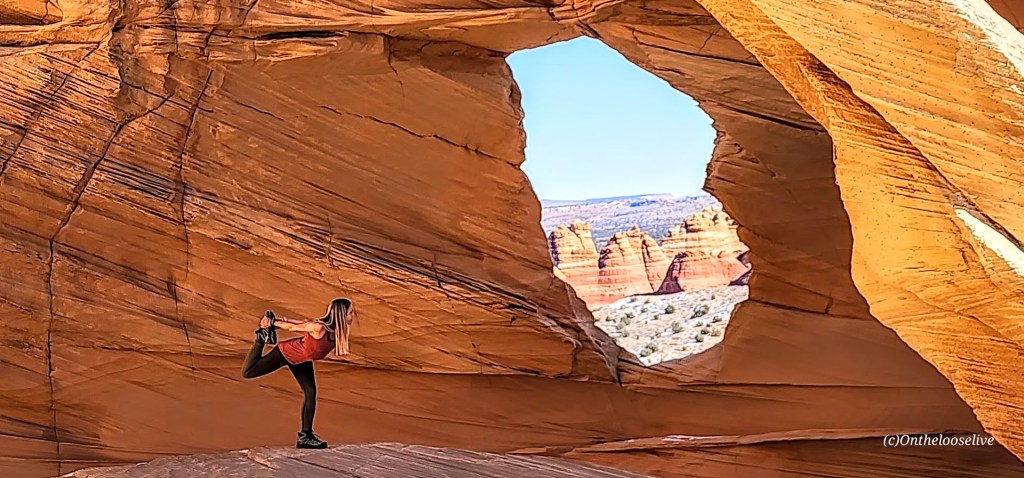
Unexpected highlights included some colorful formations along the way, an alcove, and a double arch beyond the Wave.
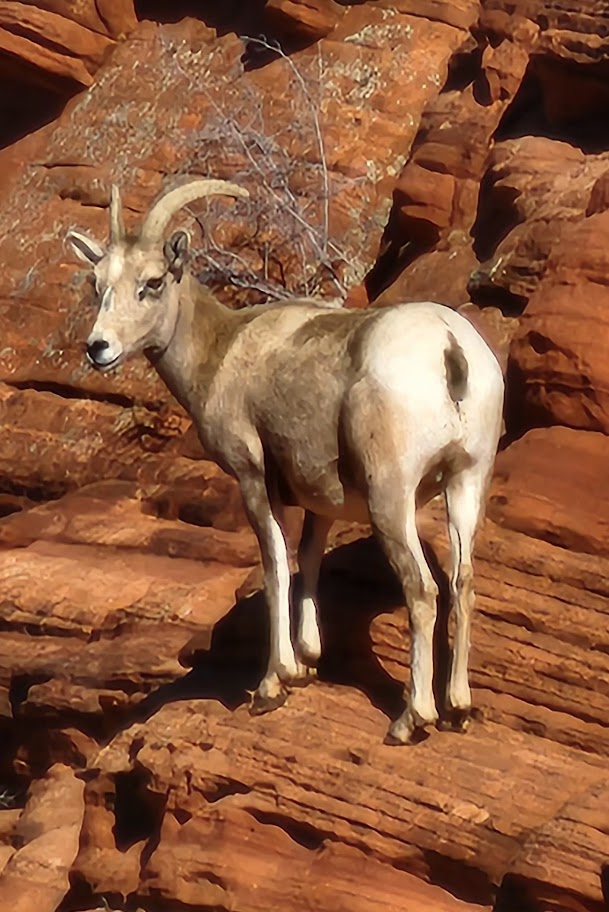
And we had the good fortune to run into some of the locals who get to call this area their home.
The maximum group size is 6, with a daily maximum of 64 people permitted. I’m for lotteries in these exquisite natural areas . It eliminates undesirable crowds, optimizes the visitor’s experience, and helps keep our natural wonders pristine. However, the lottery system for the Wave is complex and, as with most lotteries, not rigged in the player’s favor. One of our friends has been trying for 10 years! Some would argue that the system favors two tour companies that often swoop up the most permits and charge $200 per head to escort people to the main attraction and other points of interest when the group is game and time permits. Permit info.
One clear advantage of going with the guides is that they assume the risk of the notorious 9-mile drive to the Wirepass Trailhead on the rough and often unruly/treacherous House Rock Road. The perfect storm of ingredients, precipitation (rain or melting snow), thick sand, deep mud, and slick clay coagulates like quicksand to trap jeeps, trucks, and those silly enough to attempt the drive without a 4-wheel drive in their tracks. The tow cost alone likely would be several times the cost of a group tour. Our group evaluated the risks and the weather and took the tour with Dreamland Tours. Great operation, and I highly recommend our guide, Melanie Rader.
Naturally, despite doomsday predictions from the BLM and Visitor Center, the road was tame and easily passible with any 4-wheel drive on the day we went. Better safe than sorry as they say.
While we were disappointed that we couldn’t explore on our own, we appreciated the insights and highlights that Mel shared. We’re looking forward to exploring White Pocket next, along with the permitted Coyote Buttes South. A daily maximum of 20 people is permitted to visit Coyote Buttes South. Permit info.
Ok, so I didn’t exactly hang ten here, but our friend, Cris did.
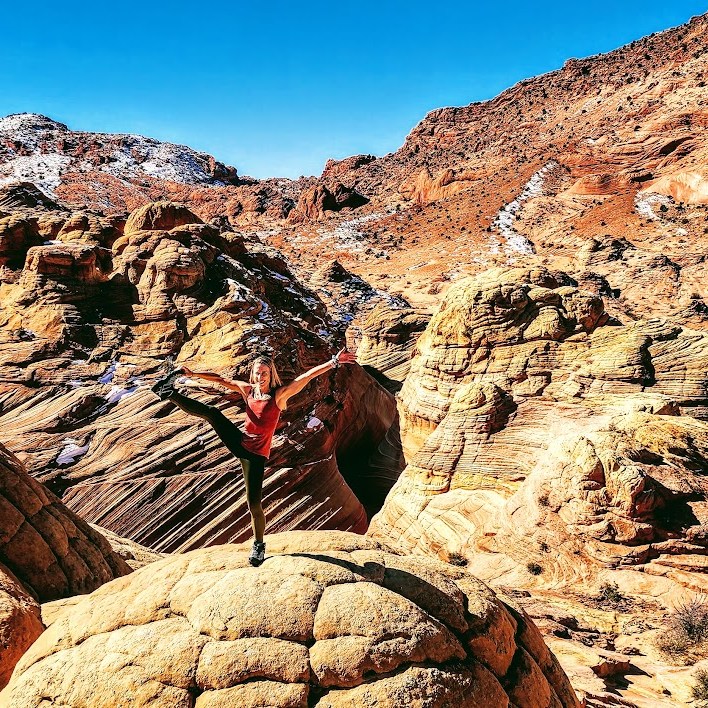
The yoga pose photobomber strikes again and again! Perhaps my yogi balance poses or headstand count?




























 On the Loose Live