Kyoto is surrounded by mountains on three sides so the opportunities to hike abound. I haven’t been able to locate my trail notes on this one so I’m just going to post some photos from my Kyoto walkabout for now.
Sometimes your future
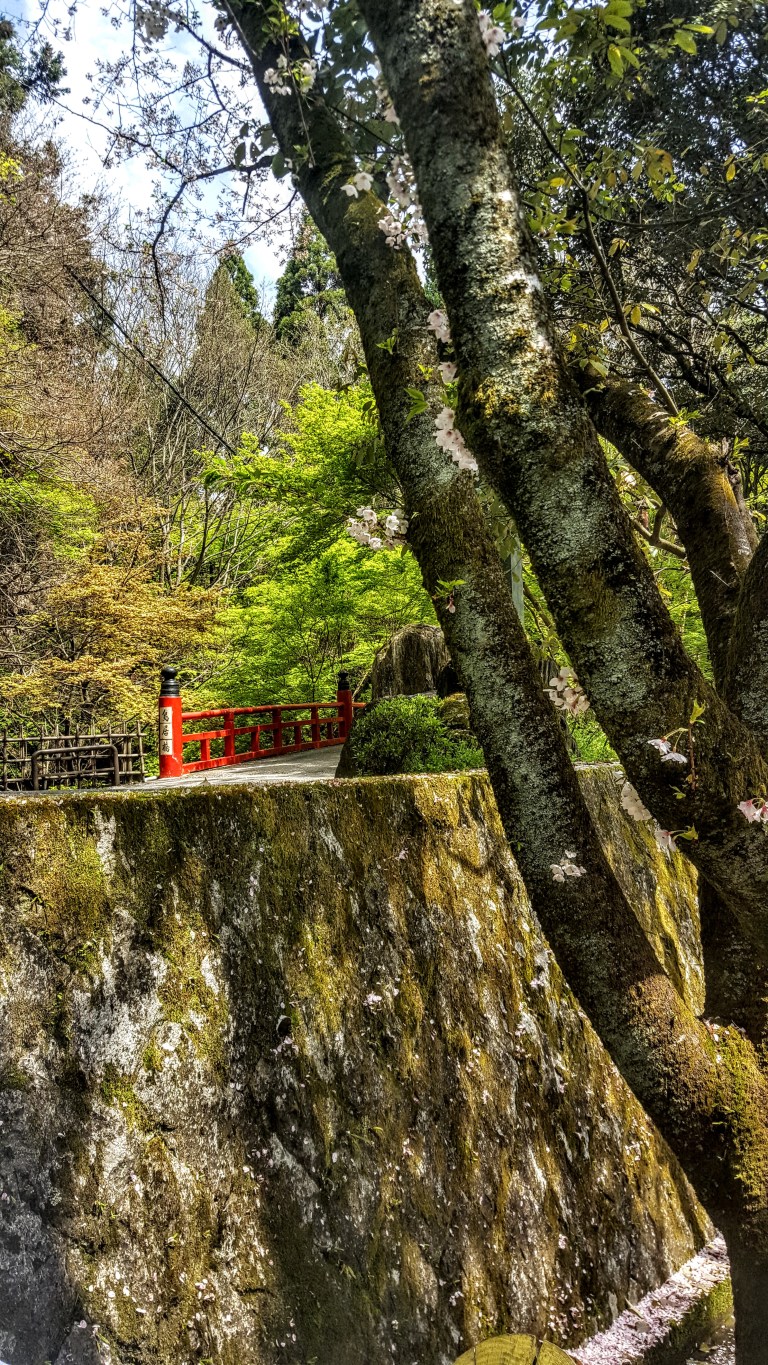
is clear and inviting. The
bridge appears; you cross.
Hmm…
Sometimes it’s hard to
know which way to go so let
the forest guide you.
Magical dappled light – must be the enlightened path
Find yourself in the
dazzling, dappled light-your path
to enlightenment.
Hidden shrines
Traditional buildings and cherry blossomsTemples
Never too far from civilizationSome signs are more helpful than others…Trail markers like this one at key intersections between Kyoto suburbia & Kyoto Forest trails were very helpful.
Most would agree that a trip to Kyoto isn’t complete unless you visit the Nishiki Market. Known to locals as “Kyoto’s Pantry”, the traditional, four-centuries-old Nishiki Food Market is a feast for the senses. The narrow, five block long shopping street is jam-packed with exotic (to the Westerner) items and approximately 130 food stands and restaurants. Bring your appetite to try something new for an unforgettable foodie experience. There are plenty of opportunities to taste samples or to buy snacks as you explore. Expect to be elbow to elbow with a big crowd of locals and tourists alike.
History
The origins of the market date back to around 1310 when it was established as a wholesale fish district. Over time, it evolved into the bustling kaleidoscope of colorful stalls, shops and restaurants that it is today.
This slideshow requires JavaScript.
Getting There
Less than a five minute walk from Shijo Station on the Karasuma Subway Line (4 minutes, ~$2 from Kyoto Station) or via Karasuma or Kawaramachi Stations on the Hankyu Line. The market is parallel to Shijo Avenue, one block north of Shijo Avenue in downtown Kyoto
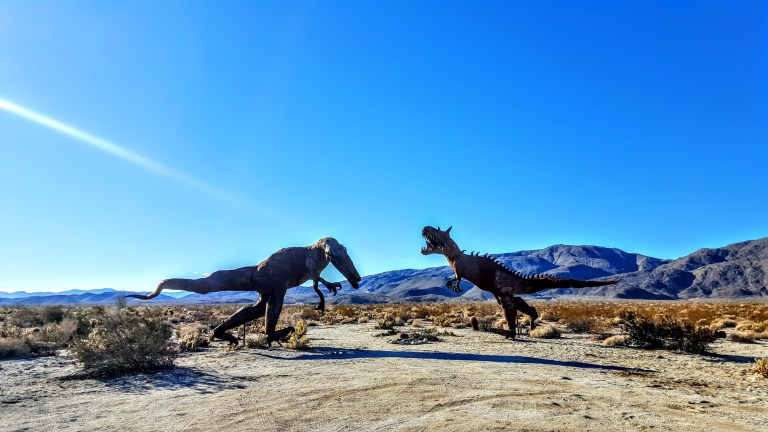
Thanks to the owner of Galleta Meadows Estate, Dennis Avery, there’s an incredible al fresco metal art sculpture exhibition to be discovered in Anza Borrego. Over 130 metal sculptures created by artist/welder Ricardo Breceda seem to appear out of nowhere in the barren, dramatic landscape. With a little imagination, you’re transported to the prehistoric times of dinosaurs, mastodons and saber-tooth tigers.
The exhibition spans about 10 square miles. Many of the sculptures can be seen from the road; others require some driving, hiking or mountain biking in on sandy roads. Some are in clusters, others quite spread out. You never now what kind of creature you’ll encounter next. Highlights include a giant scorpion, a 350 foot-long sea dragon and so many more. I’ll leave you to discover the rest yourself. My favorites, as you can tell, were the prehistoric sculptures.
It’s definitely worth seeing and no doubt a blast for the kids.
Getting there: Take the S22 into Anza Borrego and cruise the valley looking at both sides of the road. (If you want a guided map for the sculptures, you can pick one up at the visitor center in town.)
Whether you explore the historic Arashiyama District by foot, bike, boat, rickshaw or all of the above—it’s a Kyoto must do. Along the lovely scenic paths are temples, shrines, a bamboo forest, artisan shops and restaurants. Read on to discover the top 3 things to do in the area.
Wow, those strong legs!
Many of the signs are also in English so it’s easy to navigate.
You’ll pass through residential areas as well and see people going about their daily routines, sweeping the streets with handmade brooms, tending their gardens, etc.
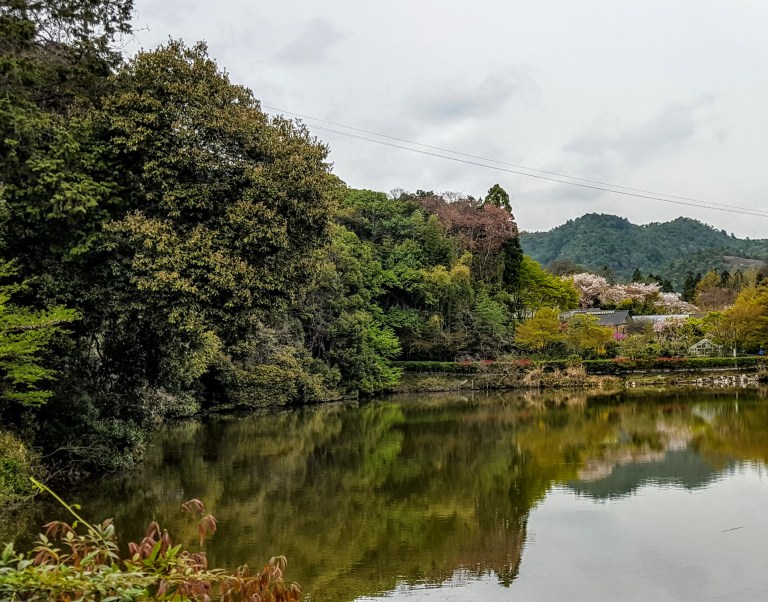
I love that the Arashiyama District is very walkable and bikeable with something new to see around every blossom-lined corner. It easy to see why this charming area is one of the most popular sightseeing districts in Kyoto.
Plan on spending a half or full day here, soaking in the sights, shopping and getting a taste of the culture and cuisine. If you only have time for two quick stops, you’ll want to check out the Bamboo Forest and the Tenryu-ji Zen Temple. If at all possible, make the time for a leisurely explore and include an excursion on the Hozu River. You’ll be glad you did.
Arashiyama Bamboo Forest
Disapproving mother-in-law lurking in the background?
While many say that this bamboo forest is the “star” attraction of the Arashiyama District, I was a bit underwhelmed by it (crowds and a path running through it).
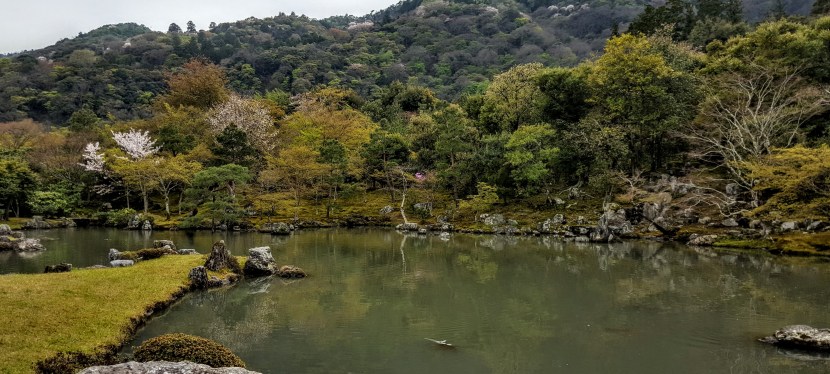
Tenryu-ji Zen Temple One of the Top 5 Zen Temples in Kyoto, this temple has an amazing Zen garden that dates back to the 14 Century. The beautiful garden features a pond that is framed by maple trees, rocks and mountain views. Admission Fee: ~$5
This slideshow requires JavaScript.
Hozu River You can take a short scenic boat ride here or start from nearby Tanba-Kameoka (16K away) and embark on a leisurely two hour boat ride that takes passengers down the winding Hozu River to Arashiyama. Unfortunately, I didn’t have time, but it sounds like a wonderful experience – self propelled on a rental canoe or escorted.
Cheers to another memorable day in Kyoto.
Getting there: Take the JR Sagano (also known as JR San-in) Line from Kyoto station to JR Saga-Arashiyma station.The local and express (or limited) lines are on platforms 32-35. The express makes 3 stops, local makes 6. It approximately a 15 minute ride and costs ~$3.
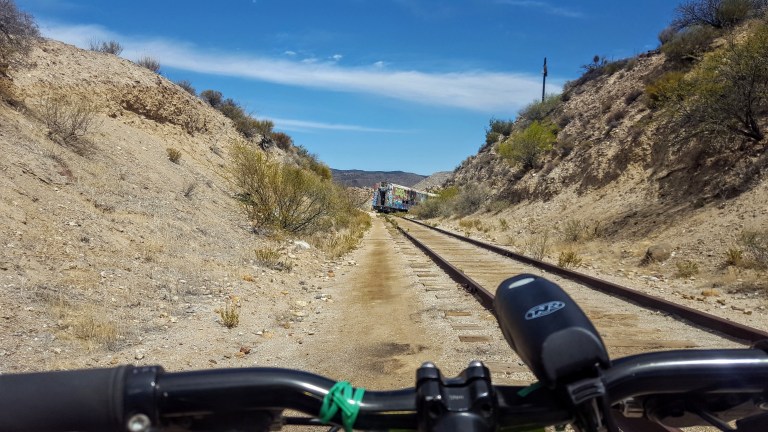
Deep in the heart of the Jacumba Mountains overlooking Carrizo Gorge in Anza Borrego State Park, you’ll find the Goat Canyon Trestle. Getting to the world’s largest curved wooden trestle is like being transported to the wild west of days done by. You’ll traverse dark tunnels in various stages of collapse, dodge rock slides, narrowly avoid precipitous drops into rock canyons, explore abandoned trains and endure the blazing desert sun. If this is your idea of fun, read on. Ok, it’s not that bad. In fact, it’s an easy, flat mtb cruise or a longish flat hike through some very cool (pun intended) desert terrain.
(Video credit and pics I’m in below: Ken Wells)
It’s slow going as there are several points where you have to lift your bike over one obstacle or another. You can’t speed through because you never know what’s around the next corner or if the bottom might drop out in front of you.
Be alert and cautious all the way out and back. Headlamps are a must for the tunnels, lots of obstacles in there. Workout-wise, it’s easy – safety-wise, it could be considered a bit sketchy.
As you bike along the railway, sometimes the path is quite narrow with a precipitous drop into the rocky canyon below. A moment of distraction could make for a very bad day. Wouldn’t suggest mountain biking for kids here, unless they are quite skilled and cautious riders.
Up close, the trestle seems a bit rickety, like a skinny, dilapidated Jenga set.
This slideshow requires JavaScript.
Background: The trestle was built in 1933, as part of the San Diego and Arizona Eastern Railway, aka “the impossible railroad” that ran through Baja California and Eastern San Diego County and ended in Imperial Valley. Over the years, collapsed tunnels and rock slides plagued the railroad, including the collapse of Tunnel 15, which led to the creation of the trestle. The trestle was constructed of wood (no nails used), rather than metal due to the area’s extreme temperature fluctuations, which can lead to “metal fatigue” / failure and it was designed with a 14 degree angle to offset Goat Canyon’s high winds. By 2008, rail traffic had ceased. As recently as last year, another tunnel, Number 6, near the trestle collapsed…(Yikes.)
Distance: Roundtrip 10 -14 miles, depending on where you start
Getting there: 8E from San Diego, take the Jacumba Exit
Parking: Park for free in the dirt lot right off the freeway at the Jacumba exit and follow the dirt portion of Carrizo Gorge Road 2 miles towards the DeAnza Spring Resort, the largest “clothing optional” resort in North America. Optionally, pay $5 to park at the resort. 1951 Carrizo Gorge Rd. There’s a Subway & gas station right off the freeway. You can also grab a bite & beer at the resort after your ride…
Note: This is the desert, plan accordingly – ample water, sunscreen, hat, etc…








 Cheers to another memorable day in Kyoto.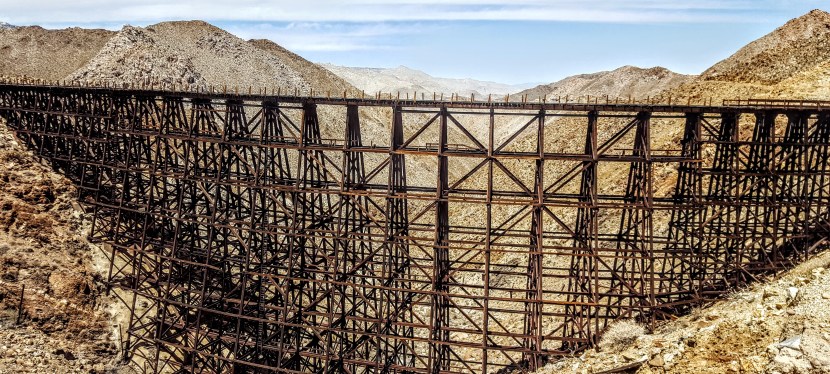




 On the Loose Live